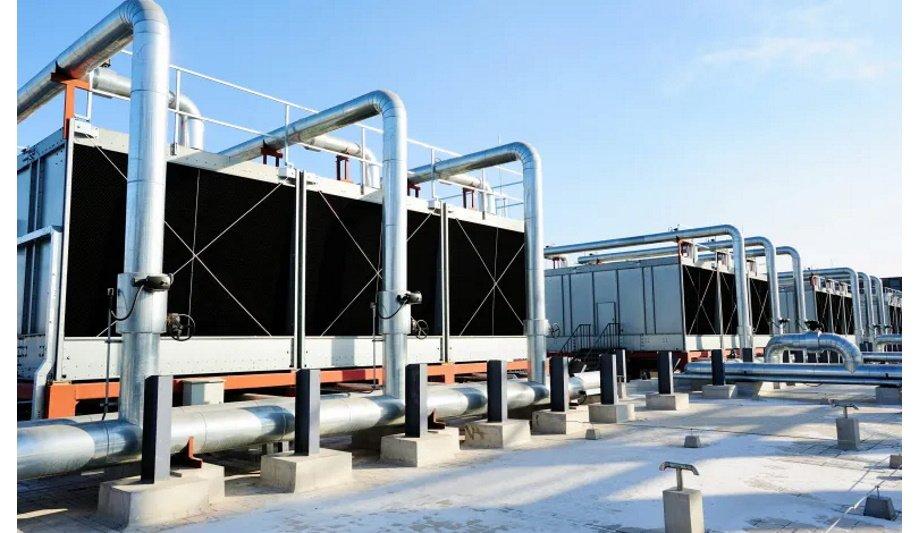

While the COVID-19 pandemic has led to a temporary downturn in industrial activity, it provides a good opportunity to review and update your cooling tower treatment in the context of the UN’s Sustainability Development Goals (SDGs).
Evoqua (Evoqua Water Technologies) is responding to these evolving water treatment demands with an ever-expanding portfolio of more sustainable solutions, including electrochlorination and UV disinfection.
Biocides are, of course, effective against most bacteria and viruses that are found in cooling towers, but these chemicals have drawbacks. Storing and handling chemicals like sodium hypochlorite occupies a good deal of space and they can degrade in storage losing their efficacy, and spillages or high concentrations in blowdown can be an environmental hazard.
Evoqua’s OSEC L electrochlorinator
Evoqua’s OSEC L electrochlorinator produces safe, low strength sodium hypochlorite solution from sodium chloride, the same salt that is used to regenerate the cooling tower make-up water softener.
Salt is not only safer and easier to handle, but also enables savings on transportation associated with bulk chemical supply, thereby helping to reduce the carbon footprint. The only other input is electricity, which if sourced from renewables, helps to deliver on the SDG commitments.
Chemical-free ultraviolet disinfection
With increasing concern about the possible presence of harmful chemicals in facility discharges, more and more cooling tower operators are aiming to reduce chemical use and turning to chemical-free ultraviolet disinfection.
UV has commonly been applied in markets, as diverse as potable water supply, aquaculture
UV has commonly been applied in markets, as diverse as potable water supply, aquaculture, food & beverage, to swimming pools. It inactivates a wide range of microorganisms and bacteria, including chlorine-resistant microbes, like Cryptosporidium and has been shown to be effective against many viruses.
UV disinfection eliminates chemical handling hazards and reduces the environmental impact associated with biocide use.
Self-sufficiency and resilience important to facility managers
Self-sufficiency and resilience are of increasing importance to facility managers, and the option to use safer products to operate in a sustainable way is increasingly attractive. Evoqua’s combined chemical and non-chemical disinfection solutions reduce energy usage, minimize chemical consumption and extend the life of the water treatment process equipment.
Evoqua also offers solutions to support water reduction, reuse, or recycling of cooling water, which contributes to a stronger and more sustainable circular economy.

- Government Regulations
- Commercial HVAC
- Refrigerants
- EPA
- DOE
- Energy Star
- Energy Efficiency
- Capacity
- Residential HVAC
- International Standards
- Safety Standards
- HVAC Plumbing
- COVID-19
- HVAC Software
- HVAC Maintenance
- Automation & Controls
- Remote Monitoring
- Smart Home
- Building Management
- HVAC IoT
- Mergers & Acquisitions