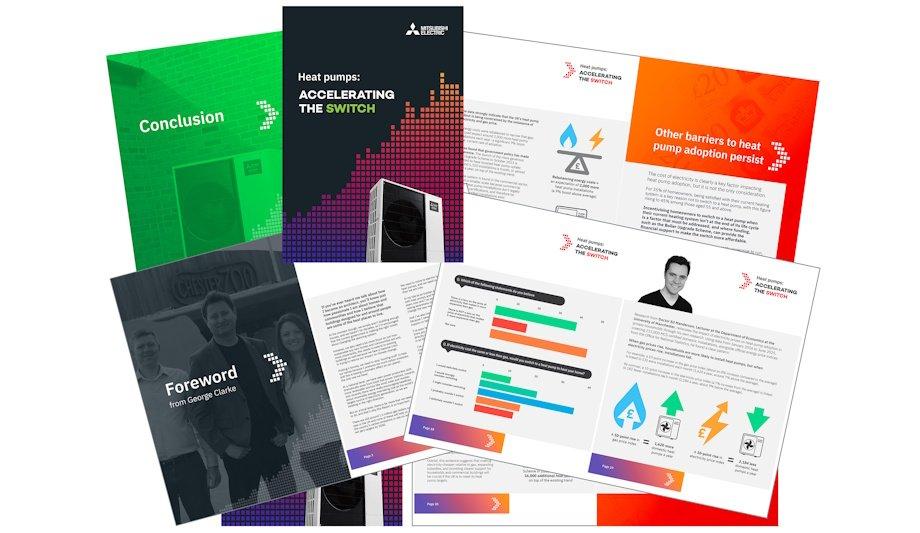
Despite a significant portion of UK homeowners expressing concern over climate change, the transition to heat pumps remains sluggish, with adoption rates at merely 6%, according to Mitsubishi Electric's latest report, 'Heat Pumps: Accelerating the Switch'.
The report highlights that the primary obstacle is not a lack of technology or awareness, but rather the cost of electricity, which burdens households.
Impact of Electricity Costs on Adoption
In the UK, switching to heat pumps is often thwarted by the high cost of electricity, despite homeowners' willingness. The existing energy pricing model disproportionately impacts eco-friendly choices, as environmental levies considerably inflate electricity bills.
These levies add approximately £140 to the average household electricity bill annually, compared to less taxation on gas. Although heat pumps are more efficient than gas boilers, their operational costs deter environmentally conscious homeowners grappling with rising living expenses.
Research Findings on Homeowner Perspectives
A segment, accounting for 15%, demands a minimum annual bill reduction of £500 to consider the switch
Research conducted by Mitsubishi Electric and Opinion Matters, surveying 2,000 UK homeowners, reveals that 33% would be open to using heat pumps if electricity were as affordable as gas.
However, a segment, accounting for 15%, demands a minimum annual bill reduction of £500 to consider the switch.
New academic data from Dr. Ed Manderson of the University of Manchester underscores that a 7% decrease in electricity prices correlates with a 9% increase in heat pump installations, both in residential and commercial sectors.
Industry Readiness and Required Reforms
Russell Dean, Deputy Divisional Manager at Mitsubishi Electric, remarked, "Our research reveals a critical tipping point in public sentiment: the desire to reduce emissions is being outweighed by the reality of energy bills."
To significantly reform heating systems in the UK, Dean emphasizes the need to restructure the electricity pricing system that currently disincentivizes low-carbon alternatives.
The study also shows a readiness among residential and commercial heating installers, with 93% confident in their ability to install heat pumps, a sharp rise from last year's 61%.
Government Action and Recommendations
Mitsubishi Electric is advocating for urgent reforms to eliminate financial barriers hindering heat pump adoption
Mitsubishi Electric is advocating for urgent reforms to eliminate financial barriers hindering heat pump adoption.
Recommendations from the report include shifting green levies away from electricity to meet net zero goals, decoupling electricity prices from volatile gas markets, and expanding financial support schemes like the Boiler Upgrade Scheme.
These changes are crucial as 15% of the public states they need significant savings to consider a heat pump.
Net Zero Ambitions and Future Outlook
To achieve the UK's target of installing 600,000 heat pumps annually by 2028 and align with the Climate Change Committee's projections for 2040, substantial adjustments in heating practices are needed.
George Clarke, Architect and Mitsubishi Electric Ecodan Ambassador, calls for removing green levies from electricity, asserting, "The technology is ready, and installers are ready to make the switch from gas heating to heat pumps, but the inflated price of electricity remains a major issue for both consumers and businesses."
Mitsubishi Electric seeks collaborative efforts between government and industry to establish an affordable transition to low-carbon heating solutions.
Despite 80% of UK homeowners saying they care about climate change, heat pump adoption in UK homes remains critically low, with only 6% making the switch.
According to Mitsubishi Electric’s latest report, Heat Pumps: Accelerating the Switch, one of the biggest barriers isn't technology or awareness, but the cost of electricity.
Average household electricity bill
For many UK households, switching to a heat pump isn’t a question of willingness, but the affordability of electricity. The current energy pricing structure actively penalizes greener choices by loading environmental levies onto electricity.
These levies add around £140 a year to the average household electricity bill, while gas is taxed less heavily. Even though heat pumps are up to three times more efficient than a gas boiler, they can still cost more to run, putting off environmentally conscious homeowners who are already feeling the squeeze from rising living costs.
Electricity pricing is holding back heat pump adoption
The new research of 2,000 UK homeowners from Mitsubishi Electric and Opinion Matters shows that 33% of homeowners would consider switching to a heat pump if electricity cost the same or less than gas. But for many, the bar is even higher: 15% of those surveyed said they would only consider switching if their annual energy bill was at least £500 cheaper.
New academic modeling in the report by Dr Ed Manderson, Lecturer in the Department of Economics at the University of Manchester, reveals that an increase in electricity pricing clearly correlates with a decrease in heat pump installations. A 7% fall in electricity prices (equivalent to a 10-point drop in the price index) would lead to about a 9% rise in domestic heat pump installations.
The same trend appears in the commercial market: rebalancing electricity prices could boost uptake by around 9%, of which the true effect across the whole market would likely be considerably larger.
Residential and commercial heating installers
Russell Dean, Deputy Divisional Manager, Mitsubishi Electric, said: "Our research reveals a critical tipping point in public sentiment: the desire to reduce emissions is being outweighed by the reality of energy bills."
He adds, "If we are to bring about considerable reform in how we heat our buildings in the UK, we must look at reforming an electricity pricing system that disproportionately penalizes those who opt for low-carbon alternatives."
Mitsubishi Electric’s own research of residential and commercial heating installers also shows that they are ready to help accelerate the shift, with 93% believing they have the skills and experience to install heat pumps – an increase from 61% last year.
Urgent reform is needed
It’s clear that a significant disruption to the status quo of how heating is fueled in the UK is required if the UK government’s target of 600,000 heat pump installations per year by 2028, or the Climate Change Committee’s 7th Carbon Budget recommendation that by 2040 half of UK homes are heated with a heat pump, is achieved as a pathway to net zero emissions by 2050.
George Clarke, Architect and Mitsubishi Electric Ecodan Ambassador, comments, "The technology is ready, and installers are ready to make the switch from gas heating to heat pumps, but the inflated price of electricity remains a major issue for both consumers and businesses. That’s why we’re calling on the government to remove green levies from electricity to encourage more people to move away from carbon-intensive gas and oil heating."
Mitsubishi Electric is calling for urgent action to remove the cost barriers holding back heat pump adoption. To overcome this, government and industry must work together to create a fairer and more affordable path to low-carbon heating.
Key actions recommended in the report
- Rebalance green levies: Shift green levies away from electricity to reflect the UK’s net zero goals. Current levies add £140 to electricity bills, but just £50 to gas, making heat pumps more expensive to run than gas boilers.
- Decouple electricity from volatile gas prices: Decouple electricity prices from volatile gas markets. With more electricity now coming from renewables, this move would lower running costs for heat pump users and improve energy fairness.
- Expand and promote financial support schemes: Expand and promote support schemes like the Boiler Upgrade Scheme. One in three homeowners, unaware of the grant, said it would make them more likely to switch. Affordability must be addressed — especially as 15% of households say they need £500+ annual savings before they’d consider a heat pump.
Net zero ambitions
"Opting for sustainable heating solutions must be a viable solution to the volatile cost-of-living problems facing UK homeowners. Rebalancing the cost of electricity and gas could turn the tide on heat pump adoption and will be key to meeting net zero ambitions," said Russell Dean.
He adds, "Heat pumps are ready. Installers are ready. Consumers and businesses are interested. Now the energy system needs to catch up."