Refrigerants
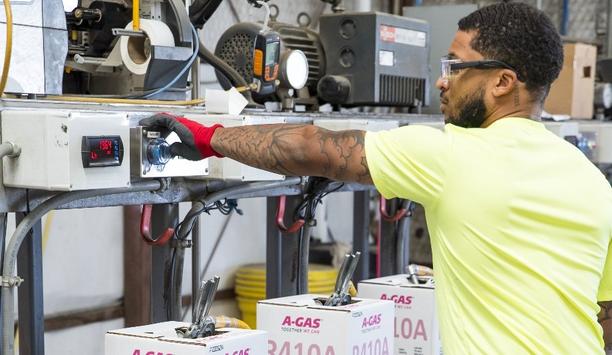
A-Gas, a world pioneer in responsible lifecycle refrigerant management, announces its participation at the 2025 HARDI conference from December 8-11, 2025, in Las Vegas, NV. Attendees can visit A-Gas at Booth 326 to explore advanced reclamation and recovery solutions and are invited to attend a featured panel session led by A-Gas President Mike Armstrong. The panel will address critical strategies for securing the future of refrigerant supply amid AIM Act-driven market changes and potential shor...
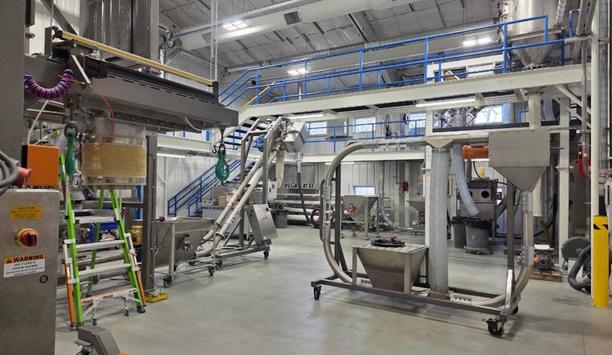
Hapman, a pioneer in the design and manufacture of custom bulk material handling equipment, is proud to announce its new test lab designed to help processors more accurately evaluate how materials will perform in conveying applications. The expanded facility allows customers to validate equipment selection, refine system design and reduce project risk before equipment is installed. Conveyors and integrated system tests The facility now accommodates bulk bag unloading and filling, higher-throu...
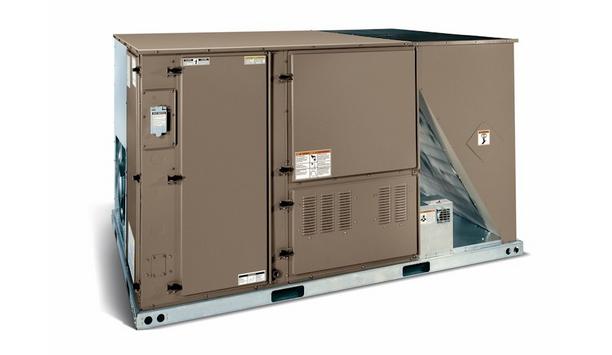
Bosch Home Comfort Group will make its landmark debut at AHR Expo 2026. The recent milestone of incorporating the YORK® and Hitachi brands in its portfolio sparks a new era for the company fueled by the strength of these iconic brands. From Feb. 2–4 in Las Vegas, attendees will be the first to experience the Bosch Comfort Revolution through an immersive booth experience that demonstrates how the expanded portfolio creates a single, powerful ecosystem that redefines comfort for contrac...

As Carrier Global Corporation works toward its vision to be the global pioneer in intelligent climate and energy solutions, the company in 2025 leveraged its unique knowledge and expertise to make a positive impact on the planet, people and communities. “Enhancing the lives we live and the world we share is more than just a commitment; it’s a call to action,” said Ashley Barrie, Executive Director, Corporate Social Responsibility, Carrier, adding “United with our em...
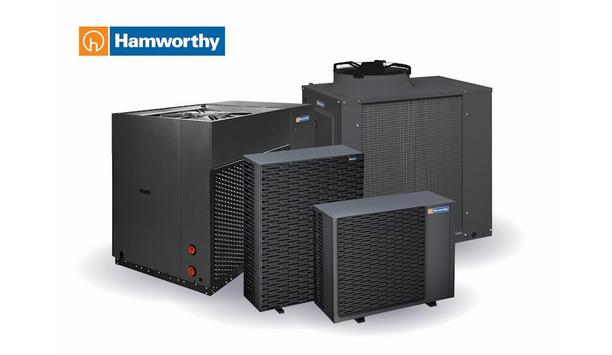
Hamworthy Heating, technical experts in commercial heating and hot water products, is pleased to announce the addition of a new 65kW model to its highly successful Tyneham 290HT commercial heat pump range. This new model increases the range's heating capacity to meet the growing demand for higher output systems while maintaining its commitment to energy efficiency and a reduced carbon footprint. Tyneham 290HT range Now available in six outputs from 15kW to 65kW, the Tyneham 290HT range is des...
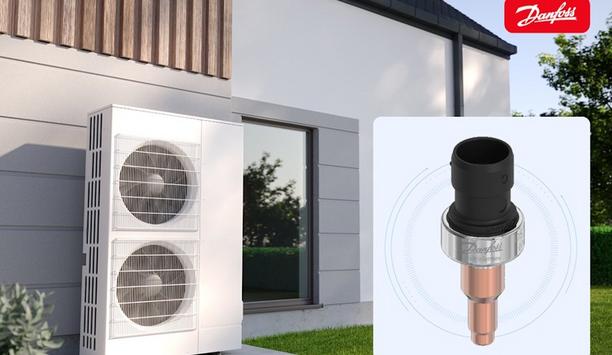
As the latest in the DST series of durable, compact pressure sensors from Danfoss Sensing Solutions, the DST P070 offers a range of features ideally suited for heat pump installations. "Heat pumps play a central role in our transition away from fossil fuel-driven HVAC systems. For example, the REPowerEU targets require that the amount of newly installed heat pumps double every four years, meaning they will need 60 million more heat pumps installed by 2030." "Yet, HVAC system builders often str...
News
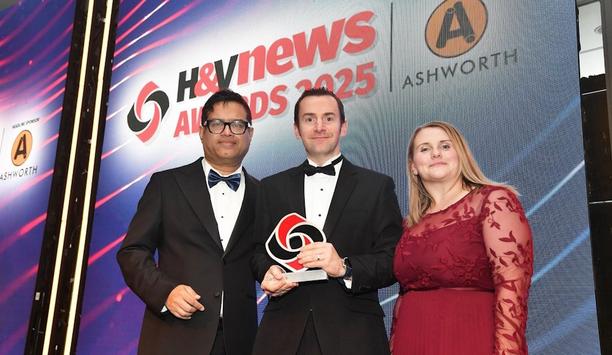
RAUVIPEX, REHAU UK’s pre-insulated district heating pipework solution, has won in the ‘Commercial HVAC Product of the Year – Components and Peripherals’ category at the 2025 Heating & Ventilating News Awards. RAUVIPEX stood out to the judges for its technical excellence and contribution to improved efficiency and sustainability for heat networks. The judging panel also noted how RAUVIPEX’s design demonstrates strong innovation, reliability and had addressed feedback from designers, installers and operators. REHAU’s proven PE-Xa carrier pipe RAUVIPEX provides a market-pioneering combination of low thermal conductivity and high bending flexibility, manufactured with REHAU’s proven PE-Xa carrier pipe, combined with PU foam insulation and an SN8-rated outer jacket. This robust construction ensures long-term durability and addresses a long-standing trade-off in HVAC piping between minimizing heat loss without compromising ease-of-installation. The solution incorporates a new longitudinal water barrier – a fully welded layer that maintains insulation integrity even if the outer jacket is damaged. The barrier achieves longitudinal watertightness in accordance with the AGFW Heat Works group’s FW 420-1 Class A classification, even when tested at double the specified test pressure – a first for a PU foam district heating pipe range. DIN EN 15632 requirements RAUVIPEX is also compatible with REHAU’s EVERLOCTM compression sleeve jointing system and CLIP-FLEX shroud, enabling rapid, secure, and flexible connections without the requirement for hot works. Affirming its sustainability credentials, the solution is produced in a factory powered by 100% renewable electricity. RAUVIPEX also meets DIN EN 15632 requirements for modern low-temperature networks, operating at 65 °C with a service life of up to 100 years to ensure low-carbon performance over the long-term. Achievement for REHAU “Winning this award is a fantastic achievement for REHAU and a testament to our team’s hard work and commitment to innovation,” said Steve Richmond, Sales & Marketing Director, REHAU Building Solutions UK, adding “RAUVIPEX was designed to deliver outstanding performance in challenging environments, and this recognition reinforces its value to the heat networks industry." He continues, “Our focus has always been on creating solutions that push the standards by combining technical excellence and ease-of-use. RAUVIPEX offers the industry a complete solution for reliable heat networks that are fit for the future and address the sectors most pressing challenges, and we are thankful the effort and dedication of the research and development team has been recognized by our industry peers.”
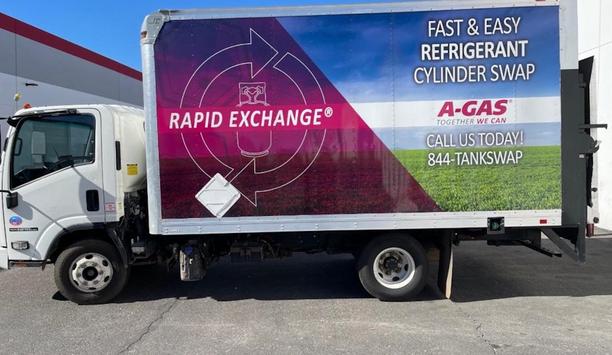
A-Gas, a world pioneer in environmentally responsible lifecycle refrigerant management, announces an expansion of its nationwide service offerings now to the Salt Lake City and surrounding areas. This expansion will provide local contractors, businesses, and HVACR communities with quick and easy refrigerant gas cylinder swaps through A-Gas’ Rapid Exchange® program, in addition to the existing Rapid Recovery® service. DOT-certified refrigerant recovery cylinders “Rapid Exchange provides a simple way for contractors and HVACR professionals to trade their used refrigerant gases for new cylinders for zero fees, all while bolstering their bottom line with A-Gas’ generous immediate buyback program,” says Dallin King, Field Service Manager for the Salt Lake City area. Because Rapid Exchange sites are localized, there are never any freight or shipping fees for used refrigerants—just free local cylinder swaps. More important now than ever before with counterfeit recovery cylinders entering the market, Rapid Exchange provides customers with DOT-certified refrigerant recovery cylinders, facilitating safe refrigerant recovery and transport. Recovered refrigerant cylinders In addition, those looking to sell their used refrigerants need not worry about buyback reductions because of mixed refrigerants or normal oil, moisture, acid (burnout), or particulate quantities. A-Gas offers competitive buyback pricing for all properly recovered refrigerant cylinders. Salt Lake City’s Rapid Exchange and Rapid Recovery® location offers services across the greater Salt Lake City area to support businesses of all sizes, from small HVACR contractors to regional grocery stores. Rapid Exchange enables safe and effective refrigerant recovery and reclamation. After A-Gas Rapid Exchange swaps a customer’s full recovery tanks for empty tanks, the recovered refrigerant is sent to an A-Gas facility to be reclaimed back to AHRI-700 specifications and then re-enters the supply chain, contributing to the circular economy. Rapid Exchange and Rapid Recovery services “By bringing these essential services to Salt Lake City and the surrounding areas, we are helping contractors incorporate sustainable business practices in their day-to-day operations,” says Kimberly Ortwine, Territory Account Manager for A-Gas. “Our Rapid Exchange and Rapid Recovery services provide all businesses and HVACR contractors the opportunity to generate an additional stream of revenue for the gases they safely recover. This not only incentivizes safe recovery practices but also strengthens the local economy.” The services additionally support larger businesses, including grocery stores, construction and demolition, commercial real estate, and banks. TEAP-certified technology As a modern refrigerant reclaimer, A-Gas is focused on environmental stewardship through the lifecycle management of refrigerant gases. A-Gas manages the full lifecycle of refrigerants, from recovery, reclamation, and re-entry into the market to refrigerant destruction services for when gases are at the end of their useful life. A-Gas employs its proprietary PyroPlas® technology, a United Nations-approved, TEAP-certified technology that delivers the industry’s highest guaranteed destruction efficiency (99.9999%).

GF announced Javier Alarcón as the new Vice President of Finance for GF Building Flow Solutions Americas, effective Dec. 15, 2025. In this role, Javier will oversee all aspects of Finance and Accounting. He will report to GF Building Flow Solutions Americas President John Reutter, who previously served as the Vice President of Finance and held the role in an interim capacity. Javier will be a key member of the company’s Senior Management Committee. Prior roles of Javier Javier brings over 25 years of global finance leadership experience and operational excellence to organizations across the financial services, food, agriculture, and manufacturing industries. He holds a strong track record transforming financial functions and laying the foundation for long-term value creation for leading brands, such as CHS Inc., Dairy Farmers of America, and Conagra Brands. He spent the past six years at CHS Inc., most recently as Segment CFO, Agriculture. Javier's breadth of knowledge “The breadth of knowledge Javier carries as well as experience leading high-growth teams will be a great asset,” says Reutter. “I’m confident in his ability to guide our organization through its next phase and look forward to seeing his leadership in action.” Javier earned his Master of Business Administration with a concentration in International Business, as well as his Bachelor’s degree in Finance and Banking, from the University of Nebraska Omaha. Throughout his career, he has supported organizations as they navigated strategic decisions, transformation initiatives, and cross-border expansion.
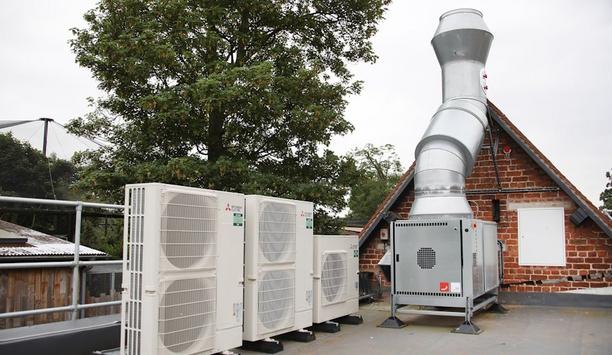
Chester Zoo is the UK’s favourite zoo, as well as an international conservation charity, supporting projects worldwide to prevent animal extinction and aid conservation. So, when the zoo was looking to install the heating for its popular venue space, it needed a sustainable solution that would help reduce carbon emissions, while keeping guests warm and comfortable. Grade II-listed stables block The Square event and conference facility was completed in 2023 and combines the historic Grade II-listed stables block – constructed in 1886, with a modern area that plays host to everything from conferences to gala dinners and product launches, seating 200 guests. The stables were home to the zoo’s first animal collection, including bears, monkeys, chimpanzees and reptiles, with the west wing of the stables used to house lions, so it is an iconic part of the Zoo. Challenge for the heating and cooling requirements The development makes for a stunning venue for weddings, product launches and meetings, but there was a particular challenge for the heating and cooling requirements, because parts of the building need high temperature heating for the Grade II listed elements, while the more modern elements need lower temperatures for the underfloor heating. “The Square combines a conference space that is also used for weddings, plus some smaller spaces that are used for meetings and private functions in the older, listed-status areas and both elements have very different heating requirements,” explained Rob Arathoon, Mechanical and Electrical Projects Manager at Chester Zoo. Ecodan CAHV air source heat pumps Arathoon added: “This presented some specific challenges to the design as we’re trying to achieve a higher temperature circuit to heat the listed building, whereas the newer, more insulated area had to have a lower temperature circuit which was feeding an underfloor heating system.” The solution sees two Ecodan CAHV air source heat pumps feeding a Climaveneta EW-HT water-to-water heat pump to provide a boosted temperature circuit. The CAHV units provide water at 45°C, with the EW-HT boosting the temperature to 75°C. Ecodan QAHV air source heat pump Together the heat pumps deliver very high temperature water for the radiators in the historic parts of the building and lower temperatures to serve the underfloor heating in the new part. The Square also benefits from an Ecodan QAHV air source heat pump which delivers water temperatures of up to 90°C for use in the facility’s kitchen and toilet areas. Ambitious target to be carbon net zero Aside from meeting the heating requirement at the Square, the designers also faced the challenge of how to cool the conference area in the summer, which is where three highly efficient Mr Slim R32 air conditioning systems come into play to provide cooling in an efficient manner when required. The energy-efficient air conditioning utilises R32 refrigerant which has a much lower global warming potential (GWP) and helps reduce the embodied carbon for the equipment. Chester Zoo opened in 1931 and is home to more than 37,000 animals and more than 500 species. As part of its commitment to sustainability, the zoo has an ambitious target to be carbon net zero in its scope one and two emissions by 2030 and a critical part of this is decarbonising heat right across the 128-acre site. Reduce carbon emissions “As a world-pioneering conservation and education charity, we know that we can’t be part of the problem that we’re trying to solve, so we are developing sustainable plans that help us reduce carbon emissions and achieve our net zero targets,” explained Jennifer Kelly, Head of Sustainability at Chester Zoo. “A major part of this is our partnership with Mitsubishi Electric and we’re also keen that this helps to showcase the best of heat pump technology in some of the most challenging applications to inspire others to act.” Heating and cooling for human spaces Heat pumps will play an increasingly important role in the Zoo’s decarbonisation programme and have already been installed in several animal habitats, including those for the Eastern Black Rhino’s and the Butterfly Habitat. “The solution used at the Square goes to show that across the zoo’s estate, it’s not just about decarbonising animal habitats, it’s also about decarbonising and using the most efficient technologies to provide heating and cooling for human spaces as well,” added Chris Newman, Zero Carbon Design Manager for Mitsubishi Electric.
A-Gas, a pioneer in environmentally responsible lifecycle refrigerant management, is proud to support California’s recent regulatory changes by providing its PENGUIN™ Certified Reclaimed Refrigerants, which are fully compliant with the latest state requirements outlined in Assembly Bill (AB) 663. Criteria for certified reclaimed refrigerant AB 663, signed on October 1, 2025, clarifies California’s State Bill (SB) 1206 and establishes strict criteria for what qualifies as a certified reclaimed refrigerant. Under the law, certified reclaimed products are exempt from hydrofluorocarbon (HFC) global warming potential restrictions, provided they meet specific criteria: each cylinder must contain at least 85 percent reclaimed material by weight, be AHRI 700 certified, achieve a minimum purity of 99.5 percent, and be processed by an EPA-Certified Reclaimer. New legislation mandate The new legislation also eliminates ambiguity regarding inventory, with a clear mandate that stockpiled refrigerants which do not meet these standards are now deemed non-compliant regardless of their purchase date. Non-compliance carries significant civil and criminal penalties. Selling Approved Refrigerants A-Gas ensures every PENGUIN™ Certified Reclaimed Refrigerant is accompanied by required documentation, notably a Certificate of Analysis, so distributors and contractors can maintain transparent records and confidently meet regulatory demands. Each cylinder is clearly labeled for traceability, reinforcing assurances that only approved refrigerants are sold and used in California. regulatory and environmental commitments PENGUIN™ Certified Reclaimed Refrigerants allow partners and customers to fulfill both regulatory and environmental commitments without disruption. By proactively adapting to regulatory changes and providing EPA-compliant, high-purity refrigerants, A-Gas delivers lasting value for HVACR wholesalers, contractors, and technicians.
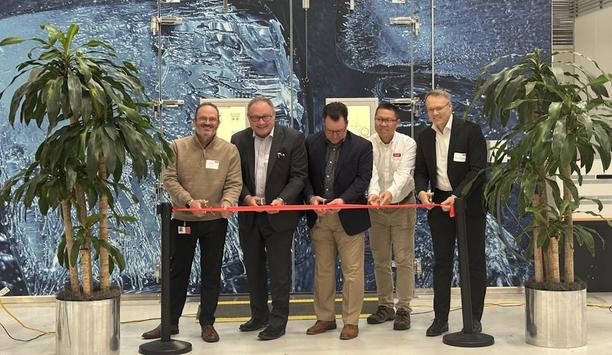
Commercial refrigeration Original Equipment Manufacturers (OEM) will now be able to utilize Danfoss’ Application Development Center (ADC) in Tallahassee, Fla., for their product testing needs. Danfoss opened an additional chamber in the ADC specifically for the testing of food retail and commercial refrigeration equipment utilizing A3, A2L or non-flammable refrigerants. With refrigerant and energy efficiency regulations necessitating product redesigns over the past few years, this new Danfoss testing facility will enable OEMs to get their products to market more quickly. Meeting Efficiency Standards Since its opening in 2017, the ADC in Tallahassee has worked with customers to develop and test new HVAC/R products and solutions, with the ability to simulate a variety of environmental and operational conditions. The addition of a testing lab geared specifically to the needs of commercial refrigeration and food retail customers allows Danfoss to address the challenges its customers are facing with the transition to low-GWP refrigerants and help them meet efficiency standards. Working with the customers Christopher Gangemi, key account manager at Danfoss, noted that the testing lab fills a gap: “Many of our OEM customers don’t have the ability to test at their own facility. Now customers can send us their equipment for testing. We can also work with them to determine if using Danfoss components with their equipment will enable them to achieve greater energy efficiency.” Test Lab Chamber Equipment tested in the new chamber includes condensing units, ice cream machines, unit coolers, freezers, racks, Glass Door Merchandisers (GDM) and process chillers. The lab has the capability to test products with up to 5 kilograms of A3 refrigerant or 7 kilograms of A2L refrigerant per unit. Testing setups are ASHRAE-compliant, with air plenums at the top and bottom of the room to reduce air velocity. As part of the testing, an acoustic infrared leak detection system detects refrigerant leaks at LEL (Lower Explosive Limit) standard. A day of learning To celebrate the lab opening, Danfoss hosted a group of customers for a day of learning that included a session on market trends, a tour and demonstration of Danfoss’ Sustainable CO2 Refrigeration Mobile Training Unit, and an introduction to the Advanced System Simulation Service (A3S), Danfoss’ testing process that simulates HVAC/R system performance using specific compressors, heat exchangers, and valves, which can be virtually changed and retested. Following the ribbon-cutting, guests also received tours of the Danfoss Turbocor® factory and the National High Magnetic Field Laboratory at nearby Florida State University, which Turbocor utilizes in the research and development of its oil-free and magnetic-bearing compressors. Potential of new testing lab Gregory Handzel, senior manager of the ADC in Tallahassee, is excited about the potential of the new testing lab. “This new lab will enable us to provide our commercial refrigeration and food retail customers with the support they need to implement A2L and A3 refrigerants safely and effectively,” he said. “They will be able to use our testing results to develop products to the highest standards of energy efficiency and meet their sustainability goals.”

Expert Commentary

As HVAC professionals know, the heating and cooling industry is undergoing a transition from refrigerants like R-410A to low global warming potential (GWP), or A2L, refrigerants such as R-454B. When preparing customers for the changes that the refrigerant shift brings, contractors can stay ahead of the learning curve by investing in staff training, purchasing necessary new tools for their HVAC technicians, and educating their residential and commercial customers about the impacts. As the industry navigates this change, below are lessons and tips to help contractors make a smooth transition to using the new refrigerants. Dealing with new refrigerants, new rules, and new challenges As new equipment has arrived, questions have come up around installation and servicing In 2025, new residential and light commercial HVAC systems must use low-GWP refrigerants. These refrigerants require new standards, new products, and enhanced safety protocols. There has been a significant learning curve for the industry, especially in the early stages of the transition. As new equipment has arrived, questions have come up around installation and servicing. Industry trade partners, such as Mitsubishi Electric Trane HVAC US (METUS), have been helpful in providing information, resources, and support. Things have been changing quickly, and while many HVAC contractors are adapting well, others are still trying to get their bearings. Part of the challenge is that manufacturers have varying requirements. Availability of A2L-compatible equipment Initially, the HVAC industry faced challenges due to the limited availability of A2L-compatible equipment and the declining supply of R-410A systems. We’ve worked to balance inventory management with maintaining customer satisfaction. In some cases, we've made two separate service visits for new system installations, first to replace the furnace and evaporator coil and then to return once the outdoor unit becomes available. Thankfully, the industry’s inventory availability has recently improved. The refrigerant itself is still hard to come by for most contractors. Remaining vigilant and proactive, continuing to depend on trusted industry partners for timely and accurate updates is essential. Staying ahead through training and education Company pioneers should ensure their teams – not just HVAC installers but sales, service As the industry receives new information on installation, service procedures, and safety protocols, it is essential that contractor training programs are continuously evolving. Company pioneers should ensure their teams – not just HVAC installers but sales, service, and support staff – stay informed as new guidance becomes available. Education is a core value: teams should be encouraged to attend training sessions and share what they learn with their fellow team members. Regulations, safety procedures, and installation best practices In preparation for the transition, it’s also vital that contractors upgrade many of their tools, such as vacuum pumps, digital gauges, recovery machines, and manifolds. They should also provide their technicians with the proper training on these tools. Most importantly, contractors should take advantage of every opportunity from their trade partners, like METUS, and numerous trade affiliations, like the Air Conditioning Contractors of America (ACCA), to obtain guidance. Constantly research and share information with your team so members are well-versed on regulations, safety procedures, installation best practices, and more. Educating homeowners on potential upgrades Customers rely on contractors’ expertise to guide them through their purchase Most homeowner discussions focus on price and equipment availability rather than refrigerant types, but a few well-informed customers ask about the impact of the equipment refrigerant on their homes. Customers rely on contractors’ expertise to guide them through their purchase. Clear, helpful education builds trust, ensures understanding, and offers peace of mind for customers. It's smart and responsible to communicate about the refrigerant change to customers early, so they’re not caught off guard when their current R-410A system eventually needs replacement. They can plan and budget better with this knowledge in mind. I recommend that New York State contractors let their customers know they may be able to take advantage of the New York State Clean Heat program rebates. These rebates can be combined with federal tax credits included in the Inflation Reduction Act for switching to heat pumps and other efficient solutions. Both programs have incentivized customers to install high-performance heat pump systems. Improving performance while enhancing comfort All-climate heat pump systems using A2L refrigerants are said to be more efficient than prior generations All-climate heat pump systems using A2L refrigerants are said to be more efficient than previous generations. We’re telling our customers who switch that they can potentially lower their utility bills. The timing of these enhancements fits well with the growing demand the industry is seeing for ductless systems. Our northeastern region – which includes Amherst, New York and the surrounding Buffalo area – has started experiencing above-average temperatures, prompting many people to adopt ductless systems as a cooling solution for the first time. I would never have anticipated this trend five years ago, and contractors in other parts of the country may be seeing the same trend. Turning disruption into a path for growth and preparedness The refrigerant transition has brought its share of challenges, but it has also sparked progress. It is essential for contractors and HVAC professionals to embrace this moment as a catalyst to strengthen their teams, invest in modern tools, and elevate customer education. By staying connected with trusted partners and industry groups, contractors don’t have to just keep pace, but they can instead position themselves for long-term success in this new era of HVAC.

The data center market has shown robust growth over the past five years, with significant increases in capacity and electricity usage. According to the International Energy Agency (IEA), global data center electricity consumption was approximately 460 TWh in 2022, and it is projected to rise to over 1,000 TWh by 2026. This growth is driven by the increasing demand for digital services and the expansion of artificial intelligence (AI) workloads. In 2025, the total capacity demand for data centers is expected to reach 82 gigawatts (GW), with AI workloads accounting for 44 GW and non-AI workloads for 38 GW. By 2030, this demand is projected to increase to 219 GW, with AI workloads making up 156 GW. This significant growth underscores the importance of sustainable practices in the data center industry. Alternative Off-Grid Power Sources To meet the growing energy demands, data centers are increasingly turning to alternative off-grid power sources. These include solar power, wind turbines, micro-hydro power, and biogas generators. These renewable energy sources not only reduce the carbon footprint of data centers but also enhance their resilience by providing reliable power in remote locations. Green hydrogen, produced by electrolysis using renewable energy, also offers a sustainable alternative to traditional cooling methods, with the potential to significantly reduce greenhouse gas emissions. Continued Compute Growth and Liquid Cooling Nvidia's use of direct-to-chip liquid cooling and closed-loop systems has shown a 300x improvement The rapid growth in compute power, particularly with the introduction of platforms like Nvidia's NVL-576 600 kW, has significant implications for data center cooling. This platform, designed for high-performance AI workloads, requires advanced cooling solutions to manage the heat generated by such dense compute environments. Nvidia's use of direct-to-chip liquid cooling and closed-loop systems has shown a 300x improvement in cooling efficiency. Google's fifth-generation cooling distribution unit (CDU), known as Project Deschutes, is another example of innovation in this space. This CDU sidecar power rack supports up to 1 MW per rack, leveraging high-voltage DC power distribution to enhance efficiency and cooling capacity. Energy-Efficient Cooling Technologies Energy-efficient cooling technologies are critical for the sustainable operation of data centers. Some of the most promising technologies include: Direct-to-Chip Liquid Cooling: This method involves applying liquid coolants directly to the processors, providing superior heat dissipation and enabling servers to operate at optimal performance levels. Hybrid Rear-Door Heat Exchangers: These systems combine air and liquid cooling to manage heat more efficiently, particularly in high-density rack environments. Heat Reuse The elevated temperatures made by liquid cooling can also be harnessed in industrial processes Liquid cooling provides an additional opportunity to reduce energy consumption while enabling data centers to become contributors to community energy systems. Unlike traditional air cooling, which disperses heat into the atmosphere, liquid cooling captures heat more effectively, allowing the heat to be repurposed for the heating needs of nearby residential or commercial buildings. Heat pumps can be employed to raise the temperature of the excess heat to the temperature required by heating systems, resulting in greater energy efficiency. The elevated temperatures produced by liquid cooling can also be harnessed in industrial processes that require specific heat levels, such as pasteurization, drying or chemical processing. By utilizing this heat, industries can reduce their reliance on external energy sources, which in turn lowers operational costs and emissions. However, most areas in the U.S. lack the infrastructure to support district heating. Significant investment is required to develop the infrastructure needed to transport and utilize the heat, such as pipelines for district heating or retrofitting industrial processes. Depending on the region, there may also be legal or regulatory barriers to overcome. Policy and Community Engagement There is strong support for AI growth, with alliances involving companies like OpenAI and Meta Within the current U.S. administration, there is strong support for AI development, with partnerships involving companies like OpenAI and Meta. OpenAI, Meta, SoftBank and Oracle have joined forces for the Stargate Project, which aims to build AI data centers in the U.S. This project includes significant investments to create infrastructure that supports AI development. The Trump administration has identified 16 sites on federal land for the development of AI data centers. These centers are intended to provide the necessary processing capacity for machine learning, cloud storage, and AI systems. Heat reuse offers a powerful tool for sustainability and community engagement. By capturing and repurposing the waste heat, data centers can significantly reduce their environmental impact while providing tangible benefits to surrounding communities and industries. This approach not only supports decarbonization efforts but also fosters stronger ties between data centers and the communities they serve, creating a more sustainable and resilient future. Benefits and integration of data centers Data centers support local economies by creating jobs, providing reliable internet services Educating the community about the benefits of data centers is crucial to ensure the successful integration of data centers into local communities. Data centers support local economies by creating jobs, providing reliable internet services, and enabling technological advancements that improve quality of life. By highlighting these benefits, data centers can build stronger community support and enhance their social license to operate. The effort should combine outreach with online educational initiatives, collaborations with industry, academia, NGOs and multiple sources of in-the-field insight. Conclusion The data center market is poised for continued growth, driven by advancements in technology and increasing demand for digital services. By focusing on sustainability, heat reuse, and energy-efficient cooling technologies, the industry can meet this demand while minimizing its environmental impact. Engaging with communities and educating them about the benefits of data centers will further support the sustainable growth of this vital industry.

Meeting a project’s overarching design goals is vital in the building and construction sector. Creating a sustainable building could be one of these goals — driven by company commitments, federal policies, and state-based initiatives. However, the priorities of minimizing capital and long-term operating costs and maintaining project timelines often prevail. Frequently, the perception in the industry is that these priorities — especially cost — are incompatible with designs and technologies that help decarbonize buildings. Cutting emissions and optimizing costs Organizations can take an incremental approach without compromising on cost However, our experience with heating, ventilation and air-conditioning (HVAC) systems has shown that cutting emissions and optimizing costs are not mutually exclusive when we leverage the right technologies and design strategies. Decarbonization isn't a one-time event. Reducing emissions is a continuous process with many paths. Organizations can take an incremental approach without compromising on cost. Finding the right balance requires weighing project priorities, the building’s environment, short- and long-range facility plans and available technology solutions. To achieve this balance, energy modeling is an essential tool. Weighing up design goals When it comes to sustainability and decarbonization in HVAC systems, there are three primary levers: electrification of heating using heat pumps, improving energy efficiency and using lower global warming potential (GWP) refrigerants. Cost priorities can often be aligned more easily with sustainability goals than expected Each project's physical environment and framework conditions will influence the mix of these three levers. Cost priorities can often be aligned more easily with sustainability goals than expected. For example, the local climate substantially impacts electrification. In hotter climates, electrification is far easier than in cold ones, where heat pumps require much more electricity when heating. In extreme cold temperatures, heat pumps will eventually require a back-up like natural gas (NG) to provide supplemental heat. A hybrid system using NG as a back-up to the heat pump also avoids oversizing the heat pump to cope with the most extreme conditions – which only occur infrequently. Hybrid heating systems come into their own Hybrid systems can significantly reduce emissions compared to traditional fossil-fuel-only heating systems and save costs, especially in areas with access to cheap renewable electricity from solar PV plants, wind farms and hydro or geothermal sources. By switching over to NG when temperatures get too low or when insufficient renewable electricity is available, building owners can not only save costs but also hedge against grid outages in the coldest months of the year. It’s critical to pick the right point for your hybrid system to switch from one fuel source to another. By changing to the lowest rate — electricity or gas prices — at any particular time, you can save money while making significant CO2 savings. Alternatively, the time to switch could be based not only on energy costs but also on emissions reductions, allowing the designer to optimize around different design goals. Sustainability doesn’t necessarily command a premium A study from the National Renewable Energy Laboratory demonstrates that decarbonization and broader sustainability goals can be achieved alongside other design goals. When comparing conventional school buildings with zero-energy schools — buildings that produce as much renewable energy as they need to operate — the NREL found that the latter offers several benefits. Zero-energy schools require less energy and offset demand using on-site renewable energy. Zero-energy schools require less energy and offset demand using on-site renewable energy The study indicates that zero-energy school buildings can be designed and built within conventional budgets — and they can cost less. By applying an integrated approach to design and construction, the extra cost of the zero-energy systems can be offset by the greater efficiencies they facilitate. The study lists downsizing heating, ventilation and air conditioning among the benefits that help reduce capital and operational expenditures. However, as we have seen, balancing each building's inherent complexities is the key to achieving these benefits. This is where energy modeling comes into play. Balancing sustainability and design goals Energy models tie together all factors affecting HVAC design and installation. They are a tool for comparing many design alternatives quickly and cost-effectively to find the most appropriate solution to the project’s design goals. Energy modeling can simulate various system configurations to show the effect of using different types of equipment, such as an electric heat pump compared to a conventional HVAC system. Modeling can also factor in decarbonization policy incentives that may affect the economics and viability of a proposed system. Various system-design options In addition, life-cycle analyses of different keys can provide a clearer long-term financial picture In addition, life-cycle analyses of different solutions can provide a clearer long-term financial picture. Models can forecast long-term costs, performance and return on investment of various system-design options, which can make it easier to get sign-off projects from investors. With its data-driven approach, energy modeling can also prevent overengineering that could lead to unnecessary expenses. A US Department of Energy study has shown that projects using energy modeling perform better and can have shorter returns on investment than those that don’t. The future of HVAC: A harmonized approach As sustainability codes, standards and regulations evolve throughout the US, energy modeling becomes increasingly vital for harmonizing environmental priorities with core design objectives — enabling balanced, effective solutions that drive greener, more resilient outcomes for buildings, businesses and the planet. By integrated advanced modeling practices into the design process, the HVAC industry can support the transition to a low-carbon future without sacrificing economic feasibility or operational efficiency. HVAC industry can support the transition to a low-carbon future without sacrificing economic feasibility. Example analysis A 54,000 ft² office building prototype, compliant with ASHRAE 90.1 standards, was modeled in Denver, Colorado, using Daikin Applied EA Pro software, powered by the US DOE’s EnergyPlus simulation engine. Rebel® heat pump rooftop units were assigned to serve the building. Two HVAC alternatives were analyzed for the heat pumps: (1) electric back-up and (2) gas back-up. The Environmental Protection Agency’s eGRID emission factors, representing the greater Denver regional grid, were used to calculate emissions, along with average electricity and gas utility rates for the region. Electric back-up scenario The results indicate that while total energy usage is lower with the electric back-up scenario—due to the higher efficiency of electric resistance heating compared to gas combustion—the annual utility costs and equivalent carbon emissions are lower with the gas back-up scenario. This is primarily because of higher electric utility rates and the electric emissions profile of the regional electric grid. The annual utility costs and equivalent carbon emissions. This example represents a specific scenario for demonstration purposes but highlights the importance of holistic, project-specific considerations when evaluating design alternatives to meet customer goals.
Editor's Note

With the acquisition of Johnson Controls’ residential and commercial HVAC business, Bosch’s Home Comfort Group has vastly expanded its global footprint. The acquisition, which was finalized on July 31, expands Bosch’s North American presence to complement its already dominant positions in the rest of the world. Champion in the HVAC and water space The newly combined businesses will include 26 research and development facilities globally and 33 factories worldwide. Previously, about 80% of Bosch’s Home Comfort Business was in the Europe, Middle East, and Africa region “Bosch has really expressed their desire to be a global champion in the HVAC and water space, so that’s really the premise behind the global acquisition,” says David Budzinski, President, Bosch Home Comfort Group, Americas. Previously, around 80% of Bosch’s Home Comfort Business was in the Europe, Middle East, and Africa region. The acquisition adds particular strength in the North America and Asia-Pacific regions, resulting is a trinity of big regional businesses combined under the Bosch global umbrella. Tremendous potential for growth in US There will be no immediate changes noticeable in how the businesses operate, according to David Budzinski. Over the next several years, one can expect more integration where it makes sense, yielding eventual cost benefits. “We are always looking at ways to decrease the cost of our products for contractors and consumers alike,” said Budzinski, adding “We want to leverage the strengths from both sides.” The acquisition provides tremendous potential for growth in the United States. “Bosch is very serious about growing in the Americas, and so it’s an incredibly important market, arguably one of the most important for the company,” adds David Budzinski. Residential and light commercial HVAC businesses Bosch will continue to use the brand names Hitachi and York under licensing agreements The acquisition includes the Johnson Controls-Hitachi Air Conditioning joint venture in addition to JCI’s other residential and light commercial HVAC businesses. Bosch will continue to use the brand names Hitachi and York under licensing agreements, in addition to their Bosch branding. The businesses are merging with Bosch Home Comfort Group, part of the global company’s Energy and Buildings business, one of four main pillars of the vast company. JCI residential and light commercial businesses The combination of the legacy JCI residential and light commercial businesses with Bosch’s existing business in North America positions Bosch as one of the “Big Six” HVAC manufacturers in North America. Bosch was already a North American pioneer in heat pumps and water technologies. An advantage of the combined companies is a larger product portfolio, included ducted and ductless technologies provided by the JCI-Hitachi unit. It’s a whole new side of the portfolio, joining Bosch’s strength in air-to-air and air-to-water heat pump technologies. Bosch was already a North American pioneer in heat pumps and water technologies. Economics of scale and synergy A regional approach allows the company to cater the strategy to each individual region “Being a global HVAC company allows us to continue and expand our existing economics of scale and synergy,” says David Budzinski. A regional approach allows the company to cater the strategy to each individual region, whether North America, China, Japan, or Europe. The goal is, in effect, to do “whatever it takes for us to win,” said David Budzinski. “It takes a slightly different strategy to win in the U.S. versus what it takes to win in Europe versus Japan or China,” says David Budzinski, adding “Bosch has been a global player for over 100 years, and we have a very strong strategy.” Switch to lower-GWP refrigerants Investment in research and development (R&D) is critical in the U.S., given the ever-shifting business and regulatory environment. For the last six years, the focus in the U.S. has been responding to regulatory changes. With that transition in the rearview, including the switch to lower-GWP refrigerants, it is time to focus more on end users and contractors, says Budzinski. “We are focused on portfolio enhancements and helping our end users and contractors install the product faster and easier in order to essentially decrease the cost of the product, including installation time,” states David Budzinski, adding “We are growing our portfolio to help consumers be able to afford to replace their HVAC.” Broad Bosch portfolio Uncertainties in the replacement cycle and housing market are among the unknowns Uncertainties in the replacement cycle and housing market are among the unknowns as one looks ahead to the future, but Bosch is responding. “We’re doing our part to work with contractors, our dealers, and distributors to make sure we continue to make new installations achievable and affordable with or without incentives for homeowners,” adds David Budzinski. The broad Bosch portfolio, including the products that are part of the acquisition, ensures the company can serve customers regardless of what happens on the political or regulatory front. Benefits of the new ownership “We are going to produce, engineer and develop products that our customers want, and that’s super critical as a business and helps us to be more agile,” said Budzinski. Overall, Budzinski expects Bosch’s business to grow faster than the overall market. “The acquisition helps us leverage economics of scale, which was one of the main drivers of the transaction,” adds David Budzinski. Among the benefits of the new ownership is operation by a private company (Bosch) as compared to a publicly traded company (JCI). Being a private company enables a longer-term emphasis on growth and investment, rather than focusing on short-term concerns such as exceeding quarterly earnings estimates, for example. Private companies are well-equipped to weather market volatility. Impact of tariffs for Bosch’s supply chain partners Given the ongoing uncertainties about tariffs, Bosch is well-positioned with manufacturing and R&D facilities in the U.S., including large facilities in Oklahoma and Kansas. There will be some expected impact of tariffs for Bosch’s supply chain partners; some components are made outside the United States. Bosch’s U.S. facilities support the currently popular notion of “Investing in the United States,” according to Budzinski. “We have created a global climate comfort champion,” said David Budzinski, adding “We are a large, global-scale company that focuses on creating the best products and technology for our customers.” Bosch’s forecast Bosch’s forecast is that sales of air conditioning units worldwide are hoped to rise to more than 200 million per year According to Bosch analyses, the global market for heating, ventilation, and air conditioning systems amounted to more than $160 billion USD (150 billion euros) in 2024. Air conditioning systems alone accounted for two-thirds of this. Demand will continue to increase significantly in the coming years. According to Bosch’s forecast, sales of air conditioning units worldwide are expected to increase to more than 200 million units per year by 2030, almost a fifth more than in 2024. Ambitious growth targets “With the largest acquisition in our company history, we are accelerating our growth, expanding our global footprint, and balancing our business by strengthening our energy and building technology – this makes Bosch more powerful and robust, in line with our corporate strategy,” says Stefan Hartung, Chairman of the Bosch board of management. “We have ambitious growth targets in all regions of the world. We are consistently focusing our new organization on this,” says Jan Brockmann, Executive Management President of Home Comfort, adding “By strengthening regional responsibility, we can meet customer needs even better.” Strategic investments in growth areas “Bosch wants to be one of the pioneering companies in each of its industries by 2030 and is expanding its business with strategic investments in growth areas, among other things. Acquisitions are also part of the strategy,” says Christian Fischer, Deputy Chairman of the Board of Management and responsible for strategic growth initiatives and portfolio management. Christian Fischer adds, “The current acquisition perfectly complements our portfolio. We can now offer our customers the entire range of HVAC technologies – from a single source and worldwide.”

Viessmann Climate Solutions (VCS) has combined with Carrier to become the core of Carrier’s newly formed business unit Residential and Light Commercial for European, Middle East and Africa. This business unit is now able to offer brands like Carrier, Toshiba, and Beretta next to the premium brand Viessmann, thus covering additional user segments with differentiated products at various price points. Climate system technology “The climate system technology of Viessmann Climate Solutions and the cooling-focused systems of Carrier combine two core competencies that will be crucial in responding to individual customer needs worldwide,” says Thomas Heim, President, Residential & Light Commercial HVAC for Europe, Middle East, and Africa. “Carrier expands the Viessmann portfolio in the area of air conditioning and enables seamless integration of heating and cooling.” Carrier’s acquisition of Viessmann Climate Solutions There was huge media interest in Carrier’s buy of Viessmann Climate Solutions when it was revealed There was huge media interest in Carrier’s acquisition of Viessmann Climate Solutions when it was announced more than a year ago. In media interviews, Carrier Chairman & CEO David Gitlin; Max Viessmann, CEO and Member of the Executive Board of the Viessmann Group, which owned Viessmann Climate Solutions prior to Carrier’s acquisition; and Heim presented the many advantages the combination would bring. Advantages apply both to the product portfolios, which perfectly complement each other, and to the optimized development of global markets. A year later, the feedback is extremely positive, says Heim. Latest developments in the Viessmann system The sentiment was confirmed by numerous conversations with installers at the ISH 2025 trade fair in March in Frankfurt. “The advantages of this combination between Viessmann Climate Solutions and Carrier are clearly noticeable for everyone involved,” says Heim. The latest developments were well received by the 100,000 visitors to the booth at ISH, with particular interest in the Viessmann system connecting several products into a solution based on full stack controls platform Viessmann One. Residential and commercial sector customers The alliance meets the needs of residential and commercial sector clients with a multi-brand portfolio Also at ISH, Viessman highlighted the newly created alliance of Viessmann, Carrier, Riello, and Beretta around the theme “Power Play as One Team.” The alliance meets the needs of both residential and commercial sector customers with a multi-brand portfolio of heating, ventilation and cooling solutions for all output ranges and price levels. “Together with Carrier, we are in an even better position to provide solutions that address climate challenges by reducing CO₂ emissions and increasing energy efficiency,” says Heim. Digital tools and ecosystems The expanded product line builds on the strong longstanding collaboration of Viessmann Climate solutions with installation partners. For example, the addition of (light) commercial Carrier heat pumps to the portfolio enables leveraging together existing digital tools and ecosystems with this expanded offering. “This increases the relevance of our ecosystems for both our installers and users,” says Heim. Culture of collaboration The focus from the start has been on creating a culture of collaboration among both teams When integrating companies, it is always about bringing people together and providing a framework that allows them to unlock their full potential, says Heim. Thus, the focus from the beginning has been on creating a culture of collaboration that allows the teams from both companies to contribute their unique talents and strengths. “We are convinced that we have found the right formula and that combining Carrier and Viessmann Climate Solutions will lead to 1 + 1 > 4,” he says. “To get there, our shared purpose and values play an important role in this successful integration.” Carrier product portfolios “Companies can only be successful if they think and act globally and operate in a spirit of co-creation,” says Heim. Combining the Viessmann Climate Solutions and Carrier product portfolios creates added value for all installation partners and users. The increasing complexity of the HVAC industry is contributing to a trend toward company consolidation. “Let's be honest: in the past, you simply installed a gas boiler,” says Heim. PV installation They also offer a design tool on the Internet and even financing with the help of a partner bank Heim added: “Today, it's often about heat pumps, battery storage, photovoltaics, wall boxes and an energy management system that links everything together. It's all extremely complex. That's why we are constantly training our installers and at the same time reducing their workload." "Many of our installers don't want to climb on a roof, which is fine. We then look for facilitating a service provider that adds the PV installation to the holistic offering of our partner company.” They also offer a configuration tool on the Internet and even financing with the help of a partner bank. Climate-neutral by 2050 Data centers will also play a bigger role in the future. For example, a typical office building in Manhattan requires only three cooling units, while a data center they are currently working on requires 140. An AI chip generates seven times more heat than a conventional chip. “This market is huge, and we are determined to play an important role,” says Heim. The building sector produces 40 percent of CO2 emissions in Europe. Therefore, a transformation to renewable energies is necessary to become climate-neutral by 2050. Viessmann products and systems “For us, as a manufacturer, this means that we continue to encourage the building electrification system strongly,” says Heim. Viessmann products and systems offer installers the basis for a sustainable climate solution offering for their users. Almost all areas, from single- and multi-family houses to commercial and industrial buildings and municipal facilities, can be covered by the system portfolio. New hydraulic interface Regardless of the outdoor unit (ODU), the new components always match the indoor unit (IDU) Heim highlights three notable products as part of the Viessmann System Solution. Users can now choose between the high-efficiency, high-comfort Vitocal 250-A and the more economical Vitocal 150-A domestic air source heat pumps. Regardless of the outdoor unit (ODU), the new components always match the indoor unit (IDU). This high level of flexibility pays off for the installers in significantly shorter installation times, and users only pay for what they actually need for their heating system. The new hydraulic interface also saves time during installation. Vitocharge VX3 storage unit The Vitocharge VX3 storage unit is one of the most proven battery storage units in its class. Its maximum storage capacity of 75 kWh (5 modules of 15 kWh each) is particularly suitable for large, detached houses and apartment blocks, as well as for smaller commercial applications such as supermarkets or craft businesses. Following on from the large power classes, the smaller modules can now also be cascaded at 4.6 kVA. Flexible installation options are now available, including corner or horizontal mounting, which allow for optimal adaptation to on-site conditions.

Does anyone still think that heat pump technologies for residential applications are ineffective in cold climates? If so, they are missing opportunities available through advancements in heat pump technology. New developments in heat pumps are significantly transforming the residential HVAC market. These advanced heat pumps can maintain 100% heating capacity at 0 degrees F and operate efficiently at low temperatures. Secondary heat sources These capabilities reduce the need for secondary heat sources, leading to lower energy consumption and a reduced carbon footprint. By leveraging variable-speed technology and intelligent controls, newer systems optimize energy use, providing homeowners with both comfort and sustainability. Modern heat pumps, such as Carrier's Infinity® Variable-Speed Ultimate Cold Climate Heat Pump with Greenspeed® Intelligence, are designed to operate efficiently at temperatures as low as minus 23 degrees F, according to Carrier. Energy savings and total comfort Additionally, for those homeowners who are hesitant to make a full swap, dual fuel technology “These systems provide reliable heating even in the harshest conditions, often eliminating the need for secondary heat sources,” says Nick Arch, Carrier’s Vice President and General Manager, Residential Solutions. Additionally, for those homeowners who are hesitant to make a full swap, dual fuel technology, in which a heat pump is paired with a gas furnace, offers an optimal solution. “The system defaults to the gas furnace depending on the outside temperatures, allowing homeowners to experience energy savings and total comfort in harsh climates,” says Arch. “By leveraging advanced technologies, heat pumps now offer a sustainable and efficient solution for year-round comfort in any climate.” Cold Climate Heat Pump Challenge Driving innovation in heat pump technology has been the participation by Carrier and other manufacturers in the U.S. Department of Energy’s (DOE) Cold Climate Heat Pump Challenge. The challenge required heat pumps to operate efficiently at temperatures as low as minus 15 degrees F, pushing manufacturers to innovate in areas such as variable-speed compressors and advanced controls. Carrier's Infinity® Variable-Speed Ultimate Cold Climate Heat Pump with Greenspeed® Intelligence was developed as part of this initiative and has demonstrated exceptional performance in harsh climates. Benefits of newer technologies Carrier has established state-of-the-art training centers, such as one in Indianapolis “Carrier's successful completion of the challenge underscores our commitment to delivering high-efficiency, reliable heating solutions for cold climates,” says Arch. Carrier is also committed to educating both the dealer/installer community and consumers on the benefits of newer technologies through various initiatives. Carrier has established state-of-the-art training centers, such as one in Indianapolis, to provide hands-on training and certification programs. operation of new heat pump systems Additionally, Carrier offers online courses and resources through its My Learning Center, covering topics such as new refrigerants, system installation, and maintenance. For consumers, Carrier provides detailed information on its website and through marketing campaigns, highlighting the energy efficiency, environmental benefits, and advanced features of its latest heat pump technologies. Intelligence plays a crucial role in the operation of new heat pump systems. For example, Carrier's Greenspeed Intelligence integrates advanced sensors and controls to optimize the performance of heat pumps. It allows the system to adjust its output based on real-time conditions, ensuring maximum efficiency and comfort. Cold Climate Heat Pump with Greenspeed® Intelligence Carrier is expanding the capabilities of dealer/installers via its Connected Portal For instance, the Infinity® Variable-Speed Ultimate Cold Climate Heat Pump with Greenspeed® Intelligence can modulate its capacity between 30% and 100%, providing precise temperature control and reducing energy consumption. This intelligent operation enhances the overall reliability and efficiency of the system. When it comes to heat pump technology, Carrier is expanding the capabilities of dealer/installers through its Connected Portal, advanced diagnostic tools, and the integration of InteliSense Technology. Remote monitoring capability The Connected Portal allows dealers to monitor HVAC systems remotely, providing real-time data on system performance and health. This remote monitoring capability enables dealers to detect issues early, schedule maintenance proactively, and ensure optimal operation. “InteliSense Technology uses cutting-edge sensors to communicate with the system via the thermostat, storing data in the privacy-protected Carrier cloud, and delivering it remotely to Carrier experts,” says Arch. “This allows for accurate troubleshooting and maintenance, reducing downtime and improving service efficiency.” These advancements help improve customer satisfaction and reduce downtime, he says. Advanced defrost technology The precise control provided by this technology enhances the reliability and efficiency of the heat pump Carrier heat pump systems also feature advanced defrost technology that monitors the outdoor coil for the presence of frost. The system uses sensors to detect frost buildup and adjusts the compressor speed to initiate defrosting. Once the frost is melted and drained, the defrost mode concludes automatically. This functionality ensures timely and efficient defrosting, thus minimizing energy waste and maintaining optimal system performance. The precise control provided by this technology enhances the reliability and efficiency of the heat pump. Step in reducing the GWP of heat pumps The transition to R-454B refrigerant, known commercially as Puron Advance™, has been a significant step in reducing the global warming potential (GWP) of heat pumps. Carrier has worked diligently to ease the transition for the dealer/installer community by providing comprehensive training and resources since 2023, says Arch. “The new refrigerant is a near drop-in replacement for R-410A, with similar operating pressures and temperatures, making the transition smoother for technicians,” he adds. Carrier has also conducted extensive field trials and developed detailed guidelines to ensure that dealers and installers are well-prepared for the changeover, minimizing disruption and ensuring a seamless transition.
Case studies

Northwell Health, New York’s largest healthcare provider and private employer, has been at the forefront of sustainability efforts and energy efficiency for years. With 23 hospitals, more than 16,600 credentialed physicians, 18,900 nurses and 5,000 volunteers, Northwell Health serves as a vital resource to New York City, Long Island, Westchester and other communities across the state. In 2018, Northwell launched an Energy Steering Committee to oversee energy use and implement initiatives to reduce its carbon footprint. One such initiative, a partnership with American Plant Maintenance (APM Steam), focuses on steam system maintenance, aiming to optimize efficiency and reduce energy consumption, while maintaining high-quality patient care. The Challenge Many of Northwell Health’s facilities rely on complex steam systems for heating, sterilization Many of Northwell Health’s facilities rely on complex steam systems for heating, sterilization and other critical operations. Maintaining these systems is essential to attain operational efficiency and patient safety. Yet, steam traps — essential components that remove condensate without losing steam — are prone to failure over time. A single leaking or plugged trap can cause substantial energy loss and increase carbon emissions, while driving up operational costs. With hundreds of steam traps across multiple hospitals, identifying and addressing failures required a proactive and scalable solution by the hospital team. The Solution In 2019, Northwell Health partnered with APM Steam, Woburn, Mass., to implement an annual steam system maintenance program. This program involves surveying steam traps across the hospital network, identifying issues and performing necessary repairs. APM Steam manages the utility incentive process, ensuring that Northwell receives available rebates APM Steam’s comprehensive approach includes inspecting steam traps, replacing or repairing faulty components, installing insulation to reduce heat loss, and descaling heat exchangers to attain optimal performance. Importantly, APM Steam manages the utility incentive process, ensuring that Northwell receives available rebates while providing detailed data to guide maintenance decisions and prioritize high-impact improvements. Reducing CO2 emissions Haneef Khan, a member of Northwell Health’s Energy Steering Committee, explains the value of this approach: "The energy and cost savings were staggering. Combine that with incentive funding for energy reduction by National Grid and ConEd, we can achieve payback in well under 12 months by proactively maintaining steam traps, system insulation and heat exchangers across our hospital portfolio." He adds, "We’re reducing our impact on the planet by reducing our CO2 emissions. The dollars we save in energy can be used to improve the quality of services we offer the communities we serve." Results The partnership has delivered substantial results for Northwell Health. Since January 1, 2022, APM Steam has surveyed 9,817 steam traps across the hospital network, resulting in remarkable savings: $2,403,672 in gas and electric savings 946,500 Natural Gas Therms saved $1,162,551 in utility incentives secured These efforts have yielded an overall return on investment (ROI) in just 1.4 years. The reduction in natural gas consumption not only translates to cost savings but significantly reduces Northwell Health’s carbon footprint. These results support the hospital network’s broader sustainability goals, while improving operational efficiency and freeing up budget for other critical improvements. Ongoing support from APM Steam Northwell Health has prioritized energy efficiency by participating in incentive programs Over the years, Northwell Health has prioritized energy efficiency by participating in incentive programs offered by National Grid and ConEdison. These incentives have been instrumental in offsetting project costs and accelerating payback periods. With ongoing support from APM Steam, Northwell ensures that its steam systems operate safely and efficiently — minimizing waste, maximizing savings, and maintaining reliability across its hospitals. Conclusion The success of Northwell Health’s steam system maintenance program underscores the importance of proactive, data-driven maintenance in reducing energy consumption and operational costs. By partnering with APM Steam, the hospital network has demonstrated that regular maintenance and strategic use of utility incentives can drive significant financial and environmental benefits. Moving forward, Northwell Health remains committed to expanding these efforts across its portfolio of hospitals, ensuring that energy savings can be reinvested to improve patient care, enhance infrastructure and better serve the communities that depend on them.

In facilities with high volumes of foot traffic, the constant opening and closing of doors not only lets in chilly air but can cause heating problems for the entire building. Cold drafts bring the temperatures down, so while main rooms benefit from the warmth of the building’s primary heating system, many other areas are left to deal with the arctic side effects. Vestibules, lobbies, entrance ways, and hallways are frequently populated, so it’s imperative that facilities hunker down and counteract the cold drafts left behind by those entering and leaving buildings. Ideal for entryways Facilities should consider fan-forced wall heaters that provide continuous comfort To help neutralize these blustery winds, facilities should consider fan-forced wall heaters that provide continuous comfort through optimized airflow. Such units are ideal for entryways and other spaces where short bursts of heat are needed – providing a tremendous advantage over gentle heating sources that may not be powerful enough to provide the desired amount of warmth. Opt for electric ceiling heaters However, if wall and floor space is minimal, facilities can instead opt for electric ceiling heaters. Mounted flat or recessed to the ceiling, these heaters are ideal not only for entryways but also in conference rooms, waiting areas, bathrooms and lobbies. No matter the case, both products move heated air with a fan to quickly heat the room from the wall or ceiling. Once the heater turns on, air is moved over a heating element and circulated into the space, making certain that residents are met with warmth and comfort from the time they enter the building until they leave. Specialized Performance Specialized heating units are designed to stop drafts in their tracks before they spread Whether it’s through vents, unsealed windows or cracks and crevices in the building’s foundation, cold air will creep into facilities any way it can. This cool air can make indoor temperatures uncomfortable for occupants and reduce the overall heating efficiency of the facility. Specialized heating units are designed to stop drafts in their tracks before they spread throughout a building. Integrated thermostats or BMS connections Fan-forced wall and ceiling heaters with an automatic delay feature eliminate cold drafts on start-up and discharge residual heat from the heater body during shut down, helping attack drafts at their source, making the best use of available heat and prolonging the life of the heater. To maintain desirable comfort levels, facilities should consider fan-forced wall or ceiling heaters equipped with integrated thermostats or BMS connections for easy adjustment of room temperatures. Commercial fan-forced wall heaters Adjustable thermostat feature allows facilities to alter their heating output needs A hotel’s vestibule, for example, may experience high amounts of foot traffic during check-in and check-out hours. Because less people are coming and going outside of these times, the adjustable thermostat feature allows facilities to alter their heating output needs to ensure heat is not misused and temperatures remain comfortable. For commercial fan-forced wall heaters with striking designs and contemporary looks, Berko® and QMark® offer units to match any room’s décor while supplying an appropriate amount of warmth no matter the time of year. Safety First Safety and style go hand-in-hand. While selecting a heater that fits a building’s aesthetic is important, opting for a high-quality product that protects against common safety risks should be a top-of-mind priority. Fan-forced wall or ceiling heaters are built with easily accessible power on/off switches for added safety during maintenance. Tamper-proof plugs for thermostat holes prevent unwanted changes to the temperature and keep children and pets from getting into places they shouldn’t. Thermal overheat protectors Heaters that include permanently lubricated and enclosed fan motors are shown to have longer lives All fan-forced units also come with thermal overheat protectors that disconnect power in the event of accidental dust or debris blockages to mitigate risk of injury. Additionally, heaters that include permanently lubricated and enclosed fan motors are shown to have longer lives, require less maintenance and gently administer heat throughout a space. Keep in mind that some heaters are noisier than others, so make sure to choose one powerful enough to negate drafts but quiet enough to prevent disturbances from interrupting daily activities. Maintaining Warmth and Comfort Drafts bring cold air and a lasting chill into heated spaces every time a door opens, especially during the colder months. To offset the frigidness, consider installing a fan-forced wall or ceiling heater to regain suitable levels of warmth and comfort for all building occupants. Berko and QMark’s commercial fan-forced wall and ceiling heaters provide the strongest, safest sources of heat for those chilly spaces.

"ABM played a critical role in helping us identify what we could be doing better—how we could be more efficient and sound from an infrastructure perspective." "Their expertise helped us hit the mark on sustainability, financial responsibility, and community impact," Union City, Indiana, Mayor Chad Spence. Overview In a small community where resources are finite, Union City, Indiana, faced the challenge of upgrading critical infrastructure while balancing financial, sustainability, and community priorities. Through a strategic partnership with ABM, the city implemented a comprehensive energy, lighting, HVAC, and infrastructure upgrade that exceeded financial, operational, and community goals—maximizing outcomes while minimizing waste. Challenges Leaky roofs and outdated systems posed risks to both the buildings and their irreplaceable contents Union City’s historic infrastructure, including a museum housed in a former railroad hotel, required urgent repairs. Leaky roofs and outdated systems posed risks to both the buildings and their irreplaceable contents. Additionally, high energy consumption—particularly at wastewater treatment facilities—placed a significant financial burden on the city’s budget, limiting opportunities for community growth and development. Key challenges Aging infrastructure in need of modernization High energy costs straining the city’s budget Preserving historic structures while improving efficiency Overcoming permitting and regulatory hurdles for renewable energy solutions An Engineering & Infrastructure Solution ABM’s industry-pioneering Engineering & Infrastructure Solutions team, led by Chris Mastrianni, Joe Boetsch, Ann Smith (LEED AP), and Erick Dustin, worked closely with Union City leadership to design a future-focused plan. Key Project Components Energy Efficiency & Sustainability: Integration of solar arrays to reduce dependency on the grid and lower operational costs Infrastructure Upgrades: Modernization of lighting, HVAC systems, and wastewater treatment facilities to improve efficiency and performance Financial Innovation: A strategic financial model that leveraged energy savings to fund additional infrastructure improvements Community Impact: Reinvesting cost savings into critical areas such as parks, streets, and sidewalks Results & Impact By thinking outside the box and leveraging innovative solutions, ABM helped Union City achieve: Significant Energy Cost Savings: Enabling reallocation of funds to community growth initiatives Improved Infrastructure Efficiency: Enhancing operational performance across city facilities Preserved Historic Structures: Protecting the city’s heritage while modernizing key assets Sustainability & Resiliency: Positioning the city for a more energy-independent future Union City Powers a Sustainable Future Union City’s successful partnership with ABM showcases how smart infrastructure investment can drive long-term sustainability, financial efficiency, and community growth. By prioritizing innovation, fiscal responsibility, and sustainability, Union City has set a precedent for how small communities can thrive through strategic energy and infrastructure improvements.

Wren is a climate subscription service that helps individuals offset their carbon footprint through monthly contributions. Users can calculate their carbon emissions using Wren’s intuitive calculator and fund various climate projects, including refrigerant destruction. Wren emphasizes transparency by providing regular updates on the impact of contributions, including data, photos, and stories. The platform aims to make climate action simple and effective, ensuring that every dollar contributes to meaningful environmental change. About A-Gas A‑Gas is a world pioneer in the supply and lifecycle management of refrigerants and associated products and services. Through the first-class recovery, reclamation, and repurposing processes, we capture refrigerants and fire protection gases for future re-use or safe destruction, preventing harmful release into the atmosphere. For over 30 years, A-Gas has supported clients and partners on their environmental journey by supplying lower global warming gases and actively increasing the circularity of the industries we serve, building a sustainable future. Challenge HCFC-22 is a potent greenhouse gas with a global warming potential (GWP) much higher than CO2 The widespread use of refrigerants like HCFC-22 (R22) presents a significant environmental challenge. HCFC-22 is a potent greenhouse gas with a global warming potential (GWP) much higher than CO2 (one molecule of R22 has a global warming impact 1,810 times that of one molecule of CO2). If not properly managed, its release would have a negative impact on the atmosphere. As these refrigerants reach the end of their lifecycle, there is an urgent need for effective solutions to prevent their emissions and minimize their environmental impact. Solution To address this challenge, A-Gas recovers refrigerants for reclamation or destruction at A-Gas facilities across the country. By leveraging Wren's platform to mobilize individual contributions and A-Gas' technical expertise in lifecycle refrigerant management, this partnership enabled an environmentally conscious solution for the used refrigerant. It underscores the potential for innovative partnerships that can help to further reduce emissions in the refrigerant industry through its on-site refrigerant recovery service (Rapid Recovery®), refrigerant buyback programs, and wholesale supplier reclaim program (Refri-Claim™). HCFC-22 destruction project The ACR methodology has included HCFC-22 as eligible for destruction-generated offsets since 2017 Wren and A-Gas formed a partnership to provide Wren subscribers with the opportunity to fund an HCFC-22 destruction project through the generation of A-Gas carbon credits to ensure the gas does not escape into the atmosphere. While the ACR (formerly American Carbon Registry) methodology has included HCFC-22 as eligible for destruction-generated offsets since 2017, few have completed such projects because the price of HCFC-22 is so high; it is more profitable for organizations to reclaim this product. ACR’s methodology As such, this is one of the first HCFC-22 destruction projects utilizing ACR’s methodology. Approved by the International Civil Aviation Organization (ICAO) to provide carbon credits in its Carbon Offsetting and Reduction Scheme for International Aviation (CORSIA), ACR is highly regarded across the world. Results The partnership yielded multiple environmental benefits: Emissions Avoided: The initiative successfully avoided the release of 16,000 tons of CO2-equivalent emissions by destroying HCFC-22. This substantial elimination of greenhouse gas emissions demonstrates the effectiveness of the program. Subscriber Engagement: Wren provided its subscribers with detailed updates on the impact of their contributions. These updates included data on the quantities of HCFC-22 destroyed and the corresponding emissions reductions. This transparency helped build trust and encouraged ongoing participation in climate action. Educational Impact: The collaboration raised awareness about the importance of proper lifecycle refrigerant management. Wren and A-Gas educated the public on lesser-known aspects of climate change mitigation by highlighting the environmental benefits of destroying high-GWP substances. Conclusion This partnership enabled an environmentally conscious solution for the used refrigerant By leveraging Wren's platform to mobilize individual contributions and A-Gas' technical expertise in lifecycle refrigerant management, this partnership enabled an environmentally conscious solution for the used refrigerant. It underscores the potential for innovative partnerships that can help to further reduce emissions in the refrigerant industry. refrigerant destruction protocols and technology "We are excited to work with A-Gas to push forward the standard of refrigerant destruction protocols and technology," said Landon Brand, CEO, of Wren. Landon Brand adds, "This is one of the most reliable and impactful project types we have found in our years of funding climate solutions, and we hope our community can keep blazing a trail to eliminate these dangerous refrigerants."

The Olsen Group, based in Boca Raton, Florida, is a national pioneer in HVAC energy optimization. Donald Olsen and his seasoned team of HVAC control specialists have been in business for two decades, integrating energy-saving solutions into over a thousand commercial and large-scale residential projects. In the process, the Olsen Group has become one of North America’s top suppliers of Verdant thermostats. Verdant devices leverage intelligent occupancy sensors and proprietary software to reduce HVAC runtimes by 45 percent on average. HVAC control integration Verdant’s effectiveness, reliability, and broad compatibility have made Verdant the energy management solution of choice for thousands of hotels and MDUs, including multifamily buildings, senior living, and student housing. The Olsen Group has forged a productive two-way partnership with Verdant. Donald Olsen and his team have made it a priority to share data, customer feedback, and requirements with Verdant – and Verdant, in turn, has come to rely on Olsen when they need to field test a new solution. In May of 2024, Verdant reached out to Olsen for help with a new pilot program aiming to facilitate more effective HVAC control integration, easier service, and deep energy savings for MDU projects around the globe. The Challenge Commercial VRF systems have an extremely attractive set of upsides for hotel operators Inverter (VRF) system design is becoming increasingly common in hospitality settings. Commercial VRF systems have an extremely attractive set of upsides for hotel operators. They are significantly more energy efficient and quieter than traditional VTACs or PTACs; they can provide simultaneous heating and cooling to different zones for optimal guest comfort; and they allow both individual room-level setpoint control and building-level centralized management. However, the majority of VRF units cannot connect directly to a third-party smart thermostat. Because they rely on proprietary manufacturer protocols for variable speed commands and internal diagnostics, VRF units require an external control solution to facilitate bidirectional communication with Verdant thermostats. Installation and commissioning process Every additional component in a system adds complexity and opportunity for human error. In hotels, that complexity is multiplied across hundreds of rooms. “HVAC systems are installed dark for new builds, with no power running to the site,” says Donald Olsen, President and Owner of the Olsen Group. “There’s no way to test as we go. If there are any mistakes during installation, we find out about it when the lights go on after project completion.” And mistakes are nearly inevitable. Some third-party controllers have prominent dipswitches that can be easily snagged or tripped during transportation or installation, altering their configuration and causing them to fail once the system is powered. These switches are often accidentally tripped multiple times throughout the installation and commissioning process, pioneering to a never-ending cycle of errors and service calls. VRF control solutions Adding to the issue, not all third-party control keys have the ability to retrieve and solve system error codes “Once properly configured and installed, VRF control solutions tend to be incredibly reliable,” says Olsen. “Getting them there is a real challenge, however. Accidents, human error, and repeated recalibrations can drive serious project overruns and client dissatisfaction.” Adding to the problem, not all third-party control solutions have the capability to retrieve and translate system error codes. “If the central management system isn’t getting certified manufacturer control signals from the control device, it may no longer recognize the thermostat. The system will continue to function, but it will always show up in the central manager with an error message,” warns Olsen. Airzone Aidoo Pro control solution These false error reports degrade the overall utility of the central management system, robbing operators of the ability to detect and mitigate problems proactively and requiring onsite testing to diagnose any issues. As VRF systems become the norm for hospitality projects, Verdant needed a solution to reduce the possibility of accidental misconfiguration and improve visibility into system functionality. They called on Olsen to conduct a pilot program, retrofitting sixteen VRF units in the Jacksonville Beach, FL Springhill Suites with the Airzone Aidoo Pro control solution. The Solution For the pilot, the Olsen Group outfitted each VRV unit in the loop with an Aidoo Pro controller The Jacksonville Beach Springhill Suites is a 156-room hotel with a state-of-the-art Daikin VRV rooftop chiller system. The Airzone Aidoo Pro ships preconfigured for the specific HVAC unit model, reducing the possibility for errors during initial installation. For the pilot, the Olsen Group outfitted each VRV unit in the loop with an Aidoo Pro controller. This 1:1 system design simplifies operations and troubleshooting: Any issue can be immediately traced back to a single unit, minimizing the scope and duration or repair downtime. “The Airzone Aidoo Pro offered two key upgrades as a VRV control solution,” says Olsen. “First, the dipswitches are recessed, making them much harder to trip accidentally. Second, Aidoo makes the system much easier to service. We can read error codes, run tests, and diagnose issues remotely, without ever needing to disrupt a guest’s stay.” Airzone’s expansive library This advanced remote management is enabled by Airzone’s expansive library of manufacturer protocols. “Because of our close relationship with HVAC manufacturers, Aidoo Pro can provide the proprietary control signals the central management system is expecting to see,” says Borja Fernandez, Director of OEM Solutions, Airzone. “That preserves all the features of the HVAC unit and thermostat, while also eliminating persistent false error codes. With Aidoo Pro, the central management system can function as a single-pane-of-glass HVAC monitoring and control solution for the building, as intended.” Results and Next Steps The pilot program is expanding to new builds around the globe, including projects in the UK Olsen reports that Springhill Suites is happy with their upgraded VRV system. “They have more visibility into the system and fewer services calls,” says Olsen. “When there is an issue, we can diagnose it remotely for faster resolution and less guest room downtime. It’s a much better customer experience overall.” Verdant is encouraged as well. This pilot program is expanding to several new builds around the globe, including projects in Central America, the Caribbean, the UK, and the EU. HVAC energy savings “There is a massive untapped market for energy-efficient HVAC upgrades in the Caribbean region,” says Olsen. “Energy costs there can exceed a dollar per kilowatt hour. Cost-effective devices like Verdant thermostats and the Airzone Aidoo Pro pay for themselves very easily in that scenario.” Verdant and the Olsen Group have built global brands by helping commercial properties realize significant HVAC energy savings. Through the Airzone Aidoo Pro pilot program, they are continuing to innovate, enabling reliable integration and enterprise-grade control on highly efficient VRF units. “The demand for commercial VRF control is definitely there,” says Olsen. “With Verdant and Airzone, we can deliver it with ease.”
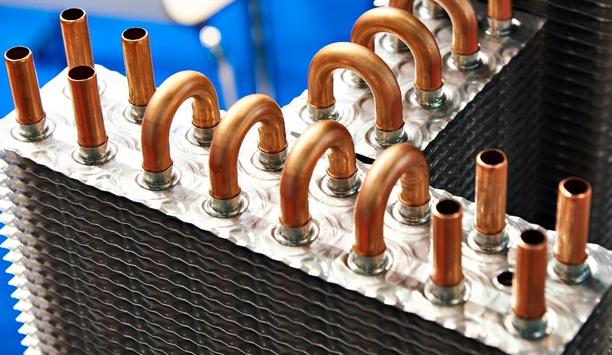
OTS R&D, Inc., in collaboration with the Copper Development Association (CDA), provides design support to optimize copper tube aluminum fin heat exchangers for commercial dehumidification. Problem In collaboration with the Copper Development Association (CDA) and OTS R&D, Inc. (OTS), AprilAire, a manufacturer of dehumidification equipment, they sought to maximize the performance of their products in both standard and low-temperature operating conditions while avoiding frost accumulation on the evaporator. Traditional dehumidifiers often lose efficiency as frost accumulates, leading to disruptions in conditioning and temporary spikes in humidity. Copper tube fin heat exchangers OTS supports innovation and next-generation product development using industry-pioneering software The question was whether small-diameter copper tube fin heat exchangers could maintain or increase efficiency while preventing frost accumulation in these unique operating conditions. OTS is a CDA partner that provides crucial heat transfer and system integration expertise to the industry, specifically in air conditioning, heat pumping, refrigeration, and energy conversion. Having roots with faculty and research at the University of Maryland, OTS supports innovation and next-generation product development using industry-pioneering software. Solution Through extensive research and simulation using the CoilDesigner® tool, the OTS project team explored various heat exchanger designs and airflow rates to identify optimal configurations. The study focused on reducing the outside diameter of the copper tubes from conventional values to 5mm and selecting copper as the tube material. The optimization study considered seven different tube fin geometries, ranging from 5mm OD options to 7.94mm OD tubes. Various parameters Using small-diameter copper tubes (5mm) provides several benefits for heat exchangers and overall advantages Various parameters such as fin density, coil height, number of tubes, circuitry, and airflow rates were analyzed to maximize dehumidification rate, efficiency, and frost avoidance while minimizing material consumption and refrigerant charge. Using small-diameter copper tubes (5mm) provides several benefits for heat exchangers and overall advantages for original equipment manufacturers (OEMs). Energy efficiency Reducing the diameter of copper tubes within coils offers a cost-effective avenue for enhancing system energy efficiency. While alternative methods might bolster system energy efficiency by increasing the number of conventional tubes, this approach incurs penalties such as augmented weight in tube and fin materials and heightened refrigerant volume. Conversely, reducing tube diameter fosters more efficient heat transfer and yields smaller, lighter coils. This reduction in materials can maintain or even enhance heat transfer efficiency while enabling smaller overall product dimensions, facilitating easier storage, transport, and installation, and ultimately reducing the footprint at the point of use. Significant advantage Coils constructed with CTAF or CTCF stand as enduring and reliable solutions within the industry Moreover, small-diameter copper tubes present a significant advantage in reducing refrigerant volume within systems. The diminished internal volume of the coils necessitates less refrigerant to charge, pioneering further benefits in system design, including a notable decrease in overall system weight. Coils constructed with copper tubes and aluminum fins (CTAF) or copper tubes and copper fins (CTCF) stand as enduring and reliable solutions within the industry, setting the standard for corrosion resistance and long-term service life. With a high level of familiarity across the supply chain, from tube suppliers to HVAC/R contractors, the transition to these innovative copper tubes ensures continuity in fabrication, assembly, installation, service, repair, and recyclability processes, maintaining efficiency and reliability throughout. Results After the project, the team identified 13 candidate designs meeting the product requirements, with seven using 5mm OD tubes and six using 7.94mm tubes. The optimized 5mm design showcased significant improvements over conventional designs, with a 5% increase in dehumidification rate and efficiency, a 15% reduction in material mass, and a 60% reduction in internal volume (refrigerant charge). The predicted efficiency at the standard rating condition exceeded the target requirement by 4%. substantial advantages The 5mm condenser variant was approximately 31% less deep in the airflow direction Comparing the 5mm and 7.94mm designs, the former offered substantial advantages regarding material consumption, material cost, and internal volume reduction while maintaining performance, achieving reductions of 42%, 48%, and 50%, respectively. Moreover, the 5mm condenser variant was approximately 31% less deep in the airflow direction, allowing for a larger evaporator depth and surface area. new level of dehumidification performance Cara Martin, CEO of OTS R&D, Inc., shares her insights on the project, stating, "The project utilized advanced simulation tools to identify viable heat exchanger combinations that unlock a new level of dehumidification performance in challenging conditions." "AprilAire will further review the wide range of design options for prototyping and testing, with the expectation that this effort will significantly cut down experimental trial and error in the product development process." commercial dehumidification applications By reducing tube diameter and selecting appropriate materials, manufacturers can achieve higher efficiency In conclusion, optimizing copper tube aluminum fin heat exchangers for commercial dehumidification applications represents a significant advancement in HVAC/R technology. By reducing tube diameter and selecting appropriate materials, manufacturers can achieve higher efficiency, lower material consumption, and improved performance in challenging operating conditions, ultimately enhancing user experience and satisfaction. customized design, simulation, testing, or evaluation Marcus Elmer, CDA Director of Tube and Fittings, adds, “At CDA, we understand that every project is unique and requires specialized guidance and expertise. That's why we work closely with our established partner network to provide customized design, simulation, testing, or evaluation support to OEMs like AprilAire." “By collaborating with CDA and our expert partners,” he continues, “you gain access to a wealth of resources, state-of-the-art facilities, and a deep understanding of the latest trends and technologies.”
Round table discussion

The HVAC industry impacts virtually every aspect of modern life, from our comfort and health to economic productivity and environmental sustainability. However, the HVAC industry is not without its challenges, whether related to people, equipment, regulations, or the economy. We asked our Expert Panel Roundtable: What is the biggest challenge currently facing the HVAC industry?

Installing HVAC equipment is not as simple as plugging in an appliance. Installers often face many hurdles, including complex system design, space constraints, accurate sizing and load calculation, and proper ductwork installation. But what are we forgetting? We asked our Expert Panel Roundtable: What is the most overlooked factor when installing HVAC systems?

Building design and HVAC are interdependent aspects of creating a comfortable, healthy, energy-efficient, and functional indoor environment. How important is collaboration as architects and HVAC engineers seek to ensure that a building's form and function are harmonized with an efficient and effective HVAC system? We asked our Expert Panel Roundtable: How does building design impact HVAC systems – and vice versa?
Products


White papers

Understanding A2L Refrigerants
Download
From A To L: Your A2L Transition Guide
Download
Sealed Connectors: Enhancing HVAC System Performance And Longevity
Download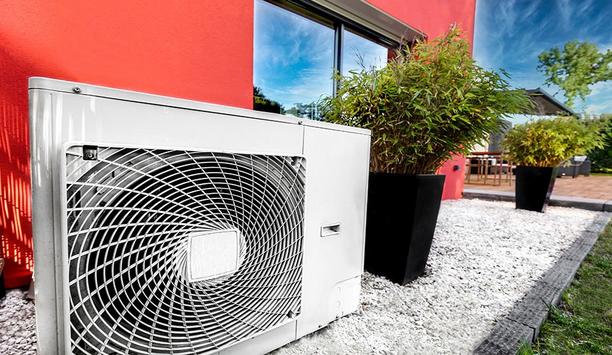
Harness The Heat, Pump Up The Savings
Download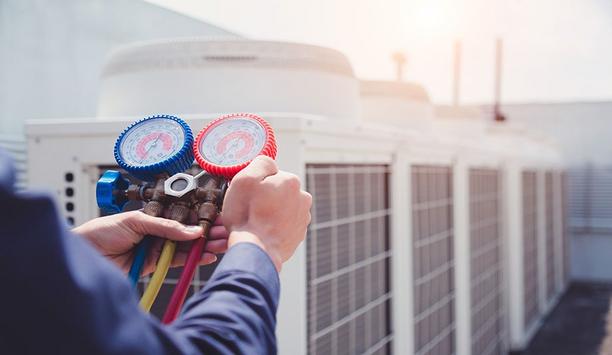
HVAC Systems In Harsh Environments
Download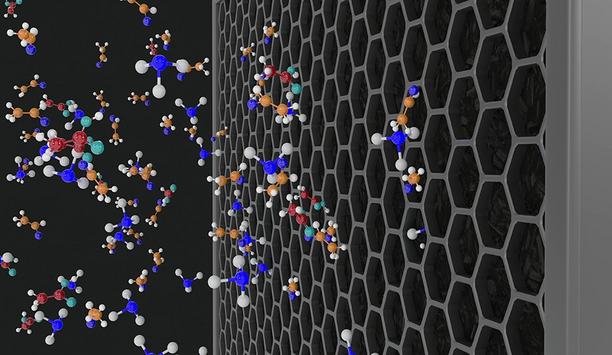
Air-Cleaning And Filtration
Download
Future Proofing Your Building
Download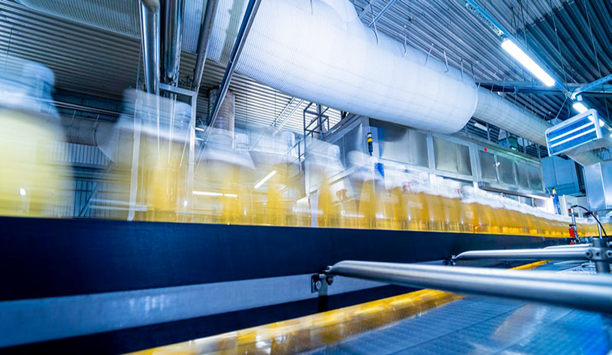
Adopting Low-GWP Refrigerants In Industrial Refrigeration, Heating And Energy Solutions
Download
Hot Gas Defrost Of Low Temperature Refrigeration Evaporators With Natural Refrigerants
Download
Adapt To SNAP: Navigating The EPA's Final Refrigerant Rule
Download
Benefits Of Solstice® ze In Commercial And Industrial Applications
DownloadVideos


Refrigerants: Manufacturers & Suppliers

Safety Certification Of IT Equipment Cooling In Data Centers
Download
The Advantages Of Cooling Tower Retrofits Using EC Fan Arrays
Download
The Water Is Fine: Diving Into Air-To-Water Heat Pumps
Download
Heat Pumps: Expert Insights
Download
The Hidden Energy Drain
Download