Smart Home
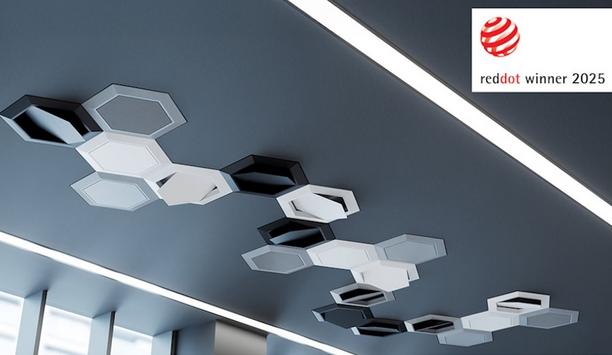
These two Hitachi air conditioning design concepts won the Red Dot Design Concept Awards 2025, including “Best of the Best” award for “airCloset” and Desgin Concept Award for “airHive”. Rather than leaving HVAC idle between cycles, these award-winning concepts weave air conditioning into furniture and architectural features, keeping spaces functional and comfortable all year. integrating vertical vents Closets are large and tall, and they are usually fixed...
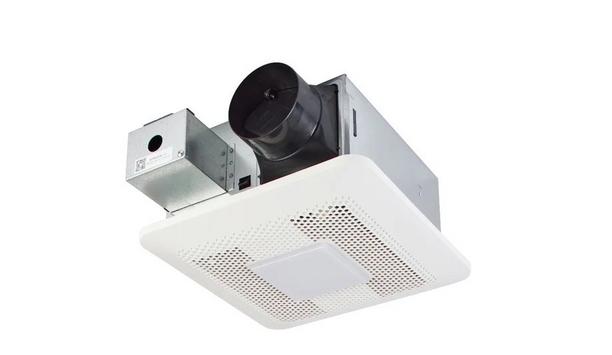
Panasonic, a foremost provider of ventilation and sustainable home comfort solutions, today announces its new Whisper Symphony™ exhaust fan, now available for purchase in stores and online at The Home Depot and Do it Best. Designed for modern homeowners and DIYers, this innovative fan enhances daily bathroom routines by combining Panasonic’s superior ventilation, energy-efficiency, and immersive audio into a single, easy-to-install solution. Features The Whisper Symphony&trad...

Quilt, the smartest way to heat and cool the home, now announced the closing of a $20 million Series B fundraising round, bringing its total funding to $64 million. The round was co-led by Galvanize and Energy Impact Partners (EIP), with participation from Gradient Ventures, Lowercarbon Capital, Incite Ventures, and Alumni Ventures. As demand for Quilt’s heat pump systems continues to grow, this investment will accelerate the company’s commercial expansion across the United States,...
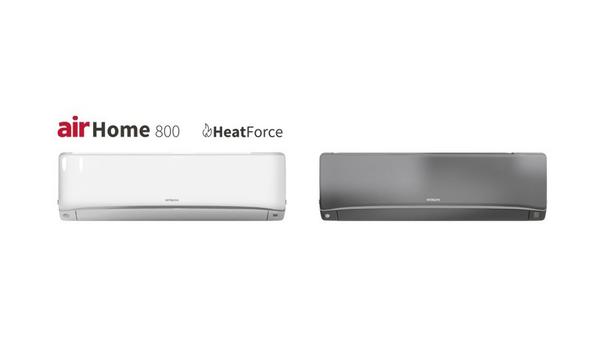
Hitachi Cooling & Heating brand is proud to announce the launch of its new generation of wall-mounted air-conditioning systems, airHome 800 HeatForce. Designed for modern residential living and available in both single- and multi-split configurations, the upgraded range combines contemporary styling with exceptional efficiency and advanced air-quality technologies. High efficiency, even at extreme cold Operating with low-GWP R32 refrigerant and available in capacities from 2.5 to 5kW, air...
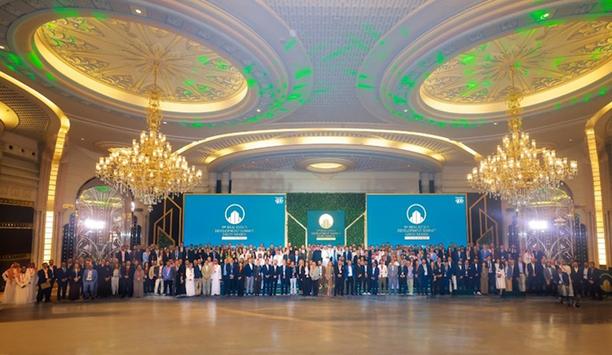
The 19th Real Estate Development Summit Saudi Arabia – Luxury Edition successfully concluded after two days of high-level exchange, strategic collaboration and global networking, bringing together more than 800 leaders, investors, and decision makers shaping the future of the Kingdom’s rapidly evolving built environment. Held under the theme “Together Towards Tomorrow,” the summit showcased the unprecedented transformation underway across Saudi Arabia, where the real est...

Global HVAC technology pioneer LG Electronics is supporting the modernization of America’s aging homes, leveraging its comprehensive suite of unitary (ducted) residential HVAC solutions designed to meet the evolving needs of the housing market. The company’s offerings – from proven electric inverter heat pump solutions and vertical air handling units to all-new gas furnaces – helps address the need for energy-efficient and connected living spaces, providing a bridge betw...
News
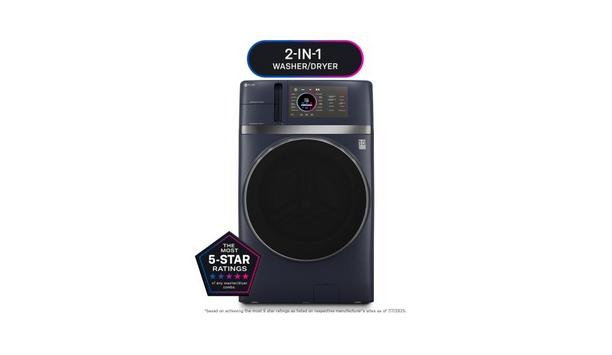
GE Profile is turning laundry into a statement of design and performance with the latest evolution of its award-winning UltraFast Combo with Ventless Heat Pump Technology. Pioneering the way are two striking new finishes—Sapphire Blue and Jade Green—bringing a vibrant, design-forward aesthetic and personality to the laundry space. With a range of color options now available for consumers to choose, these premium finishes were rigorously tested for durability, lighting interaction, and long-term color integrity, ensuring they look as exceptional as they perform. Most connected laundry appliance But color is just the beginning. As GE Profile’s most connected laundry appliance, the UltraFast Combo gets better with every update when connected to Wi-Fi through the SmartHQ app. Now, new and existing owners can unlock five new downloadable cycles designed to further meet real-life laundry needs, including: Kids Wear: Heavy-duty cleaning for tough stains while preserving vibrant colors Hand Wash: Gentle care for delicate items Drain & Spin: Removes excess water before sensor-driven drying Sweat Stains: Extra agitation for stubborn stains King-Sized Comforter: Cold water wash and max spin for faster drying of bulky items Engineered for speed and simplicity Engineered for speed and simplicity, the latest UltraFast Combo can complete a wash and dry cycle in just 90 minutes with the time-saving efficiency of Quick Cycle mode. Warm, high-speed airflow gently removes moisture from garments, drying even large loads quickly with less heat. From king-sized comforters to delicate fabrics, everything goes from start to finish in one machine, virtually eliminating the need to hang dry or transfer clothes between machines for the ultimate one-and-done laundry experience. Latest evolution of the award-winning UltraFast Combo “With expressive new finishes, intelligent updates, and faster cycles, GE Profile continues to redefine the modern laundry experience,” said Lee Lagomarcino, vice president of clothes care at GE Appliances. “The latest evolution of our award-winning UltraFast Combo is a testament to our commitment to innovation, delivering powerful, personalized laundry solutions that enhance everyday living and appliances that only get better over time.” To keep performance at its peak, GE Profile has also introduced smart maintenance alerts, including notifications for Drain Pump and Lint Filter cleaning, plus an Out of Balance Alert to help correct uneven loads and improve dry times.
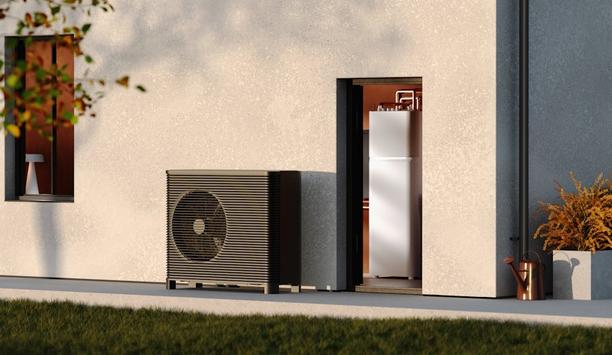
Aira introduces the new Aira Power range, completing the fully integrated Aira Home Energy System, designed to slash energy bills, decarbonize homes and accelerate Europe’s transition to affordable, secure and clean energy. Building on the success of its market-pioneering Aira Heat Pump, Swedish clean energy tech company, Aira, reaches a new milestone with the launch of two new products – the Aira Power Hub (inverter) and Aira Power Store (battery). Connected in one system, the products work seamlessly together with solar panels and the Aira Heat Pump to unlock monthly energy bill savings of over 90%. Complete home energy system Peter Prem, Aira Group CEO comments: “The launch of our complete home energy system marks a major milestone for Aira, as we unlock lower bills for millions with monthly energy bills savings of over 90%.” He adds, “By expanding our vertically integrated model into home energy, we are giving households the tools to generate, store and manage clean power efficiently. Clean home energy solutions are pivotal to Europe’s economic resilience, social well-being and energy independence. Every household that makes the switch becomes part of a bigger movement, driving decarbonization and the much-needed clean energy transition forward.” Aira Power Hub The two new products completing the Aira Home Energy System are the Aira Power Store and Aira Power Hub. The Power Store is the battery of the system, it banks solar generated, or low-cost electricity from the grid, to accommodate household needs. The Power Hub converts solar and stored energy, directing it around the home and unlocking greater potential for increased savings. It plans, forecasts and intelligently balances energy flow between the solar panels, grid, heat pump and battery, ensuring every device and appliance gets the energy it needs, when it needs it. As a modular and scalable system, the products are designed to be an affordable solution that suits a variety of households. Aira Intelligence Powered by Aira Intelligence, the system maintains energy flow throughout the home, optimizing in real time to deliver an efficient, comfortable and cost-effective solution. It learns daily household habits and incorporates intelligent weather control; predictive solar generation; smart tariff integration and hot water management. Displayed in the Aira Home Energy app, consumers can see real-time overview of energy generation, storage and usage, as well as long-term performance and cost savings. End-to-end customer experience Kaj af Kleen, Chief Product and Technology Officer, comments: “Our intelligent products work seamlessly together to offer a robust, fully managed system with one provider and an end-to-end customer experience. The system predicts, optimizes, controls and monitors home energy to maximize savings, comfort and efficiency. People across Europe can now benefit from more control than ever before, without lifting a finger.” Vertically integrated business model With a vertically integrated business model, Aira uniquely manages everything under one roof, including product design, sales, installation, financing and years of continued support with long-term optimization and monitoring. By employing this strategy, Aira provides consumers with a fully integrated home energy system, designed and operated in Europe, and installed and optimized by one provider, which results in a seamless, set-and-forget experience. To increase accessibility for all, Aira offers monthly payment plans and guarantees of up to 15 years, enabling people to confidently invest in a home energy system that lowers bills and increases energy independence. Intelligent home energy system With Aira’s new intelligent home energy system, people have more control to cut monthly bills, reduce reliance on the grid and lock in energy security for years to come. With tangible savings and a guaranteed future-proofed system, adopters aren’t just cutting costs, they are helping rewrite the story of how society powers its future.

Hitachi Cooling & Heating brand is proud to introduce the next-generation models within its airHome air-to-air heat pump range, designed to deliver enhanced comfort, refined design, and expanded functionality: The airHome Multi Pro, an updated fully customizable multi-split heat pump system, engineered for smart, connected climate control across a wide variety of residential and commercial environments. The airHome Floor, a new-generation sleek console unit, crafted for elegant integration and superior comfort in modern living spaces. These models represent the latest evolution of the airHome range, building on its proven performance with advanced features tailored to today’s needs. airHome Multi Pro airHome Multi Pro is a flexible multi-split air-to-air heat pump system designed to meet the needs of both residential and commercial environments. With capacities ranging from 3.6 to 10 kW, a single outdoor unit can support up to 5 indoor units – offering scalable comfort across various spaces. airHome Multi Pro delivers exceptional energy performance, with guaranteed cooling rated up to A+++ and heating up to A++. Inverter technology adjusts power output to demand, reducing energy consumption by up to 30% compared to traditional compressors. Broad selection of indoor units A broad selection of indoor units is available to suit different layouts and preferences: airHome 400, airHome 600 and airHome 800: wall-mounted models with built-in Wi-Fi, energy-saving modes and presence detection. airHome Cassette: Ceiling-mounted cassette units (600 x 600) with built-in humidity sensors, ideal for commercial applications. airHome Floor: Floor-standing units with built-in Wi-Fi and wide airflow and removable feet for flexible positioning. airHome Ducted: ducted systems for discreet, multi-zone control with space-saving installation – including the ultra-compact airHome Ducted Slim (P≤3.5kW). Cleaner air, smarter living Hitachi Cooling & Heating’s airHome range places indoor air quality at the forefront. airHome Multi Pro feature advanced air treatment technologies, including: FrostWash: A self-cleaning heat exchanger that helps prevent and eliminate pollutants Anti-virus filter with Zinc Pyrithione: Targets viruses, bacteria, odors and airborne particles ViroSense Z1: Enhances air purification for improved air quality Aqtiv-Ion: An ionizer that captures and neutralizes airborne particles The units are equipped with integrated Wi-Fi4 and are compatible with the airCloud Go app, allowing users to manage temperature settings remotely via smartphone, tablet or PC. Voice control is available through Google Home and Amazon Alexa, and geolocation technology enables automatic mode switching based on user presence – optimizing comfort and energy use throughout the day. airHome Floor With its curved lines, minimalist white front panel, and flush-mount installation option, the new airHome Floor console boasts a stylish design and integrates seamlessly into contemporary interiors. Suitable for both new builds and renovation projects, the unit provides reliable heating in winter and cooling in summer. airHome Floor is available in three capacities – 2.5, 3.5 and 5 kW – and delivers outstanding performance, with cooling rated up to A+++ and heating up to A++, ensuring year-round comfort while promoting long-term energy savings. Features Its whisper-quiet operation at just 20 dB(A), combined with bottom-up warm air diffusion – which helps prevent air stratification, particularly in rooms with high ceilings – ensures consistent comfort throughout the seasons. Standard features include built-in Wi-Fi, advanced air treatment technologies such as FrostWash, Anti-virus filter, Mould Guard (heat exchanger drying in cooling mode), and Aqtiv-Ion ionizer, along with remote control via the airCloud Go app and an LED-backlit handheld controller.

Resideo Technologies announced the industry-changing Honeywell Home ElitePRO smart thermostat, powered by Pro-IQ services. It delivers the precise comfort and reliability that HVAC contractors demand from Honeywell Home, America’s No. 1 most trusted thermostat brand,1 and goes beyond expectations to provide an intuitive user interface on Resideo's largest touchscreen ever. The new smart thermostat streams live video from compatible doorbells, offers seamless indoor air quality (IAQ) monitoring and control, and is ideal for customers seeking a stylish, smarter, energy-efficient solution. Honeywell Home ElitePRO smart thermostat “Our Honeywell Home ElitePRO smart thermostat is precision engineered to elevate home comfort and integrates smart home and style together in one premium device,” said Pat Tessier, Vice President of Product Development for Honeywell Home and First Alert solutions at Resideo. He adds, “Designed in partnership with our HVAC contractors, our top-of-the-line smart thermostat helps them boost labor efficiency, strengthen customer loyalty and drive leads – transforming every installation into an ongoing customer connection.” Honeywell Home ElitePRO S1200 Smart Thermostat The sleek Honeywell Home ElitePRO smart thermostat helps contractors deliver next-level comfort and convenience. With Resideo's First Alert app, homeowners can set up energy-saving features, manage schedules and add optional Smart Room Sensors. Key features and benefits include: Large, customizable touchscreen: The sleek, five-inch touchscreen enables intuitive temperature programming and customized idle screens that display information the homeowner wants to see – including a five-day weather forecast, digital clocks, and IAQ information – and offers design themes and color combinations to match home décor. Video doorbell streaming and intercom: Homeowners can view live video streams from First Alert or Ring doorbells and speak with visitors directly from the thermostat. IAQ monitoring and control: It’s compatible with a broad range of HVAC equipment and HVAC installers can easily upgrade a home’s IAQ without running additional wires using the equipment interface module. The smart thermostat monitors humidity, tracks volatile organic compounds, and estimates carbon dioxide levels. Intuitive professional installation: Built on the familiar Honeywell Home UWP wall-mounting plate, Honeywell Home ElitePRO smart thermostats are designed for seamless setup using the Resideo Pro App. Available in bold black or classic white models, the ElitePRO smart thermostat supports a wide range of HVAC system configurations, has dual-band WiFi compatibility, is Matter certified, and compatible with Amazon Alexa, Google Assistant and Apple Home for easy voice control. It’s shipping now and will be available through distribution partners in the U.S. and Canada later this month. Resideo Pro-IQ Services The Honeywell Home ElitePRO Smart Thermostat, powered by Pro-IQ services, helps HVAC contractors shift from reactive repairs to proactive, high-value and labor-efficient opportunities, expand their brand reach, and maintain an always-on connection with their customers. “The ElitePRO smart thermostat is a great opportunity to expand control and comfort to my customers,” said Scott Brown, Partner at James Brown Plumbing Heating & Air Conditioning, LLC, adding “I look forward to integrating the insights and capabilities from Pro-IQ services to help identify problems before they become emergencies and build stronger relationships with our homeowners.” Consistent workflows Delivered through the free Resideo Pro App and Pro Portal for easy configuration, Pro-IQ services enables consistent workflows and integration with client relationship management tools. With three levels of subscription service – Pro-IQ Install, Pro-IQ Engage, and Pro-IQ Analyze – it can help HVAC contractors: Streamline labor: One-touch template configuration in the Pro app helps ensure fast installation, drive consistent setup across all jobs and minimize errors. If modifications need to be made after installation, technicians can remotely configure and update in the Pro Portal – without rolling a truck. Increase loyalty: Contractors can display the company logo and contact information on the Honeywell Home ElitePRO smart thermostat’s large touchscreen and the First Alert app to expand brand visibility and enable one-click appointment scheduling for homeowners. Custom messages can also be placed in the app or smart thermostat to align with seasonal campaigns. Generate leads: Contractors can receive custom alerts before a homeowner's HVAC system needs attention and schedule an appointment when it's convenient – enabling proactive service that turns HVAC insights into value. New Pro-IQ services “Our new Pro-IQ services can turn every thermostat installation into an ongoing customer connection for our HVAC contractors, and is a force multiplier for their business,” said Pat Tessier, adding “Pro-IQ services will deliver a powerful growth engine to unlock new revenue streams and accelerate their business.” In addition to the ElitePRO smart thermostat, Pro-IQ services is available on First Alert smart water leak detection solutions, First Alert VX series cameras and Honeywell Home FocusPRO and T Series smart thermostats.

Panasonic, a globally renowned provider of ventilation and sustainable indoor living solutions to the building industry, announced the launch of its Intelli-Balance Elite and Elite Plus+ Series of energy recovery ventilators (ERV). Designed to deliver superior performance throughout the climate spectrum, from extreme cold to hot, humid conditions, these innovative models are engineered to address modern building standards and cater to a diverse range of consumer needs. Engineered for resilience and efficiency “Panasonic carries a legacy of delivering trusted, high-performance ventilation solutions, and the Intelli-Balance Elite series is no exception,” said Leon Van Oostende, Group Sales Manager at Panasonic Eco Systems. He adds, “Engineered for resilience and efficiency, this series offers professionals a reliable, easy-to-install, and code-compliant solution that performs regardless of climate.” New Intelli-Balance Elite series The Intelli-Balance Elite series continuously exchanges stale indoor air with fresh, filtered air Newly designed to deliver year-round performance, the Intelli-Balance Elite series continuously exchanges stale indoor air with fresh, filtered air, recovering energy from the outgoing air to maximize energy efficiency. Now with the ability to function effectively in temperatures as low as -13 degrees Fahrenheit, the new models achieve an impressive 90 percent sensible recovery efficiency (SRE) rating and reduced cubic feet per minute (CFM) loss at static pressure. Each unit meets the latest building standards With compliance in mind, each unit meets the latest building standards, including American Society of Heating, Refrigerating and Air-Conditioning Engineers (ASHRAE) Standard 62.2, while helping to create healthier indoor environments and support long-term energy savings. The new Intelli-Balance series excels where older ERVs previously struggled, effectively exchanging heat while prioritizing efficiency during dramatic outdoor temperature changes, no matter the conditions. Promote optimal air circulation and filtration Ken Nelson, Ventilation Group Sales Manager at Panasonic Eco Systems, said, “The Intelli-Balance Elite series expands our portfolio with advanced, adaptable solutions that promote optimal air circulation and filtration.” He adds, “This new product series reflects our continued commitment to delivering energy-efficient, reliable ventilation that helps create healthier, more comfortable dwelling spaces.” Newly engineered for building professionals The Intelli-Balance Elite series is newly engineered for building professionals seeking a smart investment for single-family homes, multi-family homes, and buildings with code compliance and reliable performance in tight-envelope structures. Builders can enjoy the following features and benefits such as: Flexible Performance Options: Choose from four models with CFM ratings of 110, 120, 140, and 150 cubic feet per minute to suit different project sizes and needs. Outstanding Cold Climate Performance: Delivers superior energy recovery even at -13°F, ensuring optimal performance even in harsh conditions all while lowering energy loads and boosting Home Energy Rating System (HERS) scores. Exceptional Static Pressure Management: Experience minimal CFM loss under static pressure. This means better airflow and energy efficiency leading to satisfied clients and fewer callbacks. Remarkable Water Vapor Rejection: In hot, humid climates Panasonic’s patented Cross-Flow membrane core can reduce inbound moisture loads by as much as 40 percent depending on airflow. Versatile Installation Options: Simplify workflows with one SKU for both regular and mirror installations. Save time and reduce inventory complexity with flexible solutions. Advanced Connectivity: Offer the modern convenience of remote operation with optional Wi-Fi controller and enhance the user experience. Code-Ready Compliance: Advance modern ASHRAE Standard 62.2 while addressing ventilation and moisture management concerns and providing homeowners with filter replacement or system-maintenance notifications. Energy-Smart Homes: Boost building value with high SRE ratings, recovering significant conditioned air to lower HVAC usage and deliver long-term energy savings.

Q-PAC, a pioneer in the design and manufacturing of advanced commercial HVAC fan systems, announces its new annual summit, FLOW, taking place on October 9, 2025, at the Q-PAC Factory near St. Augustine, Florida, USA. Designed for those who challenge convention and seek smarter ways to move air, FLOW brings together forward-thinkers, problem-solvers, and industry pioneers for a day of real conversations between users and designers, practical technical insights, and hands-on access to future products and developments. FLOW FLOW offers these forward-thinkers an inside look at the Q-PAC philosophy FLOW is for the doers and the decision-makers. Consulting engineers, air handler OEMs, manufacturers' representatives, retrofit contractors, and commercial building professionals who see themselves as not just participants in the commercial air handling industry, but as drivers of its next chapter. Created to break away from the noise and traditional trade show format, FLOW offers these forward-thinkers an inside look at the Q-PAC philosophy and its application in the field. It is an opportunity to experience the company’s commitment to engineering excellence and problem-solving for facility teams from the place where Q-PAC’s ideas are built into reality. FLOW facilitates candid conversations about real-world experiences and the exchange of practical solutions without the marketing spin. Engage directly with guest speakers Throughout the day, participants will engage directly with guest speakers who have designed, built, and refined systems in the real world, openly sharing both their successes and the lessons learned from challenges. Attendees can look forward to a keynote from an AMCA International guest speaker, Shruti Kohli-Bhargava, a first look at their custom-designed 270 Airflow Tunnel, and exclusive back-of-house updates from the Q-PAC R&D team, all designed to spark learning and conversation throughout the day. FLOW 2025 FLOW 2025 is more than an event; it is a gathering of the HVAC community and those who align with its forward-thinking culture. By working side by side with the professional HVAC community, Q-PAC is creating a space where ideas can be exchanged, assumptions can be challenged, and a shared vision for the future of commercial airflow can take shape.

Expert Commentary

As utility prices climb and extreme weather becomes more common, homeowners are increasingly looking for ways to improve comfort without breaking the bank. One solution that’s gaining traction is the all-electric, all-climate heat pump. As a fourth-generation HVAC contractor, I’ve seen firsthand how high-performing all-climate heat pumps provide efficient, year-round home comfort and financial savings. These systems are the new standard for the HVAC industry, and here’s why. Reliable, year-round comfort Unlike conventional HVAC systems with fixed-speed compressors that run at full power regardless of need In areas like northeastern Pennsylvania, where summers are hot and humid, all-climate heat pump systems can be used to deliver HVAC performance that stands up to even the harshest conditions. Unlike conventional HVAC systems with fixed-speed compressors that run at full power regardless of need, all-climate heat pumps with inverter-driven compressors start low and slow before ramping up or down to match demand. It turns on, pulls the precise amount of power it needs to be able to create cooling or heating, and then it ramps up as needed based on temperatures inside the house and outside. This precision helps reduce energy usage and utility costs, a key benefit with prices of utilities climbing across the United States. Inverter technology Inverter technology maintains its efficiency even during the coldest months, as demonstrated during this past winter's particularly harsh conditions. One of our customers shared that on a day when it was -19°F, with an even lower wind chill, his Mitsubishi Electric ducted, all-climate heat pump performed flawlessly, keeping his home warm and comfortable. Even during extreme heat and cold, we are seeing these systems perform efficiently, and I encourage contractors to continue to teach homeowners about the benefits. Flexible zoning and smart features High-performance ductless solutions ensure they stay comfy year-round without requiring modifications Another beneficial feature of all-climate heat pumps is zoning. Whole-home ductless mini-split systems can give homeowners the ability to set different temperatures in different rooms, making them perfect for families with varying comfort preferences and for improving efficiency in less-used spaces. All-climate heat pumps can also be used for areas where conventional systems struggle to provide adequate climate control, such as pole barns, she-sheds, sunrooms, or above-garage rooms. High-performance ductless solutions ensure they stay comfortable year-round without requiring major modifications to the home’s existing HVAC system. All-climate heat pumps Many all-climate heat pumps are equipped with smart features designed for optimal energy efficiency and comfort. For example, sensors in Mitsubishi Electric systems we install and service can detect occupancy along with cold and hot spots in specific rooms, automatically adjusting airflow and temperature. When no one is in the room, the sensors can switch the system into an energy-saving mode. Homeowners with certain systems can also purposefully put them into Econo Cool mode if they’re not going to be in a certain space. Educating homeowners and building trust Many homeowners have outdated misconceptions that these systems are underpowered The rural area we serve includes many homes that still rely on oil or electric baseboard heating, with a smaller number using propane or gas. Since many people tend to stick with what they know, it’s especially important to educate them on the benefits of all-climate heat pumps. Many homeowners have outdated misconceptions that these systems are underpowered or only effective in mild climates. Overcoming these beliefs starts with homeowner awareness and trust. Important for contractors to teach homeowners That’s why it is so important for contractors to teach homeowners about the systems and even include case studies on their websites that demonstrate favorable results. Contractors should make a point to explain technical metrics in ways that are easy to digest and understand. For instance, tell homeowners about the coefficient of performance (COP), explaining that electric baseboards have a COP of 1.0 − meaning you get one unit of heat for every dollar spent. Some of the all-climate heat pumps we install and service can reach COPs of 2.1 to 2.2 even in freezing temperatures. The keys to success in a changing HVAC landscape HVAC installations that once took five days with conventional ducted systems now take one or two days with modern, all-climate heat pumps, enabling more jobs and better margins. Many energy-efficient all-climate heat pump systems are also eligible for tax credits and utility rebates, which is another win. Because I want our industry to evolve, I offer three key pieces of advice to my fellow contractors: Trust in all-climate heat pump systems − proven, reliable, and engineered to keep occupants comfortable through summer highs and winter lows. Prioritize training and education, not just for yourself but for your team and clients as well. Well-informed contractors build trust and ensure every installation is done right. Recognize that all-climate heat pumps aren’t just the future − they’re here now, reshaping the way we think about HVAC. All-climate heat pumps are more than a passing trend. With the right knowledge, support, and commitment, they represent a smarter, more efficient path forward for contractors and homeowners alike.

I remember Dr. Dave Bowman from Kubrick's "2001: A Space Odyssey" commanding HAL 9000 to open the pod bay doors, and HAL chillingly responds, "I'm sorry, Dave. I'm afraid I can't do that." Fortunately, unlike the fictional HAL," ChatGPT and other GenAI tools remain compliant and helpful, far from refusing commands or leaving us stranded in space. In the rapidly evolving landscape of technology, artificial intelligence (AI) should play a pivotal role in transforming various aspects of our daily lives, using climate tech. One significant domain where AI should make substantial strides is in the realm of smart homes. With the advent of Generative AI (GenAI), the capabilities and possibilities for enhancing smart homes can reach unprecedented levels. New level of personalization Machine learning algorithms can analyze user behavior over time, learning patterns and anticipating needs GenAI brings a new level of personalization to smart homes by understanding and adapting to individual preferences. Machine learning algorithms can analyze user behavior over time, learning patterns and anticipating needs. This allows for the creation of highly personalized automation systems that can adjust lighting, temperature, music, and other home settings based on the occupant's habits and preferences. For example, GenAI can learn when occupants typically wake up and adjust the thermostat and lighting accordingly. It can also integrate with other smart devices to streamline daily routines, such as brewing coffee when it senses the user waking up or adjusting the home security system based on historical usage patterns. Landscape of smart home technology In an era defined by the pressing need to address climate change, one of the most significant contributors to energy consumption is often overlooked—the ubiquitous air conditioner (AC). The key to addressing this issue lies in the synergy of AI and cutting-edge technology. In the ever-evolving landscape of smart home technology, climate tech startups must disrupt the dated and non-smart devices of air conditioners and heat pumps to reduce CO2 emissions and the loads on power grids. The key to addressing this issue lies in the synergy of AI and cutting-edge technology In mid-January 2024, Sensibo, the pioneering Climate Tech IoT company combining smart heating and cooling devices with a more sustainable world, took a giant leap forward with the integration of an advanced AI Assistant powered by OpenAI's ChatGPT. This innovation represents a significant advancement in Climate Tech IoT, specifically in the realm of smart heating and cooling devices. I’d like to exemplify how Sensibo utilizes Large Language Models (LLMs) to enhance user experiences, conserve energy, and optimize HVAC (Heating, Ventilation, and Air Conditioning) performance. Understanding the AI Assistant's Capabilities Voice-activated assistants have become a staple in smart homes, and GenAI can significantly enhance their capabilities. Natural Language Processing (NLP) algorithms powered by GenAI enable more nuanced and context-aware interactions. This means users can communicate with their smart homes in a more natural and conversational manner. The integration of GenAI with voice assistants allows for improved comprehension of user commands, pioneering to more accurate responses. Additionally, GenAI can learn from user feedback and adapt over time, making the voice-controlled interface more intuitive and user-friendly. Sensibo AI Assistant Sensibo's AI Assistant is planned to understand complex user bids and hire in telling talks The Sensibo AI Assistant is not just another voice-activated tool. Unlike traditional voice assistants with predefined commands, Sensibo's AI Assistant is designed to understand complex user requests and engage in meaningful conversations. This includes responding to simple commands like "I'm cold" by adjusting the heating to a desired temperature. Moreover, it can handle more intricate tasks, such as creating schedules based on weather forecasts and energy considerations. This functionality not only adds a layer of interactivity but also empowers users to seamlessly integrate AI capabilities into their daily heating and cooling routines. The advanced system goes beyond mere understanding; it empowers the AI Assistant to take direct actions with connected HVAC systems. Integration Timeline: ChatGPT in Sensibo Sensibo raises an enhanced AI assistant, leveraging the capabilities of the ChatGPT The journey began in 2023 when ChatGPT was initially integrated into Sensibo. Initially, the focus was on offering suggested recommendations based on user behavior patterns. This included automated AC schedules tailored to individual preferences and personalized Climate React recommendations. Building upon this foundation, Sensibo now introduces an enhanced AI assistant, leveraging the capabilities of the ChatGPT Large Language Model. Leveraging AI for Energy Efficiency Traditional heating and cooling devices are notorious for their inefficiency, contributing significantly to global energy consumption and CO2 emissions. OpenAI's innovative technology, driven by the AI Assistant into smart HVAC, aims to revolutionize how users manage their heating and cooling systems. The integration of AI allows users to issue commands to the cloud, which, in turn, controls HVAC devices within their premises. This goes beyond understanding and processing user requests; it translates into taking direct actions that optimize energy consumption. The potential for energy savings is up to 40%, showcasing the transformative impact of AI on AC performance and overall energy bills. The integration of the ChatGPT Large Language Model into AI Assistants marks a significant stride in smart climate technology. The marriage of advanced AI capabilities with climate control systems showcases the potential for sustainable living through energy-efficient HVAC management. As the AI revolution deepens, climate tech companies must embrace these new technologies and research and develop how they can benefit the users and our climate.
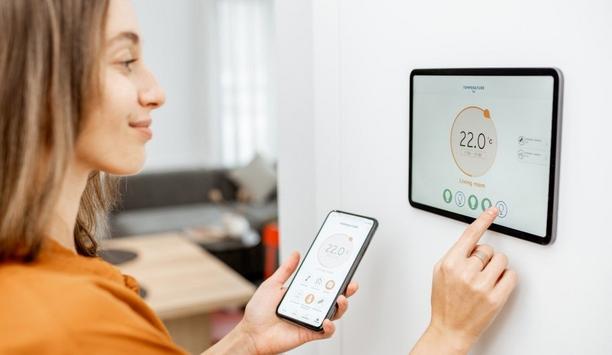
Using air conditioners and electric fans to stay cool accounts for nearly 20% of the total electricity used in buildings around the world, according to a report from the International Energy Agency. hybrid work model As a unique mix of key factors, such as the adoption of the hybrid work model and escalating heatwaves in certain regions of the United States keep people indoors for longer periods, this 20% share represents an increasingly costly line item on household budgets. Those within the market are responding by seeking out products that can help them control climates more efficiently. Smart thermostats and inverters Markets for smart thermostats and inverter HVAC controllers are clear illustrations of in-demand technology Given what the industry is experiencing, the markets for smart thermostats and inverter HVAC controllers, which are clear illustrations of in-demand technology, are experiencing growth. But as they do, are the technologies growing together or growing apart? Rapid Growth in Both Markets Discounts and incentives The smart thermostat market has expanded steadily in recent years, with that growth projected to continue through the 2020s in part due to savings of up to 8% on energy bills homeowners can recoup with the best smart thermostats. The sleek design and digital interface of modern smart thermostats, coupled with the increased control capabilities provided by mobile applications, seem to offer homeowners unprecedented control over their indoor climate. Moreover, the growing popularity of rebate programs providing discounts and incentives is making these solutions even more attractive. Real-time heating/cooling needs with Inverter/VRF Inverter/VRF HVAC systems are capable of adjusting the frequency of the compressor precisely Concurrently, the market for Inverter/VRF HVAC control systems is also expanding. It is estimated that the global Inverter/VRF market will grow from USD $17.6 billion (2020) to $31.9 billion (2025) at a CAGR of 12.7%, with the US identified as the fastest-growing Inverter/VRF market. Unlike their single-speed system counterparts which operate on an on/off or all-or-nothing dichotomy, Inverter/VRF HVAC systems are capable of adjusting the frequency of the compressor to precisely match the real-time heating/cooling needs of an environment. By regulating the fan speed and airflow, Inverter/VRF systems are extremely efficient at keeping an environment at a precisely set temperature. Enhanced HVAC system performance or not? Given the rapidly expanding markets, one might think that the easy interface of the current smartest thermostats and the operational efficiency of the best Inverter/VRF HVAC controllers could combine to create an exceptionally comfortable and cost-efficient experience for homeowners, and an easily interoperable install for HVAC pros. However, the question remains: have these devices genuinely enhanced HVAC system performance in terms of accuracy, consistency, and efficiency? More importantly, have they made living spaces more comfortable? Have these growing markets and technological advancements made life easier for industry pros? Persistent and pervasive incompatibility This communication breakdown leads to issues such as set temperature variance, inefficient operation Many are surprised to discover that the response to these important queries is frequently negative and “no”, due to a persistent and pervasive incompatibility between smart thermostats and Inverter/ VRF HVAC controllers. It is this incompatibility that ultimately negates the advanced features and intelligence of each product. This communication breakdown leads to issues such as set temperature variance, inefficient operation, and energy consumption. Confronting the Critical Interoperability Challenges Ideally, the current smart thermostats, and the benefits they bring such as user-friendly interfaces, would integrate flawlessly with high-efficiency Inverter/VRF HVAC systems, enhancing comfort and cost-efficiency while simplifying installation for HVAC professionals. Unfortunately, this ideal scenario is elusive. The core problem stems from these technologies developing and evolving separately, and in isolated environments. Inadequate two-way communication While individual support for certain protocols may exist, they fail to communicate complex instructions effectively While individual support for certain protocols may exist, they fail to communicate complex instructions effectively due to inadequate two-way communication. When a smart thermostat is improperly paired with an intelligent Inverter/VRF HVAC system, the resulting communication breakdown forces the HVAC system to revert back to single-speed operations, completely undermining its full potential, and sophisticated features. Inefficiency and discomfort Given its prevalence, what does this incompatibility mean for HVAC professionals and their clients? Consider a scenario where a user desires to adjust the indoor temperature to 68°F via a smart thermostat. Since the Inverter/VRF unit can only be adjusted by means of its own communication protocol, and the output of the smart thermostat is a dry contact closure, the 68°F would never be properly relayed to the air conditioner. In other words, the smart thermostat does not provide information on how hard the system is working or the deviation of the current temperature from the desired set point. As a result, the system cannot modulate its output to precisely match the temperature needs of an environment, and the air handling unit within the system is forced to always operate at high speeds creating inefficiency and discomfort. On-and-off mode Homeowners miss out on the benefits of their investment, and installers find themselves in the predicament Moreover, this style of operation is quite noisy, as the HVAC system drones on at full capacity every time it is reactivated. This on-and-off mode of operation consumes more energy, comparable to stop-and-start gas-guzzling city driving versus smooth highway cruising. Both homeowners and installers bear the brunt of these drawbacks, homeowners miss out on the benefits of their investment, and installers find themselves in the predicament of either explaining this intricate issue or spending valuable time troubleshooting. What Can Be Done to Address Incompatibility? While this convergence of technology and home comfort presents significant potential and profound challenges, this situation is not without a solution. The industry’s most advanced smart thermostats and efficient Inverter/VRF HVAC controllers both possess impressive capabilities, but the key to success lies in improving their ability to fluently exchange commands and information. Translator between smart thermostat and Inverter/VRF These remarkable devices contain the unit's protocols, deftly translating the commands of the smart thermostat Thankfully, there are solutions within the market from industry pioneers that act as a "translator" between the smart thermostat and the Inverter/VRF unit. These remarkable devices contain the unit's protocols, deftly translating the commands of the smart thermostat, creating a seamless conduit of communication. Enhancing interoperability Enhancing interoperability is a prevailing trend across the smart home sector, and it is imperative the HVAC industry works to align with this trend. By embracing such changes, HVAC professionals can offer unparalleled value and functionality to their clients while simultaneously reducing installation complexities. This paradigm shift offers a unique opportunity to alleviate their challenges while providing customers with extraordinary value and performance from their HVAC systems.
Editor's Note
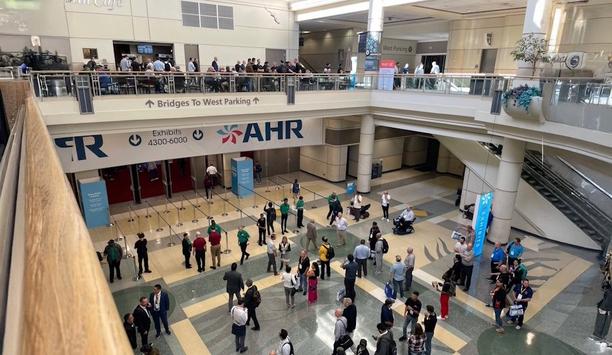
The HVAC Industry gathered in Orlando for AHR Expo 2025, focusing on the latest advancements in technology. Attendees included contractors, manufacturers, engineers, system design professionals, facility managers, architects, wholesalers, and distributors. This year’s expo highlighted game-changing innovations, regulatory shifts, and emerging trends designed to enhance efficiency, sustainability, and connectivity. For HVAC professionals, these developments translate into practical solutions that improve system performance, optimize energy use, and simplify compliance with evolving industry standards. The Next Phase of Refrigerant Transition The transition to A2L refrigerants is a dominant theme at this year’s expo, with major players such as Arkema, Chemours, LG Electronics, Rheem, Daikin, and others showcasing the latest refrigerants and equipment solutions. Following the deadline of Jan. 1, 2025, the shift from R-410A to R-32 and R-454B is well underway, with 80% of manufacturers opting for R-454B. While concerns about flammability persist, experts emphasize that proper training and system design can mitigate risks. LG Electronics' full product line Some OEMs opted for R-454B as an option that is closer to a “drop-in” solution Some OEMs opted for R-454B as an option that is closer to a “drop-in” solution. Daikin was among the manufacturers to go all-in on R-32, which required a complete redesign of product components, ultimately pioneering to more efficient, cost-effective systems, according to the company. LG Electronics' full product line now uses R-32 refrigerant, and they started shipping products in December. All R-410A equipment will be gone by the end of Q1. variety of products on R-454B refrigerant Rheem announced their 100-year anniversary, and a new tagline, "Engineered for Life." They say the trend is toward side-discharge heat pumps, although the industry needs a mix of both. They had a variety of products on display that use R-454B refrigerant. Attendees at AHR Expo 2025 came away with an understanding that refrigerant regulations and selecting compatible equipment will be crucial for ensuring smooth transitions in commercial and residential applications. Intelligent Building Automation and Controls Smart HVAC technology is revolutionizing building control, with AI-driven automation Smart HVAC technology is revolutionizing building management, with AI-driven automation, IoT connectivity, and remote monitoring taking center stage. Companies like Distech Controls and Schneider Electric are introducing IP-based controllers that integrate seamlessly with existing building management systems. Belimo’s intelligent butterfly valve and Delta’s Node-RED Programming with built-in Python support, among other products, are making automation more powerful and user-friendly. Copeland’s Sensi Touch 2 smart thermostat Copeland’s Sensi Touch 2 smart thermostat and Sensi equipment interface module (EIM) can eliminate the need to pull additional wires during installation. The system is weatherproof, indoor, or outdoor, and communicates using radio frequency (RF). AHR Expo 2025 made a strong case that investing in smart controls will improve operational efficiency, reduce downtime, and enable predictive maintenance. Hydronic Systems for Data Center Cooling One major player is Bell & Gossett/Xylem, whose hydronic cooling systems target data center market The rise of data center cooling solutions was another recurring theme at AHR. One prominent player is Bell & Gossett/Xylem, whose hydronic cooling systems target the data center market. The company’s e-1531X and e-1532X smart pumps offer enhanced energy efficiency and a larger "efficiency island." These systems are designed to meet the growing demand for sustainable data center cooling, providing a net-zero roadmap. As data center energy consumption rises, hydronic solutions offer a scalable, efficient approach to thermal management. Heat Pumps Expand Capabilities and Market Reach Heat pumps continue to dominate as a top energy-efficient alternative for commercial and residential applications. Companies such as Danfoss, Mitsubishi, and Samsung are pushing the boundaries with heat pumps that operate in extreme temperatures. Danfoss is progressing forward related to four application areas at AHR 2025--heat pumps, data centers, RTU/DOAS, and retail/refrigeration. Emphasis is on lower emissions and better energy efficiency. Midea drew a lot of attention at AHR 2025, including modular air handler Midea drew a lot of attention at AHR 2025, including their modular air handler – the EVOX G³ – that breaks down into three pieces for easy movement and installation in any of six configurations. They are also opening showrooms throughout the country so consumers and contractors can see and touch the products. Integration with renewable energy sources Johnson Controls-Hitachi mini-splits have a self-cleaning feature called FrostWash Johnson Controls-Hitachi Air Conditioning’s Hitachi mini-splits have a self-cleaning feature called "FrostWash;" they intentionally build a frost layer on the coil so the fine particulates can be captured and then melted away, thus avoiding mold and other contaminants. It can be used in lieu of UV light, which damages plastics. The heat pump market is growing rapidly, and advancements in low-temperature performance and integration with renewable energy sources will drive adoption. The Drive Toward Sustainability Sustainability is a recurring theme at the expo, with manufacturers prioritizing energy-efficient equipment, smart automation, and low-GWP refrigerants. Companies like Lennox, and Rheem are launching highly efficient packaged rooftop units and unitary heat pump systems. Grundfos’s distributed pumping technology and Ziehl-Abegg’s ZAcore intelligent control platform further demonstrate the industry's push toward lower energy consumption and minimal environmental impact. Investing in sustainable HVAC technologies Availability is paramount, and they are opening a new factory in Mexico Lennox is serving the "emergency replacement" market for HVAC equipment with their Xion line. Availability is paramount, and they are opening a new factory in Mexico. Telling the "story" of humidification at AHR 2025, Condair has products for any vertical. They say more education and awareness are needed on the value of humidification. As regulations tighten and demand for green building solutions rises, investing in sustainable HVAC technologies will be critical for long-term success. Smarter, Cleaner, and More Efficient AHR Expo 2025 underscores the industry's shift toward smarter, cleaner, and more efficient HVAC solutions. Whether it’s refrigerant transitions, intelligent automation, or advanced heat pump technology, staying ahead of these trends will help HVAC professionals deliver superior performance while meeting regulatory requirements. The innovations showcased in Orlando set the stage for a future where HVAC systems are not only more efficient and environmentally friendly but also easier to manage and integrate into modern buildings.

An expansive construction boom is underway in Saudi Arabia, amplified by the Saudi Vision 2030 initiative promoting global engagement, enhanced quality of life, and economic diversification beyond petroleum. Mega-projects pioneering the way include The Line, a linear smart city that is only 200 meters (220 yards) wide, towers 500 meters (550 yards) above sea level, and stretches 170 kilometers (105 miles) from the Neom 26,500-square-kilometer (10,200 sq. miles) urban area across desert valleys to the Red Sea. sports and tourism investment An unprecedented investment also includes sports and tourism and has attracted the attention of major players in the construction industry, who are gathering at the Big 5 Construct Saudi exhibition in Riyadh. The event enables attendees to connect with government representatives and other visitors involved in Saudi Arabia’s gigantic construction projects. HVAC systems HVAC systems play a major role in the construction boom, including the construction of new district cooling plants Given the hot climate, HVAC systems play a major role in the construction boom, including the construction of new district cooling plants and an enormous number of data centers, which require extensive cooling systems to operate. HVAC R Expo is one of the “Big 5” categories at the exhibition, enabling companies access to top contractors, project managers, distributors, and engineers involved in growth opportunities across the Middle East, Africa, and South Asia. Victaulic’s grooved solutions Victaulic, the mechanical pipe joining specialist, is a major supplier playing a role in the Saudi expansion, which also includes a future Vision 2040 plan that will begin in 2027. Active in the Saudi market for 25 years, Victaulic’s grooved solutions are used throughout the burgeoning Saudi construction industry, including in the commercial, fire protection, water, oil and gas, and mining sectors. multitude of applications Victaulic’s prefabrication and modularization services accelerate the installation process even further In the HVAC sector specifically, Victaulic solutions serve a multitude of applications from district cooling to data centers to cooling systems for large skyscrapers. Victaulic’s grooved couplings can be installed quicker than traditional welded or flanged joints and without specialist labor. By reducing the work carried out on the job site, Victaulic’s prefabrication and modularization services accelerate the installation process even further. This is important for keeping up with the fast pace of construction projects in Saudi Arabia while ensuring the highest quality and reliability. Sustainability Sustainability is another priority for Vision 2030 projects in the Kingdom. Because there is no welding required to join pipes with Victaulic’s technology, energy consumption and emissions are significantly reduced during the installation process. The couplings themselves are made from 98% recycled content in electric induction furnaces that emit 85% less CO2 per ton than a traditional blast equivalent. And they are infinitely reconfigurable, reusable, and recyclable as buildings are extended or repurposed in the future. one-stop solution provider Cooling such a tall building involves multiple chiller stations connected with building riser solutions (pipes) At the Big 5 event, Victaulic aims to showcase its abilities as a one-stop solution provider for pipe joining. However, given the raft of high-rise construction in Saudi Arabia, particularly in Riyadh and Jeddah, cooling systems for tall buildings will naturally be in focus. For example, the Jeddah Tower, currently under construction, will be 1 kilometer (3,280 feet) tall and become the tallest building in the world when it is completed. Cooling such a tall building involves multiple chiller stations connected with building riser solutions (pipes) that run the entire span of the building. use of expansion joints Traditionally, in a tall building, thermal expansion and contraction require the use of expansion joints that accommodate the impact of changing temperatures on the pipes. Victaulic’s couplings, however, are inherently flexible to a degree, which eliminates the need for space-consuming expansion loops or expansion joints that can fatigue over time. This improves the reliability of the system as well as keeping shafts as narrow as possible to maximize sellable floor space. investment focus Continuing investment by banks and trust funds in key Saudi projects encourages Victaulic Continuing investment by banks and trust funds in key Saudi projects encourages Victaulic to continue its commitment to the region. “This region has committed to continuous investment,” says Zeyd Ammoura, Victaulic Division Manager for the Middle East, Africa, and Turkey. “These projects translate into a massive need for products, and they have a vision as more investment focuses on the region. Our vision is to walk parallel hand-in-hand with the Saudi 2030 vision.” Reason for Big 5 exhibition participation “They need a lot of data centers, and they need a lot of district cooling plants,” adds Ammoura, “so that's also something that is getting a lot of our attention. And that's one of the major reasons we are going to be participating in the Big 5 exhibition.” While historically population centers in Saudi Arabia were mostly concentrated, the new vision includes development throughout the large country including areas where infrastructure did not previously exist and must be created. Thousands of new cooling systems will be needed for the new buildings, data centers, stadiums, and other facilities. Infrastructure development Investment is also being made to expand the infrastructure to accommodate future waves of construction In addition to near-term construction projects, investment is also being made to expand the infrastructure to accommodate future waves of construction. “They are building now to serve expanded projects in the future,” says Ammoura. “Saudi Arabia is our top priority for the next five to 10 years in the region.” Air conditioning (AC) usage A stadium, planned as part of The Line, will host the 2029 Asian Winter Games, the 2034 FIFA World Cup, and other big events. With scorching summers and limited natural cooling, Saudi Arabia has the highest air conditioning (AC) usage globally. This intense cooling demand accounts for nearly 50% of the country's annual electricity consumption, reaching 70% during peak periods. These factors drive the need for district cooling systems, which distribute cooling capacity in the form of chilled water or other medium from a central source to multiple buildings through a network of underground pipes for use in space and process cooling. Reducing fossil fuel use Victaulic is furnishing a large exhibition booth at the Big 5 event to highlight their technical solutions Saudi Arabia is seeking to reduce its dependence on fossil fuels for energy production, and district cooling systems can be powered by renewable energy sources like solar, further contributing to sustainability. In addition to promoting its profile at Big 5 Construct Saudi, Victaulic is increasing its number of local employees and is looking into opening a local facility in the area to support the big growth in business. Victaulic is furnishing a large exhibition booth at the Big 5 event to highlight their technical solutions. piping and flow control systems Ammoura says that Victaulic’s capabilities expand beyond the manufacture of piping and flow control systems. The company also pledges to be a delivery partner and engineering company that builds solutions. “We help to design and optimize the project and help to build better construction,” says Ammoura. Victaulic has participated in many Saudi district cooling plants so far and plans to continue to be a part of building engineering and construction capacity. BIM (building information modeling) Victaulic utilizes BIM to provide 3D visualization of systems before they are built and installed Victaulic utilizes BIM (building information modeling) to provide 3D visualization of systems before they are built and installed. The company’s virtual design and construction department works with companies and allows customers to “walk through a project” virtually and optimize design and innovation, thus taking out the guesswork before a needed change becomes overly expensive and delays the project. reassurance and reliability “The challenges in any project cycle, regardless of scale, means owners, general contractors, and construction teams require reassurance and reliability from designated partners, and Victaulic has expanded offerings to become a comprehensive one-stop solutions provider, including design, fabrication, spooling, and quality control." "We are committed to being a partner for our customers and contributing to Saudi Arabia’s construction boom as efficiently, reliably, and sustainably as possible,” Ammoura says.
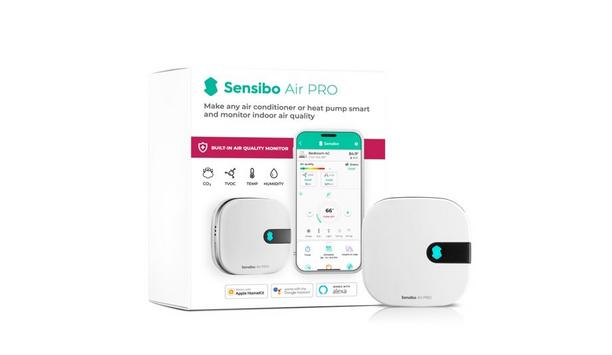
Data-driven control of centralized home and building HVAC systems is helping to minimize energy usage, lessen sustainability concerns, and provide greater levels of comfort for lower costs. However, room air conditioners are globally the fastest growing segment, each operating independently with the aid of a remote control. How can the lessons and capabilities of data-driven control systems be applied to the world of room air conditioners? Sensibo is looking to do just that. Sensibo aims to be the brains of an indoor climate system, using data to provide the best comfort, energy efficiency and air quality to every home and office. The company’s systems connect to ACs and may be remote-controlled via a mobile app, along with full integration with Google Assistant, Alexa, Siri, and Apple HomeKit. HVAC systems The backgrounds of Sensibo founders Ran Roth and Omer Inbar are not in the HVAC market. Coming from the world of data and artificial intelligence (AI), they were looking for an industry that could benefit from data more than it was. Constituting a quarter to a third of the energy used by humanity and representing substantial sustainability challenges, the HVAC market had the potential to benefit greatly from an approach using data, computational power, and machine learning. Computational power to leverage the data points into knowledge of how to control the HVAC systems In fact, Ran Roth, Sensibo’s CEO and co-founder, says there were two major elements previously missing from how HVAC systems were controlled. The missing elements were data points, provided by various sensors and other information, and computational power to leverage the data points into knowledge of how to control the HVAC systems. “The combination of computation power in the cloud and more data from systems can save a lot of energy, 20% on average,” says Roth. Sensibo control systems Emerging control systems such as Nest, Ecobee, and Emerson’s Sensi provide high levels of control for centralized HVAC systems, but what about the 87% of systems that use room air conditioners? How can new technologies address this fastest-growing market segment? Sensibo’s low-power solution controls any room air conditioner that uses a remote control and is among the easiest systems to install for do-it-yourself homeowners. Some 99% of users install the units themselves. Sensibo control systems communicate using the infrared remote-control protocols of the 30,000 or so available models of room air conditioners. The company mapped out more than 1,000 protocols used by various models, and “reverse-engineered” them to be controlled by the system, a process that took about three years. The technology is also compatible with variable refrigerant flow (VRF) and mini-split ductless systems – basically any system that uses a remote control. Sensibo’s mobile application Sensibo’s mobile application suggests recommendations based on a user’s behavior patterns In the area of artificial intelligence (AI), Sensibo recently integrated OpenAI’s ChatGPT into its smart AC products. The advanced language model uses a deep learning architecture called transformers. For the first stage of integration, Sensibo’s mobile application suggests recommendations based on a user’s behavior patterns, such as an automated AC schedule based on the customer behavior of the user and climate react personal recommendations. “Since we come from the field of AI, we are very excited about the recent developments (regarding ChatGPT),” says Roth. “There is a lot of hype, but there are also results beyond the hype. We were amazed by what it could do.” Traditional approaches Sensibo is using the new technology to fine-tune products and to improve how they process results, with more accuracy and better cost-effectiveness. “With Chat GPT, you get both good results, and you can understand why,” says Roth. The company expects to see additional uses for the technology over time. Traditional approaches to analyzing AC data require a lot of fine-tuning in terms of signal processes. Advanced language models and other new technologies make it easier to develop a smart system at scale. “We can analyze data in new ways and come up with new answers and fewer customizations,” says Roth. “It’s a game changer.” Environmental elements Sensibo collects more than a billion data points a day from more than a million unique uses Sensibo systems collect more than a billion data points a day from more than a million unique uses by customers. The resulting data, including factors such as humidity and temperature, and air quality elements such as volatile organic compounds and carbon dioxide, enables computations that allow the system to control environmental elements more precisely. The system also considers factors such as local weather conditions based on geolocation, and presence sensors that let the system know if a home or room is occupied. “We found that around 37% of people use a totally incorrect temperature on (their thermostat setting),” says Roth. “Because of various circumstances they may never reach the target temperature and then you spend more and more energy in an ineffective way.” The system also analyzes air quality indoors versus outside and may advise a user to open a window for greater ventilation, for example. Sensibo’s technology Interfaces and notifications are provided through a smartphone, and the system’s application programming interface (API) enables integration with 100 home automation systems and with programs of utility companies, which might subsidize or pay for the unit. Directing power usage to non-peak hours, the system saves money for consumers and helps utility companies shift usage patterns to be the most cost-effective. “If a house is insulated, you can pre-cool before you arrive home from work (in a non-peak period) for less money,” says Roth. Sensibo’s technology is not compatible with smart thermostats. Currently, Sensibo sells mostly through Amazon and the company website Currently, Sensibo sells mostly through Amazon and the company website. They are looking to expand their distribution in big-box stores and to work with professional HVAC installers and trade distribution. “It’s a product people love,” says Roth, who urges interested HVAC installers to contact the company through their website. Customer Involvement A benefit of the product is greater customer involvement in how their AC system operates. They might use the app several times a day, which provides greater potential to connect and, possibly, more service and maintenance opportunities for HVAC professionals. “Part of our philosophy is that indoor climate is not just about heating and cooling,” says Roth. “The gases around us are more than just how we feel. We see air quality as part of the same system. Currently air quality systems are disconnected from the heating and cooling systems, but they should be the same systems.”
Case studies

Is it possible to engineer a sense of peace? That’s the challenge the development team behind Velvære has set for themselves. Velvære is a Park City, UT luxury development, which debuted its first residence in 2024. It’s named for the Norwegian concept of well-being, a way of life the entire community is built to promote and embody. Velvære “Velvære” includes not just personal satisfaction, but a sense of connection to nature; the practice of giving back to the community; an embrace of outdoor recreation; and prioritizing coziness or “koselig.” Cultivating “velvære” means bringing your physical, social, emotional, and spiritual life into balance. This holistic sense of peace and fulfillment is the new luxury. With Velvære in Park City, Bonfire Collective set out to create an intentional community where the built environment exists in harmony with both the natural world and residents’ needs, promoting this balance in every respect. The Velvære Vision Velvære is a 60-acre development adjacent to Park City’s Deer Valley Resort® Velvære is a 60-acre development adjacent to Park City’s Deer Valley Resort®. Upon completion, it will include 115 private residences, including paired homes, cabins, and sites for private estates. Velvære is designed to offer residents an elevated experience that is nonetheless completely connected to the natural world. The 2300-2400 sq. ft. cabins and 3000-5500 sq. ft. paired homes embody the concept of wellness as luxury. With warm, natural finishes bathed in sunlight from panoramic windows, the homes will feature ski-in/ ski-out access. Homes with customizable Synergistic Sanctuary Spaces In an effort to prioritize intentional wellbeing, each residence will feature customizable Synergistic Sanctuary Spaces that transform the concept of a “healthy home.” These in-home sanctuary spaces feature environmentally forward design and amenities, a treatment room (with storage to hold equipment), steam shower, cold/hot plunge, and a HaloIR Sauna. Bonfire Collective has a discerning eye for detail born from the company’s shared roots with storied luxury home builder - Magleby Construction. They are committed to ensuring that everything from the construction materials to the mechanical systems align with their mission of creating communities for intentional living. Minimized carbon footprint As part of the commitment to “velvære,’ each residence is designed to minimize its carbon footprint and use shared energy resources responsibly. Homes are built with pathways to solar, so that residents may choose to add renewable energy collection and storage with no infrastructure retrofit required. Residents can also opt-in to a “time of use” demand response program that will automate certain activities Each home also comes equipped with an energy management system that allows residents to set their priorities and goals for energy usage – part of a ‘single pane of glass’ Crestron home automation system that manages everything from lights and AV to security and safety sensors. Residents can also opt-in to a “time of use” demand response program that will automate certain activities – e.g. running the dishwasher – to occur during times of lowest grid demand. Making HVAC Part of the Mission HVAC system efficiency was naturally crucial to the Velvære’s sustainability goals – but the HVAC system designs for these luxury homes need to achieve more than just efficiency. They need to support the crucial ‘coziness’ element, welcoming residents in from a ski run or a summer hike to an ideal environment. That might mean toasty floors in the winter, a cool living room in the summer, or even different temperatures for different rooms and activities year-round. It is also critical the HVAC systems avoid adding complexity to overall home management. Bonfire Collective prioritized bringing HVAC control into the Crestron home automation system, unifying home management and preserving a simple, elegant end-user experience. “Sustainability is only one aspect of our goals for Velvære,” said Chad Magleby, Partner at Bonfire Collective, adding “It’s part of wellness, which is in turn part of ‘velvære.’ We believe that a specific desire for personal wellness will drive more change than a broad preference for sustainability.” Engineered for Coziness Bonfire Collective contracted Gunthers Heating, Cooling, and Plumbing to engineer Velvære’s HVAC systems Bonfire Collective contracted Gunthers Heating, Cooling, and Plumbing to engineer Velvære’s HVAC systems. This family-owned business has served American Fork, UT continuously for over a century; they brought both advanced expertise and a deep connection to the community, central to the project’s mission. Gunther’s Heating, Cooling and Plumbing designed a system that delivers on the concept of koselig year-round. A natural gas radiant floor system warms the homes in the winter, melting snow from parkas and mittens and warming residents’ toes as they step out of their boots after a black diamond run. Zoned heat pumps Zoned heat pumps control the upper-end of the set point range, allowing residents to maintain a cozy kitchen without allowing home office and master suite spaces on the upper floors to get stuffy. In the summer, the same heat pumps deliver zoned air conditioning throughout the home. The specifying engineer selected Mitsubishi SMART MULTI Hyper-heating heat pumps for this project. These highly versatile Inverter units offer superior efficiency, and their multi-position design allows Gunther to spec them for any Velvære floorplan. A typical Velvære paired home includes three SMART MULTI units, as well as an AprilAire Humidifier to keep these homes comfortable in the dry Mountain West climate. Sophistication Meets Simplicity Indeed, ideally, they should not have to manage the HVAC system at all The engineering team recognized that residents would not want to separately manage radiant and electric heating systems. Indeed, ideally, they should not have to manage the HVAC system at all: temperature and humidity should be orchestrated by the Crestron home automation system without a second thought. To unify operation of the two-stage heating system, manage zoning control, and enable two-way communication between the Crestron home automation system and Mitsubishi Inverter units, the specifying engineer turned to Airzone. Airzone VAF solution Airzone is a major provider of intelligent HVAC control solutions, with an exclusive library of HVAC manufacturer protocols. For the homes of Velvære, Gunthers Heating, Cooling and Plumbing used the Airzone VAF solution. This flexible zoned HVAC system controller supports control of ducted and ductless systems from major manufacturers. Airzone VAF can control heating, cooling and schedules for multiple zones, allowing the engineers to optimize the comfort of each Velvære home. Uniquely, Airzone allows simultaneous control of a two-stage heating system with both radiant and air from a single thermostat. Airzone VAF connects to Crestron home automation system Airzone VAF connects directly to the “single pane of glass” Crestron home automation system. Airzone offers a dedicated RESTful API driver for the Crestron Home® OS that allows HVAC controllers to be integrated without custom programming, additional wiring, or WAN connection. Via the Airzone controller, the HVAC system becomes part of the holistic home management system Via the Airzone controller, the HVAC system becomes part of the holistic home management system. The user only needs to interact with one interface. When the user changes a set point, or the home enters automation, such as “eco mode,” or “vacation mode,” the Crestron system communicates to the Airzone controller, which then translates the commands into the requisite manufacturers’ protocols for the radiant heat system, heat pumps, fans, temperature sensors, etc. The home is managed as a unified whole, in alignment with the spirit of Velvære. The Velvære Journey Begins As Velvære welcomes its first residents, Bonfire Collective is offering luxury homeowners a new kind of mindful living. The community is designed to support connection to the natural world as a top priority. Homeowners who wish to carefully manage their carbon footprint can monitor and optimize their energy sources and consumption through the Crestron home automation system. They can also monitor their natural gas consumption specifically via an exclusive pulse device on home meters. Elegant HVAC and home automation system design The community’s elegant HVAC and home automation system design is integral to achieving that balance The community’s elegant HVAC and home automation system design is integral to achieving that balance. “Our laboratory testing indicates that properly controlled Inverter HVAC systems offer energy savings of 45% on average compared to traditional units,” said Victoria Garcia Massimo, North America Operations Manager for Airzone. She adds, “Zoned systems can achieve energy savings of 60% or more. When an HVAC system is part of a holistic building and energy management system, as in Velvære, these effects are amplified. The more deeply we integrate these systems, the more good we can achieve.” Tracking the community’s performance Bonfire Collective and their partners plan to track the community’s performance. “Our intent on a community scale is to exist in balance with nature,” says Magleby, adding “As Velvære grows, we plan to monitor aggregate energy consumption and eventually seek ways to offset our fossil fuel usage through the HOA.” Integration with IoT systems The concept of ‘velvære’ recognizes that well-being requires connection. Integration with IoT systems, such as home and building automation is essential to participating in this vision. By designing homes and a community that promotes enjoying and taking care of the natural world, Velvære represents an ambitious path forward for the industry, where HVAC systems are a key element of a better, more connected life.

With a reputation for uncompromising integrity, HDG Legacy is an experienced voice in the hospitality industry for those looking to build, own, and operate hotels. As both a respected developer and preferred management company, the Legacy team employs its core values of teamwork, communication, innovation, leadership and resourcefulness, and has an established reputation for positively impacting the hospitality sector. Currently, Legacy manages and maintains nine hotels that it owns, with its tenth opening July 2025. Rising energy and water costs A commitment to improving and innovating hotels means that Legacy is alive to the economic challenges facing hoteliers, not least in operational challenges because of rising energy and water costs. With profit margins often razor-thin, even small innovations can mean the difference between profit and loss, so it was no surprise that Legacy looked to Anacove’s unique AI- and Cloud-powered Smart Thermostats, Leak Detection and Asset Management systems to help give its hotel clients the edge in their energy and water management. Anacove’s Smart Thermostats “One of my core beliefs is that operating a business that respects the environment in terms of how resources are utilized is important just because that's the right thing to do – but there's also an economic benefit,” explained Navroz F. Saju, Founder and Principal at HDG Legacy. “We initially tested Anacove’s Smart Thermostats across our express properties, before piloting them in one of our larger hotels, and we were so impressed with the results (we actually have the data showing the savings for 2024-25 thus far – very impressive!) that we are looking to roll out the solutions across our other properties.” Electricity consumption reduced He continued, “We started using Anacove Smart Thermostats in July 2024 at the Holiday Inn Express Crystal River, and based on historical data and usage, electricity costs on our utility bills are 35.94% lower per occupied room.” “The Holiday Inn Express & Suites Silver Springs-Ocala’s electricity costs were 33% less than what we’d budgeted for per room, with the Holiday Inn Express & Suites Inverness-Lecanto coming in at 43% lower than budgeted in electricity usage.” Features of Smart Thermostats Anacove’s Smart Thermostats are innovative IoT devices with advanced sensors Anacove’s Smart Thermostats are innovative IoT devices with advanced sensors that monitor temperature, humidity, air quality, barometric pressure, current weather conditions, daylight conditions and guest presence. They seamlessly integrate with HVAC systems through existing hotel WiFi infrastructure, allowing for centralized control throughout the hotel. This enables continuous optimization of each room, regardless of occupancy status, leading to immediate and sustained cost savings. Unlike other occupancy-sensing thermostats, Anacove Smart Thermostats remain active even when guests are asleep or have left their pet in the room. Optimizing HVAC Cycles Learning from each room’s thermal behavior – heating and cooling coefficients – the thermostats optimize HVAC cycles, resulting in reduced peak energy consumption, and maintenance of guest comfort with less energy usage. “I have been very pleased with the transition to Anacove Smart Thermostats, and we will continue to replace older, less efficient thermostat technology with Anacove thermostats,” added Saju. “They are easier to operate – for staff and guests – and install than others on the market – irrespective of their superior energy-saving performance – and are incredibly responsive.” Anacove’s staff and support Such was their ease of use that Legacy’s skilled maintenance staff installed the Anacove Smart Thermostats themselves, but Saju is keen to point out how engaging Anacove was throughout the process. “Their support has been excellent. Even though the thermostats are easy to install and operate, if there is ever a question that needs answering the Anacove team is there to back us up very quickly and in a very expert way,” he said. “I've been very comfortable with their price point – I actually think that their thermostat pricing is the most competitive I have found – and with their after sales service and the technology’s ease of use they are very customer-centric indeed.” Anacove’s AI-enabled water management systems In addition to rolling out Anacove’s Smart Thermostats incrementally across his hotels, Saju is also deploying the company’s AI-powered, cloud-maintained Toilet Leak Detectors and Asset Tracking Systems. The AI-enabled water management systems go beyond basic leak detection. While sensors installed in water tanks or behind walls detect even the tiniest leaks, it’s the AI that identifies anomalies, pinpoints problem areas, and alerts maintenance teams before the issue escalates – saving water, money, repair costs, and mitigating guest inconvenience. Anacove’s Asset Management System Anacove’s Asset Management System equips hotel assets such as luggage carts, rollaway beds, cribs, housekeeping trollies and other movable items with location tags, which, thanks to the cloud-maintained AI system, helps to track down missing items, triangulating their exact positions, streamlining retrieval, reducing loss, and improving overall resource management. “We all expect a lot from our hotel’s front desk,” said Saju. “They’ve got to check people in, the phone's ringing, someone wants a bandage and then suddenly someone will check in and say, ‘where's the luggage cart?’” “The fact that they're immediately able to log in to the Anacove cloud dashboard on their phone and see exactly where the cart is – usually in a guest’s room – is an incredible time-saving benefit, enabling them to locate the cart’s exact location so that they can repurpose the cart for another guest’s use. In the past they would have to ring around guests’ rooms to find it – a waste of time and valuable resources.” Anacove AI cloud brain The performance of all four Anacove technology services (thermostats, toilet leaks, staff and asset trackers) are monitored and analyzed by the company’s AI cloud system, effectively a brain hovering over key operational areas of the hotel that make intelligent decisions. This ‘Anacove AI cloud brain’ – the only system of its kind – looks at the whole hotel as a single living entity, autogenerating reports that allow hoteliers to clearly see the return on their investment. The AI-enabled, cloud-connected energy management solution uses one inclusive dashboard, with a data-rich, monthly ‘flash report’ that provides a summary of how much energy has been saved, what's going on in terms of potential toilet leakage, etc. Easy and energy efficient Overall, Saju is delighted with not only Anacove’s innovative, unique, AI-powered, cloud-connected devices, which are exceeding Anacove’s own expectations, but also by the company’s service and support. “They advertised a saving of about $12.00 per-room per month for the Smart Thermostats, which was pretty significant, but we're beating those numbers,” he explained. “Overall, all their technology is easy to install and use. There are huge savings, and – importantly – our general managers are very happy!” “Anacove’s after-sales service has also been second to none, and they have been incredibly receptive in helping us adapt the systems to our own requirements. I am a huge fan of Anacove and the team there; they're good people and I'm so glad that we're able to work together.”

The Olsen Group, based in Boca Raton, Florida, is a national pioneer in HVAC energy optimization. Donald Olsen and his seasoned team of HVAC control specialists have been in business for two decades, integrating energy-saving solutions into over a thousand commercial and large-scale residential projects. In the process, the Olsen Group has become one of North America’s top suppliers of Verdant thermostats. Verdant devices leverage intelligent occupancy sensors and proprietary software to reduce HVAC runtimes by 45 percent on average. HVAC control integration Verdant’s effectiveness, reliability, and broad compatibility have made Verdant the energy management solution of choice for thousands of hotels and MDUs, including multifamily buildings, senior living, and student housing. The Olsen Group has forged a productive two-way partnership with Verdant. Donald Olsen and his team have made it a priority to share data, customer feedback, and requirements with Verdant – and Verdant, in turn, has come to rely on Olsen when they need to field test a new solution. In May of 2024, Verdant reached out to Olsen for help with a new pilot program aiming to facilitate more effective HVAC control integration, easier service, and deep energy savings for MDU projects around the globe. The Challenge Commercial VRF systems have an extremely attractive set of upsides for hotel operators Inverter (VRF) system design is becoming increasingly common in hospitality settings. Commercial VRF systems have an extremely attractive set of upsides for hotel operators. They are significantly more energy efficient and quieter than traditional VTACs or PTACs; they can provide simultaneous heating and cooling to different zones for optimal guest comfort; and they allow both individual room-level setpoint control and building-level centralized management. However, the majority of VRF units cannot connect directly to a third-party smart thermostat. Because they rely on proprietary manufacturer protocols for variable speed commands and internal diagnostics, VRF units require an external control solution to facilitate bidirectional communication with Verdant thermostats. Installation and commissioning process Every additional component in a system adds complexity and opportunity for human error. In hotels, that complexity is multiplied across hundreds of rooms. “HVAC systems are installed dark for new builds, with no power running to the site,” says Donald Olsen, President and Owner of the Olsen Group. “There’s no way to test as we go. If there are any mistakes during installation, we find out about it when the lights go on after project completion.” And mistakes are nearly inevitable. Some third-party controllers have prominent dipswitches that can be easily snagged or tripped during transportation or installation, altering their configuration and causing them to fail once the system is powered. These switches are often accidentally tripped multiple times throughout the installation and commissioning process, pioneering to a never-ending cycle of errors and service calls. VRF control solutions Adding to the issue, not all third-party control keys have the ability to retrieve and solve system error codes “Once properly configured and installed, VRF control solutions tend to be incredibly reliable,” says Olsen. “Getting them there is a real challenge, however. Accidents, human error, and repeated recalibrations can drive serious project overruns and client dissatisfaction.” Adding to the problem, not all third-party control solutions have the capability to retrieve and translate system error codes. “If the central management system isn’t getting certified manufacturer control signals from the control device, it may no longer recognize the thermostat. The system will continue to function, but it will always show up in the central manager with an error message,” warns Olsen. Airzone Aidoo Pro control solution These false error reports degrade the overall utility of the central management system, robbing operators of the ability to detect and mitigate problems proactively and requiring onsite testing to diagnose any issues. As VRF systems become the norm for hospitality projects, Verdant needed a solution to reduce the possibility of accidental misconfiguration and improve visibility into system functionality. They called on Olsen to conduct a pilot program, retrofitting sixteen VRF units in the Jacksonville Beach, FL Springhill Suites with the Airzone Aidoo Pro control solution. The Solution For the pilot, the Olsen Group outfitted each VRV unit in the loop with an Aidoo Pro controller The Jacksonville Beach Springhill Suites is a 156-room hotel with a state-of-the-art Daikin VRV rooftop chiller system. The Airzone Aidoo Pro ships preconfigured for the specific HVAC unit model, reducing the possibility for errors during initial installation. For the pilot, the Olsen Group outfitted each VRV unit in the loop with an Aidoo Pro controller. This 1:1 system design simplifies operations and troubleshooting: Any issue can be immediately traced back to a single unit, minimizing the scope and duration or repair downtime. “The Airzone Aidoo Pro offered two key upgrades as a VRV control solution,” says Olsen. “First, the dipswitches are recessed, making them much harder to trip accidentally. Second, Aidoo makes the system much easier to service. We can read error codes, run tests, and diagnose issues remotely, without ever needing to disrupt a guest’s stay.” Airzone’s expansive library This advanced remote management is enabled by Airzone’s expansive library of manufacturer protocols. “Because of our close relationship with HVAC manufacturers, Aidoo Pro can provide the proprietary control signals the central management system is expecting to see,” says Borja Fernandez, Director of OEM Solutions, Airzone. “That preserves all the features of the HVAC unit and thermostat, while also eliminating persistent false error codes. With Aidoo Pro, the central management system can function as a single-pane-of-glass HVAC monitoring and control solution for the building, as intended.” Results and Next Steps The pilot program is expanding to new builds around the globe, including projects in the UK Olsen reports that Springhill Suites is happy with their upgraded VRV system. “They have more visibility into the system and fewer services calls,” says Olsen. “When there is an issue, we can diagnose it remotely for faster resolution and less guest room downtime. It’s a much better customer experience overall.” Verdant is encouraged as well. This pilot program is expanding to several new builds around the globe, including projects in Central America, the Caribbean, the UK, and the EU. HVAC energy savings “There is a massive untapped market for energy-efficient HVAC upgrades in the Caribbean region,” says Olsen. “Energy costs there can exceed a dollar per kilowatt hour. Cost-effective devices like Verdant thermostats and the Airzone Aidoo Pro pay for themselves very easily in that scenario.” Verdant and the Olsen Group have built global brands by helping commercial properties realize significant HVAC energy savings. Through the Airzone Aidoo Pro pilot program, they are continuing to innovate, enabling reliable integration and enterprise-grade control on highly efficient VRF units. “The demand for commercial VRF control is definitely there,” says Olsen. “With Verdant and Airzone, we can deliver it with ease.”

Nearly Bergamo, Italy, there is a weather station that collects meteorological data and monitors air quality. Its operation requires professional equipment that, however, works without a permanent power supply or the presence of staff. Such conditions put the equipment and other assets at risk. In fact, the station had already suffered from several intrusion attempts and needed a security system to be put in place. Challenge Protect a remote object without a permanent power supply Like many remote objects, the weather station does not have a permanent power supply and cannot afford a full-time presence of staff members on the site. After several intrusion attempts, the client needed to secure an area of 600 square meters, prevent equipment theft, and put an end to the damage made to the agricultural produce growing on the site. They looked for a professional security system that could operate outdoors without mains power and was easy to manage remotely. Solution Wireless outdoor security system with flexible power options and remote control The implemented security system consists of 11 Ajax devices, coupled with a third-party solar panel, battery, and case In response to the challenge, Von Wunster Next s.r.l. configured a solution for securing the object that has no permanent power source or staff on-site but has extensive sun exposure. The implemented security system consists of 11 Ajax devices, coupled with a third-party solar panel, battery, and case. At the core of the system, there is a Hub 2 (2G) Jeweller control panel with a low-voltage PSU 6V. The latter allows the hub to operate from an external 7 A h battery for years. The battery, in turn, is charged via the 25 W solar panel (10 A). If the external power supply fails, the hub switches to a built-in battery and continues to protect the object for up to 16 hours or even 60 hours if the Battery Power Saver feature is enabled. The client and central monitoring station of the security company instantly receive a notification about the power issue to be fixed. The company has enough time to get to the remote object for restoring power without compromising its security. A SIM card (2G) ensures connection with the network, so Von Wunster Next s.r.l. won’t miss a thing. StreetSiren DoubleDeck Other elements of the security system are wireless outdoor Ajax devices that operate with pre-installed batteries for up to 3 years. Several MotionCam Outdoor Jeweller cover the perimeter and detect movement within seconds. The device’s photo-by-alarm feature allows minimizing expensive patrol dispatches to false alarms and gives the client peace of mind. StreetSiren DoubleDeck activates the sound of up to 113 dB and bright LED indicators in response to an alarm to deter and expose intruders. Communication with the wireless devices is provided via Ajax proprietary radio protocols Jeweler and Wings at a distance of up to 2,000 m. It’s perfect for covering large areas such as that of the station. Ajax SpaceControl Jeweller key fobs Dealing with the security system is as easy as it gets for both the client and the security company The client can control security modes effortlessly. There are four end users with different rights, and they can manage the system in the Ajax app on their phones and with wireless Ajax SpaceControl Jeweller key fobs. Von Wunster Next s.r.l., which installed the system and conducts monitoring, can track the devices’ status and take care of their configuration and maintenance remotely in the majority of cases. Dealing with the security system is as easy as it gets for both the client and the security company. All the devices are either weather-resistant or reliably hidden in the case to withstand the impacts of the environment. Constant exposure to rain or sun does not affect the security system. Why Ajax Flexible power supply options. Ajax's product portfolio includes PSUs designed to connect the system to a low-voltage power supply even when no permanent power source is available. Wireless Ajax devices operate with pre-installed batteries for up to 3 years. Visual alarm verification. With photo verification, system users and monitoring company operators can promptly verify whether an alarm is real and save costs on patrol dispatches. It is a particularly important feature for remote objects. Remote system management. The system can be managed, configured, and maintained through Ajax apps with no people present on-site, which is a cost-effective solution for a remote object. Products Hub 2 (2G) Jeweller - Security system control panel with support for photo verification MotionCam Outdoor Jeweller - Wireless outdoor motion detector with a photo camera to verify alarms 6V PSU for Hub 2/Hub 2 Plus/ReX 2 - Power supply unit for operation of the device from portable battery StreetSiren DoubleDeck Jeweller - Wireless outdoor siren with a clip lock for a branded faceplate Ajax SpaceControl Jeweller - A key fob for controlling security modes

To adequately heat the 111 Murray Street residential skyscraper in New York, the owner sought an effective way to maintain the aesthetic of the mostly glass building without being obtrusive to its design. Custom convection style heaters, mounted in the building’s millwork by Faber Industrial Technologies, proved to be the game-changing resolution. “Convection heaters provide warmth and heat to a specific area or room by circulating air and heating it using a highly efficient electric element,” explained Andrew Martin, Manager of Product Management with Marley Engineered Products. He adds, “Designed for quiet, controlled comfort, they are ideal for both residential and commercial applications, including living rooms and bedrooms, offices, hallways, lobbies, conference rooms, retail stores and buildings with floor-to-ceiling windows.” Installing heaters while maintaining aesthetics 111 Murray Street is a 792-foot-tall residential skyscraper with 156 luxury condominiums Located in the Financial District and Tribeca neighborhoods in Lower Manhattan, 111 Murray Street is a 792-foot-tall residential skyscraper with 156 luxury condominiums and 2,100 square feet of retail space on the ground floor. Due to mechanical constraints exacerbated by the building’s slim design, hot water was not available in most of the upper residences, rendering hydronic heating systems impractical. Therefore, the client requested Berko ASL3 convector heaters from Marley Engineered Products to be installed for elegant, supplemental comfort for heat loss, condensation prevention and continuous warmth throughout each condo. The challenge, however, came from their preference to keep the heaters hidden for aesthetic reasons. “The varying heights and angles of the millwork in each condo limited our ability to install the heaters directly where we wanted them,” said Christopher Smith, a Heater Manufacturing Representative with Faber Industrial Technologies, adding “Therefore, we needed a custom design that enabled us to mount the heaters properly while also keeping them out of sight.” Hidden Heat for Unmatched Comfort and Elegance The solution involved fabricating and supplying custom dual inlet convector heaters, which were then mounted within the millwork of each condominium unit. Using a thermocouple array, the engineering team at Marley tested the Berko ASL3 convectors – at 125 watts per foot and 120V – inside a customer-supplied demo millwork section sent from New York City. After making some adjustments to the design, thermal couplers were utilized on both the heaters and their enclosures to ensure their surface temperatures were within Marley Engineered Products’ limits to pass a UL site inspection. Berko ASL3 convector heaters The result was an ‘invisible solution’ in which none of the controls or heaters could be seen in the residential units Next, Smith coordinated with the electrical and mechanical contractors on-site to fit the heaters into each condo’s temperature control system using power relays. The result was an ‘invisible solution’ in which none of the controls or heaters could be seen in the residential units. “Innovation and collaboration converged as we tailored a custom heating solution, seamlessly blending functionality and aesthetics,” explained Christopher Smith, adding “In fabricating this ‘invisible solution’ for the client, our dedicated team and the coordination of skilled contractors transformed these condos into spaces that harmonize comfort and elegance and exemplify the blending of form and function.” Berko ASL3 convector heaters The success of the project not only resulted in an extremely satisfied customer, but also left the contractors pleased with the uninterrupted delivery and installation of the heaters. They were further impressed when the custom heater and millwork system passed the UL site inspector’s test after just one evaluation. To acknowledge the innovative approach and exceptional achievements demonstrated by the Faber team in overcoming the challenges faced during this project, Marley Engineered Products awarded Smith the 2023 Jim Herring Memorial Silver Fox Award at its recent national sales meeting. Solving unique heating or ventilation problems “This award for excellence in solution design embodies the spirit of Herring, who was always up for a challenge and most happy when solving a unique heating or ventilation problem,” said Sean Pesce, Acting Director of Sales for Marley Engineered Products. He adds, “Chris and his team perfectly captured Jim’s talent for finding creative solutions to the most complex issues and left a lasting impression on the client.”

A new £37 million residential development in Sheffield, United Kingdom (UK) is benefiting from sustainable and efficient heating, courtesy of Taconova’s market-renowned Heat Interface Units (HIUs). The Ironworks Situated on Scotland Street, the Ironworks has been developed by Rise Homes and brings much-needed quality rented accommodation to Sheffield. Building work began in January 2021 on the site of the former Queens Hotel, and in September 2023, Rise Homes and Taconova were joined by the Mayor of Sheffield to open the new 12-storey Ironworks building. Inside The Ironworks This development encompasses 229 furnished apartments, comprising 144 one-bedroom, 80 two-bedroom, and 5 two-bedroom duplex units. A focus on sustainability is evident, with each unit connected to the building’s communal biomass boiler-powered heating system. The Heating System The HIUs ensure efficient and consistent heating and domestic hot water provision Water heated by the basement biomass boiler circulates through the building’s risers and into the Heat Interface Unit (HIU) in each of the 229 apartments. The HIUs ensure efficient and consistent heating and domestic hot water provision, maintaining optimal temperature and flow for the residents. TacoTherm H 3000E: The Core of Heating Each flat features a TacoTherm H 3000E Heat Interface Unit. This HIU is an electronically controlled, compact, and connection-ready all-in-one unit that offers indirect heat transfer for heating and domestic hot water. The 229 HIUs had to be supplied, installed, and commissioned within a three-month window. Taconova delivered 50 HIUs per week, and the contractor installed them in the utility cupboard of each apartment. TacoTherm H 3000E offers high efficiency The TacoTherm H 3000E has been designed specifically for multi-story residential buildings and provides an operating pressure of 6 bar. It has an operating temperature of 90°C and generates hot water temperatures of up to 60°C. The TacoTherm H 3000E is highly efficient and has an overall Volume Weighted Average Return Temperature (VWART) figure of 26, making it a market leader – as independently tested by BESA (Building Engineering Services Association). More than just hardware One of the standout benefits of opting for an electronically controlled HIU is the availability of data One of the standout benefits of opting for an electronically controlled HIU is the availability of data. The initial specification for this project was for Heat Interface Units (HIUs) only. However, the TacoTherm H 3000E offers much more than just hardware. The HIU has a smart meter, which enables remote monitoring and analysis of heat consumption. The meter gathers information from across the network, from the plant room to the HIU. System efficiency can be tracked With this data, the system's efficiency can be tracked, and improvements may be made based on the information. Likewise, if there are any inefficiencies or faults, these can be identified, pinpointed, and rectified quickly. The Ironworks management chose to also install the suggested smart heating controls and offer the controls to the residents through a smartphone or tablet app. These controls mean heating can be switched on or off remotely, potentially saving energy. Rigorous Quality Assurance Acceptance Test: Good Performance Before the project was completed, Taconova conducted testing on each HIU. This service formed part of the Taconova’s commitment to ensuring the HIUs function to the correct specification. The testing analyzed the operating pressure, temperature, and hot water temperatures in each apartment and measured the overall efficiency of the heating system during a 48-hour period. The results were then measured against set parameters. After Taconova’s engineers had completed the adjustments and remedial work, the tests were conducted again. Improvements were evident and the scheme was performing according to the set design parameters and achieved overall network compliance. On-going Monitoring for Sustainable Living Taconova will continue to monitor and improve the heating system for the lifetime of the scheme As part of its commitment to customer service and sustainability, Taconova will continue to monitor and improve the heating system for the lifetime of the scheme. It is well documented that the efficiency of a newly built property drops substantially after the first 12-month operation, so it's important to monitor the efficiency of the whole heating system beyond the initial year. The ongoing monitoring provides complete oversight of the whole system, not just the HIUs. Therefore, it is possible to recommend improvements to ensure that the network remains at the optimum efficiency level. For example, adjusting the plant room temperature during the summer and winter can optimize the system and improve efficiency. As well as providing constant monitoring and improvement suggestions, Taconova will also support Ironworks with annual servicing of the HIUs, as part of the service level agreement. A Greener Future Exciting plans for the future reveal that things could get even greener if the Ironworks development can join the Sheffield City District Heating Network. This district heating network is one of the largest city heat networks in the UK and currently supplies 2,800 homes and 140 commercial buildings, saving 21,000 tons of CO2 emissions annually. The focal point of the network is the city’s incinerator which burns 120,000 tons of municipal waste each year, producing up to 60MW of thermal energy. With an expansion and improvement to the network, it is hoped that the Ironworks will be able to benefit from the waste heat generated from Sheffield's incinerator. Enhancing the building’s green credentials The indirect TacoTherm H 3000E HIU is future-ready and will seamlessly transition to the heat network Joining the network will mean the Ironworks can replace the biomass boiler and utilize waste heat from the network, further enhancing the building’s green credentials. The indirect TacoTherm H 3000E HIU is future-ready and will seamlessly transition to the heat network, and deliver efficient heating to the residents in the building. HIU’s pre-fitted heat meter Thanks to the HIU’s pre-fitted heat meter, the residents’ heat consumption will be calculated based on what they use. Switching to the heat network will mean a lower heating tariff compared to the biomass boiler, so residents’ energy bills will also be lower. Innovative heating solutions like Taconova’s indirect TacoTherm H 3000E HIUs are part of the company’s mission to offer reliable, low-maintenance, and highly efficient heating solutions that save customers time, effort, and money.
Round table discussion
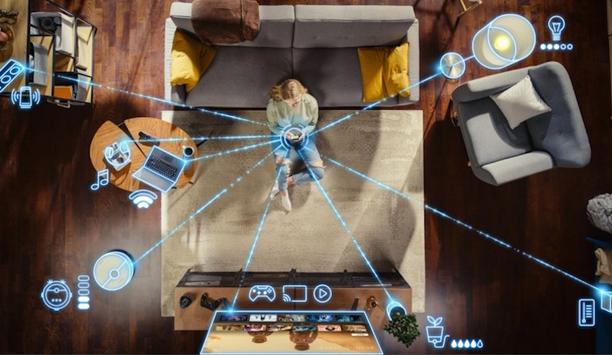
In today's smart homes, traditional climate control meets modern automation and connectivity. Technologies such as smart thermostats, home automation platforms, sensors, zoned heating and cooling, and artificial intelligence are combining to yield new levels of comfort for homeowners who embrace the smart home concept. We asked our Expert Panel Roundtable: How is the changing smart homes market impacting HVAC systems?

Some of the technologies in the HVAC market are mature, although the newest innovation is always just around the corner. Newer systems seek to be more sustainable and energy-efficient, and digital control technologies play a role in maximizing their performance. Trends such as the Internet of Things (IoT) and smart systems are the basis for the newest connectivity and control approaches. These innovations tie into the broader environment of smart buildings. Systems are also providing remote access to enable technicians to analyze system operation and troubleshoot any problems. We asked our Expert Panel Roundtable: What's new in connectivity and control systems for HVAC?

The practice of working from home soared during the coronavirus (COVID-19) pandemic and many observers see a likely continuation of the trend, as infection risks gradually subside. Both environments – home and office – depend on HVAC systems to keep occupants comfortable (and safe!). Therefore, the industry stands to be impacted whichever way the trend plays out. We asked our Expert Panel Roundtable: How will remote working affect residential and commercial HVAC?
Products


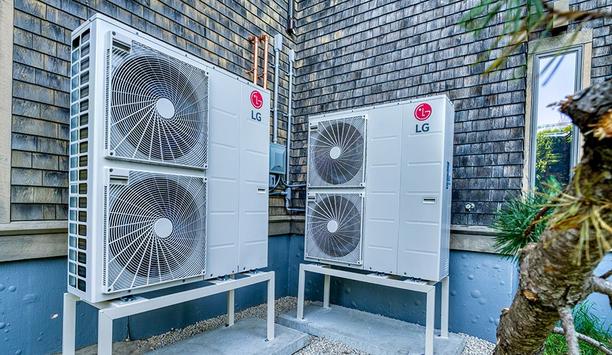





Videos


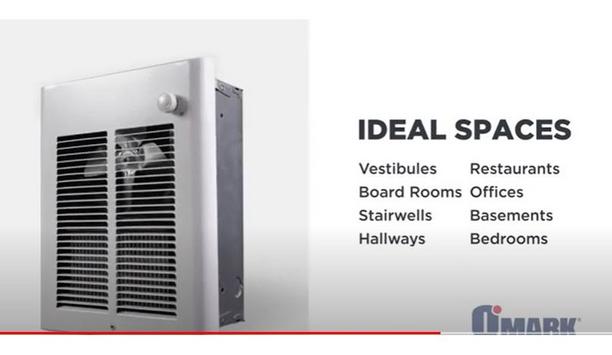
Smart Home: Manufacturers & Suppliers

Safety Certification Of IT Equipment Cooling In Data Centers
Download
The Advantages Of Cooling Tower Retrofits Using EC Fan Arrays
Download
The Water Is Fine: Diving Into Air-To-Water Heat Pumps
Download
Heat Pumps: Expert Insights
Download
The Hidden Energy Drain
Download