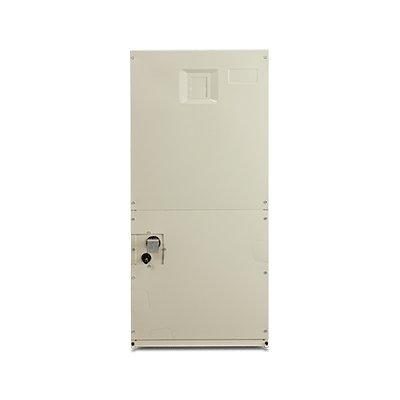
Air duct heaters are commonly used in the HVAC industry. They provide supplementary heat to the delivered air inside an air-delivery duct.
For heavy duty industrial applications, air duct heaters are a perfect choice. With high tensile strength cages and durable tubular heating elements, air duct heaters provide appropriate heating solutions to the power generation industry.
Air duct heaters
An air duct heater is an electric-resistant heater mounted inside an air-delivery duct. It comprises branching network of round or rectangular pipes, which are made of sheet metal, fiberglass, or plastic-wire composite.
The primary purpose of air duct heaters is to produce supplementary heat to the delivered air. When air in the duct flows through and around open coil elements, it gets heated. In other words, they temper forced air in industrial processes.
Application in residential and industrial HVAC systems
Air duct heaters can be used for residential HVAC systems. At the same time, they cater to the heating needs of industrial type applications.
In the industrial segment, they are used in heating applications like refractories and core drying, industrial drying, autoclaves, heat treatment, load banks, dehumidification, and convection furnaces. In addition, materials like hydraulic fluids, air, water, heat transfer fluids, and bunker oils are heated.
Watt Density and Temperatures
High temperature air duct heaters can process air temperatures up to 1200°F
High temperature air duct heaters can process air temperatures up to 1200°F. Medium temperature air duct heaters can process air temperatures up to 7500°F. The watt density is measured as the coil wire’s watts per square inch of the surface area.
While high temperature heaters deliver watt density as high as 90 W/sq. inch, the lower the watt density, the better. Anything less than 50 W/sq. inch is preferred. With medium temperature heaters, a watt density of less than 30 W/sq. inch can be achieved.
Air Flow Rates
For a better performance of the air duct heater, a minimum of 200 fpm air flow rate is recommended. When there is insufficient air flow, coils in the heater get overheated or break up. The upper limit for air flow rate is 7000 fpm. An air flow rate of more than 7000 rpm can result in the deflection of the coils.
However, it depends on the gauge of the coil. For heavy process applications, light gauge coils are avoided. If you install multiple duct heaters, they should not be mounted closely side by side. When a few inches of space is left between the air duct heaters, air can mix or blend, before reaching the next coil system.
Available in square, rectangular and round shapes
Air duct heaters come in square or rectangular shapes, in general. Certain models are custom-shaped as well. For certain unique applications, round air duct heaters are used. Standard sizes of an air duct heater are 6”, 12”, 22” and 36”. When optimal sheath material is used, the size, weight, and footprint of the duct heater can be considerably reduced. You can purchase a single-phase heater or a three-phase air duct heater.
The air duct heater can be configured for different stages. When a stand-alone circuit is configured for each stage, users can get different levels of heat output. Air duct heaters can be separately wired for each stage to reduce amp load and gauge. Still, the entire system works in unison.

- Government Regulations
- Commercial HVAC
- Refrigerants
- EPA
- DOE
- Energy Star
- Energy Efficiency
- Capacity
- Residential HVAC
- 2LA Flammable Refrigerants
- International Standards
- Safety Standards
- Flammability
- HVAC Plumbing
- HVAC Software
- HVAC Maintenance
- Automation & Controls
- Remote Monitoring
- Building Management
- HVAC IoT