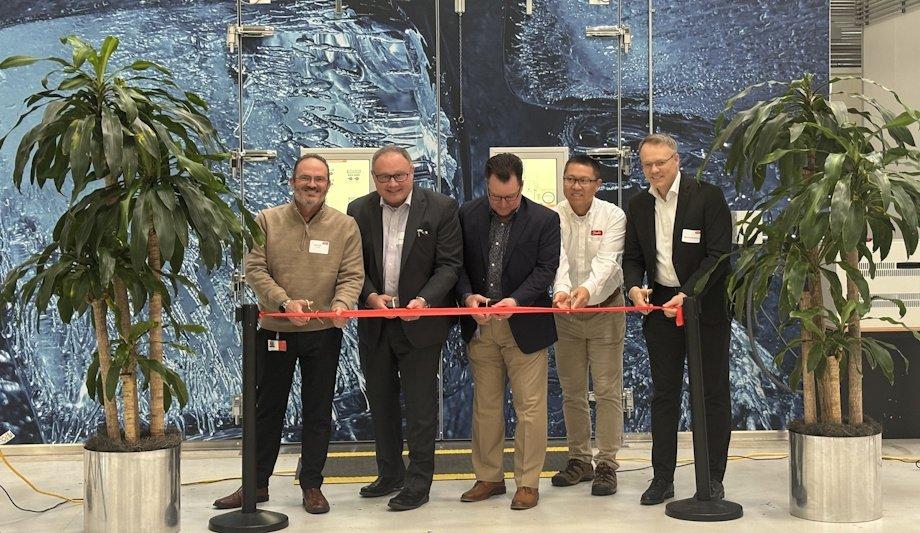
Original Equipment Manufacturers (OEM) in commercial refrigeration now have access to advanced testing capabilities with the opening of Danfoss’s new chamber at its Application Development Center (ADC) in Tallahassee, Florida.
This facility is tailored for testing food retail and commercial refrigeration systems that incorporate A3, A2L, or non-flammable refrigerants. The addition comes as many manufacturers face changes due to new refrigerant and energy efficiency regulations.
Enhanced Energy Efficiency
Since its inception in 2017, the Tallahassee ADC has been instrumental in assisting customers with the development and testing of HVAC/R products and solutions across varying environmental and operational conditions. The new chamber expands Danfoss’s capacity to support the industry's shift towards low-GWP refrigerants and assist in meeting evolving efficiency standards.
Collaborative Testing Opportunities
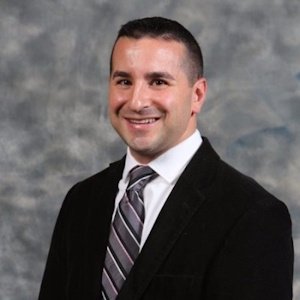
Christopher Gangemi, key account manager at Danfoss, highlighted the importance of their testing lab, sharing that many OEMs lack the infrastructure for such testing.
“Many of our OEM customers don’t have the ability to test at their own facility. Now customers can send us their equipment for testing. We can also work with them to determine if using Danfoss components with their equipment will enable them to achieve greater energy efficiency,” he explained.
Technical Capabilities
The test chamber setups are compliant with ASHRAE standards The test chamber is equipped to handle equipment such as condensing units, ice cream machines, unit coolers, freezers, racks, Glass Door Merchandisers (GDM), and process chillers. The facility supports testing with up to 5 kilograms of A3 refrigerants or 7 kilograms of A2L refrigerants per unit.
The setups are compliant with ASHRAE standards, featuring air plenums to mitigate air velocity and an acoustic infrared system for detecting refrigerant leaks at LEL standards.
Inaugural Event and Learning Experience
To mark the lab opening, Danfoss organized a day of learning for its customers, featuring insights into market trends, a demonstration of the Sustainable CO2 Refrigeration Mobile Training Unit, and an overview of the Advanced System Simulation Service (A3S).
Guests also toured the Danfoss Turbocor factory and the National High Magnetic Field Laboratory at Florida State University, where Danfoss conducts research on oil-free, magnetic-bearing compressors.
Exciting Prospects
Gregory Handzel, senior manager of the ADC, expressed enthusiasm regarding the new lab’s capabilities. “This new lab will enable us to provide our commercial refrigeration and food retail customers with the support they need to implement A2L and A3 refrigerants safely and effectively,” Handzel remarked.
He emphasized that the testing results will aid customers in developing products that meet high standards of energy efficiency and support their sustainability objectives.
Commercial refrigeration Original Equipment Manufacturers (OEM) will now be able to utilize Danfoss’ Application Development Center (ADC) in Tallahassee, Fla., for their product testing needs.
Danfoss opened an additional chamber in the ADC specifically for the testing of food retail and commercial refrigeration equipment utilizing A3, A2L or non-flammable refrigerants.
With refrigerant and energy efficiency regulations necessitating product redesigns over the past few years, this new Danfoss testing facility will enable OEMs to get their products to market more quickly.
Meeting Efficiency Standards
Since its opening in 2017, the ADC in Tallahassee has worked with customers to develop and test new HVAC/R products and solutions, with the ability to simulate a variety of environmental and operational conditions.
The addition of a testing lab geared specifically to the needs of commercial refrigeration and food retail customers allows Danfoss to address the challenges its customers are facing with the transition to low-GWP refrigerants and help them meet efficiency standards.
Working with the customers
Christopher Gangemi, key account manager at Danfoss, noted that the testing lab fills a gap: “Many of our OEM customers don’t have the ability to test at their own facility. Now customers can send us their equipment for testing. We can also work with them to determine if using Danfoss components with their equipment will enable them to achieve greater energy efficiency.”
Test Lab Chamber
Equipment tested in the new chamber includes condensing units, ice cream machines, unit coolers, freezers, racks, Glass Door Merchandisers (GDM) and process chillers. The lab has the capability to test products with up to 5 kilograms of A3 refrigerant or 7 kilograms of A2L refrigerant per unit.
Testing setups are ASHRAE-compliant, with air plenums at the top and bottom of the room to reduce air velocity. As part of the testing, an acoustic infrared leak detection system detects refrigerant leaks at LEL (Lower Explosive Limit) standard.
A day of learning
To celebrate the lab opening, Danfoss hosted a group of customers for a day of learning that included a session on market trends, a tour and demonstration of Danfoss’ Sustainable CO2 Refrigeration Mobile Training Unit, and an introduction to the Advanced System Simulation Service (A3S), Danfoss’ testing process that simulates HVAC/R system performance using specific compressors, heat exchangers, and valves, which can be virtually changed and retested.
Following the ribbon-cutting, guests also received tours of the Danfoss Turbocor® factory and the National High Magnetic Field Laboratory at nearby Florida State University, which Turbocor utilizes in the research and development of its oil-free and magnetic-bearing compressors.
Potential of new testing lab
Gregory Handzel, senior manager of the ADC in Tallahassee, is excited about the potential of the new testing lab. “This new lab will enable us to provide our commercial refrigeration and food retail customers with the support they need to implement A2L and A3 refrigerants safely and effectively,” he said.
“They will be able to use our testing results to develop products to the highest standards of energy efficiency and meet their sustainability goals.”