
If users want complete comfort from an air conditioning system, they recommend reverse-cycle units. These systems offer both a heating mode and a cooling mode from one unit, ensuring comfortable temperatures in summer, winter, spring, and autumn.
Reverse cycle systems also boast incredible efficiency, helping to keep the electricity bills in a comfortable range.
whisper-quiet performance
However, comfort isn’t just about the right temperature or the most affordable system. It’s also about how much noise users have to put up with. After all, user’re not going to feel very comfortable if achieving the perfect temperature means user can’t hear themselves think!
No air conditioner is silent, but many systems really can achieve whisper-quiet performance. Here is a guide to some of the quietest air conditioners on the market.
Reverse cycle air conditioning
Reverse cycle air conditioning has several advantages that help it stand out from the competition. If Australian Climate Systems were going to recommend one HVAC solution for the home or business, it would be a reverse cycle.
Here are a few reasons why:
- Up to 600% energy efficiency with low power consumption
- One of the best ACs for the environment
- Excellent heating capacity and cooling capacity in one unit
- Ducted or split to suit the property
- Innovative technology and features
- Reverse cycle systems offer all-electric heating and cooling, which lines up with a National and International move away from gas appliances.
Australian Climate Systems wants to present users with useful information on the most popular type of heating and cooling on the market. That’s why Australian Climate Systems focuses on noise levels from reverse cycle systems in this article.
Interpreting Noise Level Information
dBA levels are a more accurate representation of what Australian Climate Systems hears
How loud is too loud? Air conditioner noise levels are generally measured in decibels (dB), or more specifically adjusted decibels (dBA).
The difference between dBA and dB is that dBA levels are weighted and adjusted based on the way the human ear works. In other words, dBA levels are a more accurate representation of what Australian Climate Systems hears.
- Sound pressure
Some air conditioning brands will only list “sound levels” but others will list “sound pressure” and “sound power”.
Sound pressure is more representative of what human ears hear, so this is the number that the user should use in the comparisons wherever possible.
- Outdoor noise
Finally, it’s more important to look at indoor noise levels than outdoor noise levels, as users will be most directly exposed to indoor noise.
Outdoor noise will be behind a brick wall and a few layers of insulation, and the outdoor unit may not be positioned anywhere near the most used rooms (living room and bedroom).
- Decibel readings (dBA)
Here are a few decibel readings (dBA) and how they translate to real-world noises:
- Most whispers are measured between 20 dBA to 30 dBA.
- The ambient noise in a quiet office, library, or residential area will be around 40 dBA.
- Normal conversation is measured at about 60 dBA.
- A vacuum clear can come in at around 80 dBA.
- Some louder noises include a rock concert (120 dBA) and fireworks (160 dBA – depending on distance).
Which Reverse Cycle Air Conditioners Are Quietest?
Some of the Quietest Reverse Cycle Split Systems
Users can get reverse cycle split system air conditioners that efficiently heat and cool
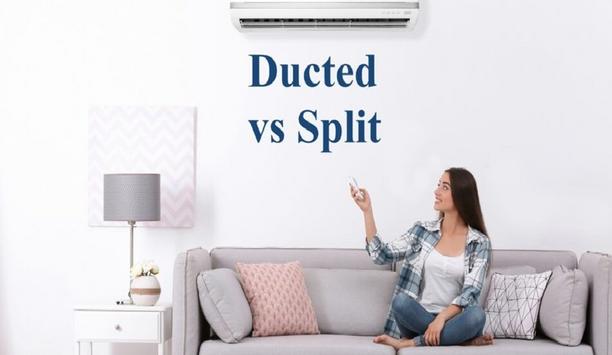
Split systems are some of the most popular air conditioners in Melbourne due to their affordability and easy professional installation. Users can get reverse cycle split system air conditioners that efficiently heat and cool any room they’re installed in.
Split systems are capable of quiet operation due to their design, which is split into a quieter indoor unit and a louder outdoor unit (condenser unit). With the loudest part of the system located out of sight, out of mind, and out of earshot, users can look forward to quiet climate control all year round.
Inverter technology
The inverter technology in the split system air conditioning also assists with quiet operation, energy efficiency, and comfort. Users can take advantage of all the split system’s features directly from the remote control.
Some of the quietest split-system air conditioners include:
- The Daikin Range, including the US7, the Zena, and the Alira
- The LG WS Smart Series
- The Panasonic Premium Reverse Cycle Inverter
Each of these split systems offers indoor noise levels as low as 19dBA, which is quieter than a whisper! The units with the quietest outdoor operation are the Daikin Zena and Alira Models (43dBA), closely followed by the Daikin US7 (46dBA). These outdoor noise levels are not much louder than ambient noise levels in a standard room.
Some of the Quietest Ducted Reverse Cycle Systems
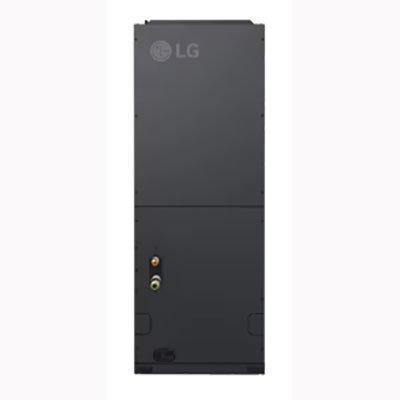
Ducted reverse-cycle air conditioning is perfect if the user wants to heat or cool the entire home. While split systems only target one room, ducted systems can deliver conditioned air via a series of ducts that are concealed in the roof.
Ducted systems can be zoned, which allows for individual temperature control in each room, and the air is expelled out of sleek outlets rather than prominent indoor units.
Supply and install
Ducted and bulkhead units are more expensive to supply and install, but it’s well worth it if users are looking for central heating and cooling. Ducted systems are typically controlled via wall-mounted controls, but remote controls and smartphone/Wi-Fi control may also be available.
When it comes to noise levels, they’ve found that Daikin has a wide range of the quietest ducted units, including:
- Daikin Premium Inverter – Indoor sound levels from 37.3dBA (Single Phase).
- Daikin Inverter Ducted – Indoor sound levels from 33.3dBA (Single Phase).
- Daikin Slimline Ducted – Indoor sound levels from 35dBA (Single Phase).
6 More Things to Consider for a Quiet Air Conditioner
As well as the noise level rating, here are some other factors that will contribute to the loudness of the air conditioner.
1. Quiet Mode and Similar Features
Many reverse cycle air conditioners have convenient features like Quiet Mode, Night Time Mode, Sleep Mode
Many reverse cycle air conditioners have convenient features like Quiet Mode, Night Time Mode, Sleep Mode, and Eco Mode, which help to reduce the system to its quietest level.
Simply push a few buttons on the remote control for quiet operation.
2. The Age of the System
Older reverse-cycle air conditioners will generally be noisier for several reasons:
- Years of wear and tear can force the system to work harder, resulting in a louder overall operation.
- Newer systems are equipped with the latest noise-reducing technology, from specially designed air grilles to aerodynamic fan rotors.
Keep in mind that while the air conditioner may have been the quietest model a few years ago, it might not be nearly as discreet today.
3. The Condition of the System
As well as age, the general condition of the system can contribute to excessive system noise. If the system is experiencing loud humming, rattling, squeaking and squealing, buzzing, popping, clicking, grinding, or hissing, contact a heating and cooling technician ASAP.
These noises could signal the need for air conditioning repairs, maintenance, or even a new system. the expert team can help users get the HVAC back to its quietest and most energy-efficient best! To avoid unnecessary noise, it’s best to service the system every 2-3 years.
4. Fan Speed Settings
Lower fan speeds will also make less noise, so users can always run the system on lower fan speeds
Reverse cycle heaters and coolers are forced air systems, meaning they utilize fans to direct airflow across a room or throughout the home. Higher fan speeds help to heat or cool the home quickly, while lower fan speeds are best for temperature maintenance.
Lower fan speeds will also make less noise, so users can always run the system on lower fan speeds for quiet operation. For some products, noise level ratings will include minimum noise levels as well as noise levels on high fan speeds.
5. Positioning of the Outdoor Unit
When installing an air conditioning unit, it’s essential to position the outdoor system in a location that will minimize noise pollution and maximize acoustic comfort. Ask the air conditioning technician to place it away from the most used areas of the home and as far away from the boundary of the property as possible to avoid complaints from angry neighbors.
Generally, users will have more flexibility on the placement of a ducted outdoor system compared to a split outdoor system. The team will always ensure the indoor and outdoor units are installed in the ideal location.
6. Ask for Recommendations and Look at Reviews
At the end of the day, users can’t go past personal experience. If users have family and friends who have recently installed a reverse cycle air conditioner, ask them if they’re happy with how quiet the system is.
Users can also check out online reviews for first-hand opinions on the quietness of various models, as well as other factors of performance. Air conditioner size can also affect noise output, so keep that in mind when user are reviewing different types of air conditioners.
Looking for a Quiet Reverse Cycle Air Conditioner?
Whether users are after a split system air conditioner or a ducted unit, Australian Climate Systems can pair users with an energy-efficient, affordable, and high-performance air conditioner that’s also whisper quiet!
Australian Climate Systems can also service a noisy system to get it back to its best.