
They’ve probably noticed that they’re not getting the airflow out of the vents that they should be. Maybe they have rooms that are hotter than others. Therefore, the logical conclusion is that not enough air is being pushed through the ducts and into rooms further away from the unit.
So, the next logical leap would be that they need a bigger, and more expensive, air conditioner so all that air gets pushed through, right? Well, most likely not. Sure, someone will sell one to them, and they may even notice a difference, but that’s kind of like pouring gas on top of the car to get it in the tank. Let’s first look into solving the air leakage issue before swapping out for something that could be overkill.
Understanding the Real Issue: Duct Leakage
According to the Department of Energy, every home that has a duct system has duct leakage
A significant factor in uneven room temperatures is duct leakage. According to the Department of Energy, every home that has a duct system has duct leakage. On average, that leakage varies from 10% to 30%. So it’s possible that only 70% of the conditioned air is reaching the end of the ductwork, while the other 30% is escaping into unconditioned spaces such as inside the walls, into an attic, or in the crawlspace.
Considering this, even if they paid up for a stronger air conditioner, they’re now paying for even more air to be lost. Therefore, the air conditioner may already be the perfect size for the home, but they’re losing air through duct leakage. Sealing the ductwork may be all they need to solve the problem.
The “Right Sizing” Philosophy
The concept of “right sizing” the air conditioning system is crucial in addressing inefficiencies. Rather than focusing on the size of the equipment, it’s crucial to consider the unique needs of the home.
Factors such as the home’s insulation, the number and quality of windows, and the state of the ductwork play a significant role in determining the appropriate size of the air conditioning unit. Learn more here about getting the maximum efficiency out of the equipment.
Concept of Air Changes per Hour (ACH)
In the case of windows, quality glazing can significantly reduce unwanted heat gain or loss
In the case of windows, quality glazing can significantly reduce unwanted heat gain or loss. Similarly, superior insulation acts as a barrier to heat flow, maintaining desired indoor temperatures with less energy expenditure. It’s also important to consider the concept of Air Changes per Hour (ACH).
ACH is a measure of how many times the air within a space is replaced in an hour, and it plays a pivotal role in understanding a home’s energy efficiency and comfort levels. Poorly sealed and drafty homes can have high ACH values, leading to significant energy losses and uneven temperatures.
The Misconception of Bigger Units
The misconception that a bigger air conditioner will solve all cooling issues leads to a cycle of inefficiency and increased energy costs. Oversized units not only consume more energy but can also lead to other problems, such as increased humidity levels in the home and reduced life of the air conditioner overall.
The key lies in optimizing the performance of the current system through measures like duct sealing and insulation improvements. By oversizing the equipment, they’re getting less efficiency out of that equipment, even if it’s rated very well.
Proper sizing and airflow management
Installing an oversized air conditioner can inadvertently create issues in the home, such as undue condensation
Installing an oversized air conditioner can inadvertently create problems in the home, such as excessive condensation and mold growth. When an AC unit is too large, it cools the space quickly but doesn’t run long enough to effectively remove humidity from the air. This excess moisture can condense on cooler surfaces, fostering mold growth that can damage the home and affect air quality.
Moreover, an oversized AC can lead to a phenomenon known as ‘choking,’ where the system’s return air flow is insufficient for its capacity. This restriction makes the air conditioner work harder than necessary, increasing wear and reducing its lifespan. Proper sizing and airflow management are critical to avoid these issues and ensure efficient, healthy cooling.
Positive pressure forces
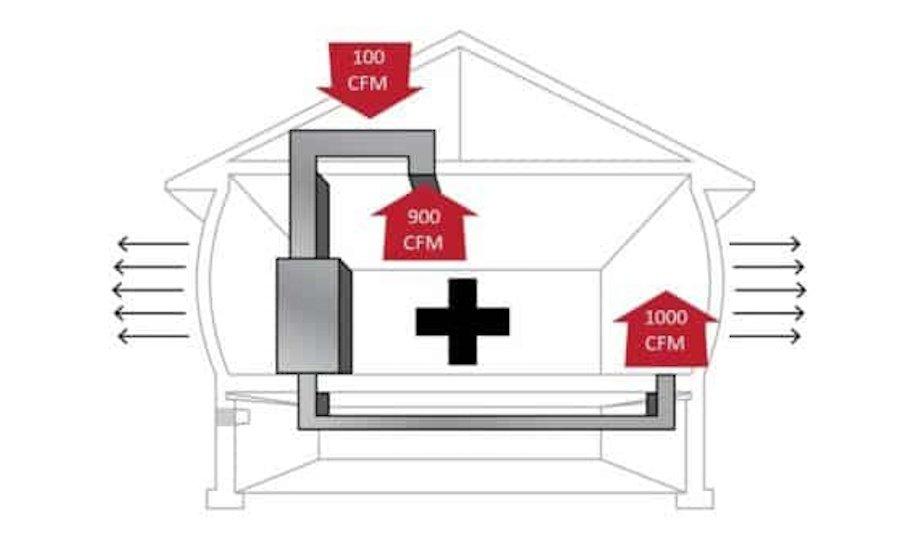
It’s also important to understand the role of return duct leakage. Return ducts bring conditioned air back to the furnace or air conditioner. Not only does this type of leakage pull in hot/humid or cold/dry air from unconditioned spaces, but it also introduces various contaminants into the living environment. A bigger air conditioner would only exacerbate these problems. Moreover, the imbalanced airflow caused by return duct leaks can lead to a buildup of positive pressure inside the home.
This positive pressure forces conditioned air out through any openings in the building’s envelope, a process known as exfiltration, effectively wasting the cool air that the air conditioner works hard to produce. With more air being forced through the system, the positive pressure increases, leading to greater losses of conditioned air and higher infiltration of contaminants.
The Easiest and Most Effective Way to Seal the Ducts
Aeroseal’s non-toxic, water-based sealant efficiently seals air leaks in both ducts
They may be wondering how to even go about sealing the ducts. Using tape and a sticky sealant called mastic is one of the couple of ways to stop the leaks that they can see. But what if they don’t know where the leaks are? That’s where Aeroseal comes in. Aeroseal is the only advanced duct sealing method that can reduce leakage by 90%-99% in one simple process.
Even the leaks they can’t see, which are often behind drywall. Aeroseal’s non-toxic, water-based sealant efficiently seals air leaks in both ducts and the building envelope itself, ensuring that the air goes where they need it and not where they don’t. Imagine feeling comfortable, consistent temperatures in ALL rooms of the house. Aeroseal is by far the most effective, and efficient method to seal ductwork.
Optimize Before They Maximize
Obtaining consistent room temperatures doesn’t necessarily mean buying a stronger air conditioner. By understanding the underlying issues and embracing the “right sizing” approach, they can achieve efficient cooling without falling into the trap of “bigger is better.”
So, before they purchase a pricey upgrade, consider whether sealing their ducts and optimizing their current system might be the smarter, more efficient choice.