Eurovent Middle East has issued its first guidance on the anticipated transition from hydrofluorocarbon-based refrigerants (HFCs) in the Gulf Cooperation Council (GCC) region, following discussions held during the HVACR Next Generation Congress in Riyadh on October 28, 2025.
This move comes after the Kingdom of Saudi Arabia ratified the Kigali Amendment in September, which mandates a phasedown of HFCs, beginning with a baseline freeze set for 2028 and a subsequent phased reduction starting in 2032.
Potential Supply Shortages of HFC Refrigerants
The phasedown, initially reducing the consumption and production of HFCs by 10% every five years
The phasedown, initially reducing the consumption and production of HFCs by 10% every five years, raises concerns about potential supply shortages due to the region's economic growth and increasing demand for cooling.
Markus Lattner, Managing Director of Eurovent Middle East, highlighted this during the Riyadh Congress, stating, "The phase down will start from a baseline of HFCs produced or consumed over the period from 2024 to 2026."
He further explained that the combination of sectoral growth and even a modest reduction could result in a sudden shortfall of over 30% of HFC-based refrigerants by the time the first reduction step is implemented in 2032. Lattner stressed the urgency for both industry and governments to take immediate action to mitigate these shortages.
Implementation and Harmonization of Safety Standards
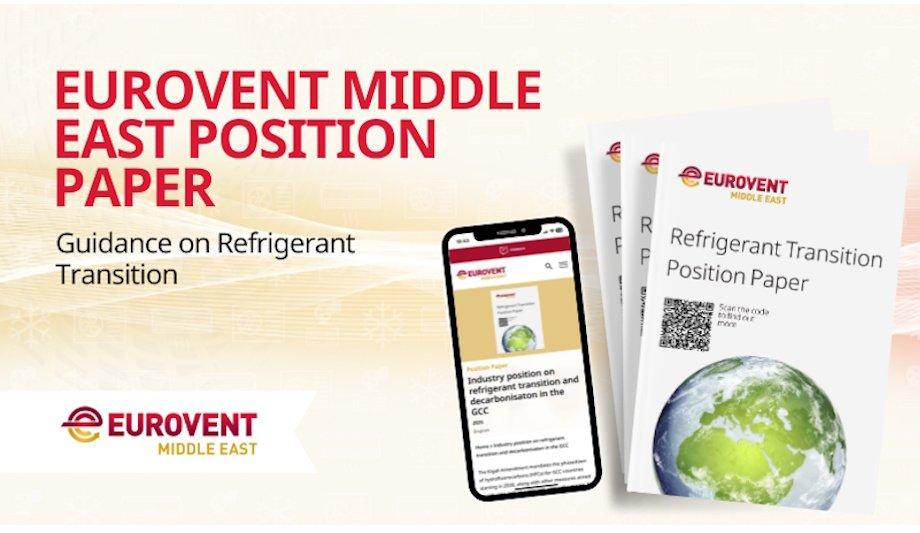
In response to these concerns, Eurovent Middle East's Position Paper offers strategic recommendations to avert future bottlenecks.
It advocates for the immediate and safe adoption of HFC alternatives wherever feasible, promotes workforce upskilling to manage alternative refrigerants, and underscores the importance of standardizing safety and regulatory frameworks across the GCC to support the transition to cooling and refrigeration systems utilizing low global warming potential refrigerants. This Position Paper is available for free download on the Eurovent Middle East website.
Following discussions alerting the industry about potential supply shortages of HFC-based refrigerants during its HVACR Next Generation Congress in Riyadh on 28 October 2025, Eurovent Middle East has published its first industry guidance on the impending refrigerant transition in the region.
With the ratification of the Kigali Amendment by the Kingdom of Saudi Arabia in September, the GCC countries are set to phase down hydrofluorocarbon-based refrigerants (HFCs) starting with a baseline freeze in 2028, followed by phase-down from 2032.
Shortages of HFC refrigerants
While the phase down begins only gradually with reductions of HFCs consumed or produced in steps of 10% every 5 years initially, the industry will be faced with potential supply shortages of HFC refrigerants due to the economic growth and thus rising demand for cooling in the region.
During the HVACR Next Generation Congress in Riyadh, Markus Lattner, Managing Director of Eurovent Middle East, warned: “The phase down will start from a baseline of HFCs produced or consumed over the period from 2024 to 2026."
"This means that if we add the accumulated growth in the building sector in the next years to the 10% reduction in the first step, we can very likely look at a sudden shortage of HFC-based refrigerants in excess of 30%, when the first reduction happens in 2032. To prevent wider shortfalls and bottlenecks, it is imperative that industry and governments act now!"
Implementation and harmonization of safety standards
The Position Paper by Eurovent Middle East addresses alternatives and outlines recommendations to industry and governments on how to avoid bottlenecks in the future.
It recommends the use of alternatives to HFCs immediately, wherever possible to be done safely, encourages upskilling initiatives to ensure that the workforce is prepared to handle alternative refrigerants, and calls for implementation and harmonization of safety standards and regulatory frameworks across the region to facilitate the switch towards cooling and refrigeration systems, which work with low global warming potential refrigerants. The association’s position paper can be downloaded free-of-charge on the Eurovent Middle East website.