
An increasing number of studies show that indoor air quality can be significantly poorer than outdoor air, with indoor environments being 2 to 5 times more polluted.
Low ventilation rates of outdoor air compromise the health of building occupants and can contribute to moisture-related issues, as outdoor air bringing in moisture often enters buildings unconditioned. Notably, conditioning incoming outdoor air can account for up to 40% of an HVAC system's capacity.
Enhancing Indoor Air Quality Through Ventilation
Elevating the levels of outdoor air in ventilation systems significantly benefits both occupant health
Elevating the levels of outdoor air in ventilation systems significantly benefits both occupant health and productivity.
Integrating more outdoor air into indoor environments helps reduce pollution inside buildings, thereby improving indoor air quality (IAQ). Utilizing innovations like Energy Recovery Wheels allows for increased ventilation rates while maintaining energy efficiency.
Understanding Energy Recovery Wheels
Airxchange® Energy Recovery Wheels play a critical role in enhancing ventilation efficiency.
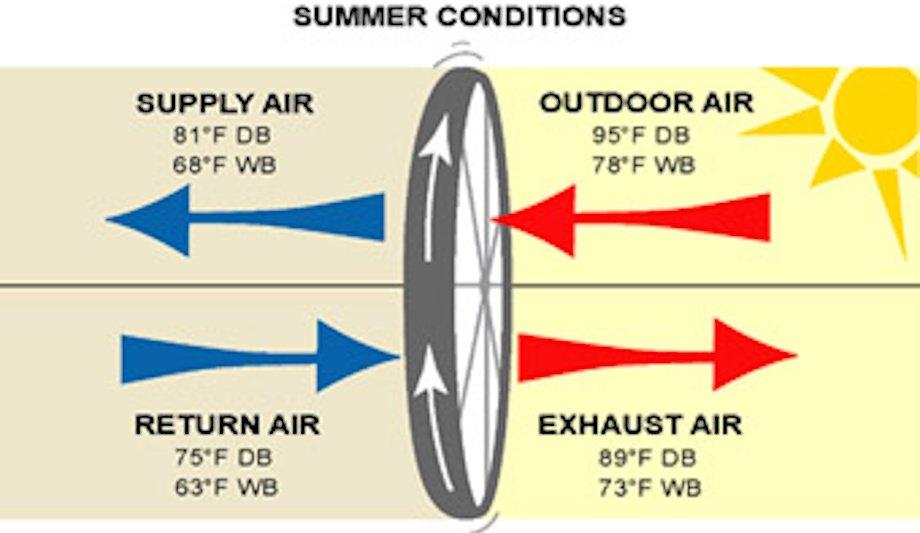
These wheels operate by rotating between the outdoor airstream entering a building and the exhaust leaving it.
Pre-conditions the outdoor air
Through this rotation, they effectively transfer a portion of the heat and moisture differential from one airstream to the other.
This process pre-conditions the outdoor air, thereby reducing the workload and energy demands placed on the mechanical HVAC systems.
Advantages of Airxchange® Energy Recovery Wheels
The patented technology utilized by Airxchange® Wheels significantly curtails energy requirements needed for conditioning outdoor air, achieving reductions of up to 70%. These wheels also offer seasonal adaptability by removing moisture during summer months and adding it during winter, maintaining optimal humidity levels within buildings.
Energy recovery ventilation systems deliver superior performance efficiencies and address many drawbacks traditionally associated with high outdoor air ventilation, such as excessive energy consumption and moisture-related issues.