In the rapidly evolving HVAC sector, maintenance strategies are shifting from merely addressing breakdowns to preemptively identifying potential issues before they arise. As buildings incorporate more sophisticated digital systems, the approach to maintaining these systems is also advancing.
The industry is moving away from traditional reactive maintenance towards more predictive and condition-based models, which utilize data and analytics to enhance reliability and cut costs. This transition is significant, as it promises to reshape how maintenance is conducted in modern buildings.
Understanding the Maintenance Spectrum
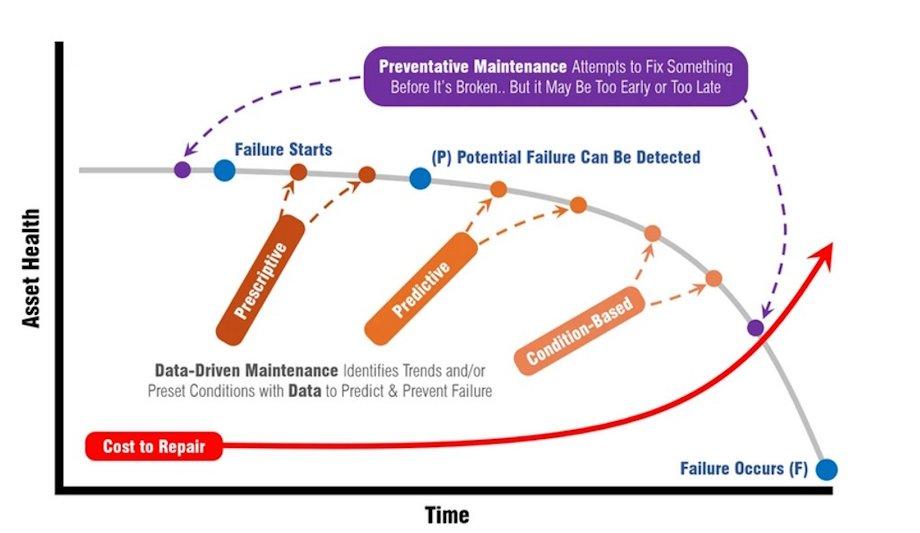
HVAC maintenance strategies can be visualized along a continuum from reactive to highly prescriptive
HVAC maintenance strategies can be visualized along a continuum from reactive to highly prescriptive approaches. Reactive maintenance is the most conventional method, where systems are repaired only after a failure occurs.
Preventive maintenance offers a more proactive strategy, involving routine servicing of equipment at predetermined intervals, regardless of condition.
Condition-based maintenance (CBM) introduces real-time monitoring, ensuring maintenance is performed only when data suggests it's necessary.
Predictive Maintenance
Predictive maintenance takes an advanced step by employing historical data and analytics to anticipate failures, allowing preventative measures before issues arise.
At its most developed stage, prescriptive maintenance not only predicts potential problems but also advises on specific actions based on expected outcomes. This paradigm shift in maintenance focuses on preemptive strategies to efficiently prevent problems using data-driven insights.
The Hidden Cost of Reactive Maintenance
Although reactive maintenance might appear simple and cost-effective initially, it often results in more extensive and expensive issues over time.
Unplanned downtime poses immediate risks, especially during peak load times like heatwaves or cold snaps, potentially causing discomfort, tenant issues, or even tenant loss in commercial real estate. In critical facilities such as hospitals or data centers, downtime can compromise safety or halt operations.
Secondary Effects
A malfunctioning component can damage others, like a faulty fan motor leading to overheating
Failures can have cascading impacts. A malfunctioning component can damage others, like a faulty fan motor leading to overheating of surrounding sensors.
Issues such as clogged lines or refrigerant leaks can lead to water damage and mold. These secondary effects increase repair complexity and costs. Systems pushed to failure experience a reduced lifespan.
Motor, bearing, and compressor components degrade faster under stress, leading to reduced operation life by five to ten years compared to proactively maintained systems.
Shifting to a Predictive/Proactive Maintenance Strategy
Transitioning to a predictive or proactive maintenance strategy offers noticeable advantages but comes with challenges, mainly concerning the initial investment. Integration of sensors, data systems, and analytics with existing infrastructure can be expensive.
Effective data management is crucial, requiring proper IT frameworks and skilled personnel to utilize the continuous data flow effectively.
Moving Toward Predictive and CBM Strategies
Despite these hurdles, the incentive to adopt predictive and condition-based maintenance strategies is strong. One significant benefit is the reduction of unplanned downtime by identifying potential issues beforehand, allowing maintenance during off-peak hours and minimizing disruptions.
Predictive approaches can decrease unexpected downtime by up to 50%, while maintenance costs become more predictable, potentially lowering costs by 25% to 40% according to industry estimates.
Preventing Problems
These strategies also prolong equipment life by preventing issues like overheating and airflow imbalance
These strategies also prolong equipment life by preventing issues like overheating and airflow imbalance, reducing wear and tear. Predictive maintenance can extend HVAC system life by five to ten years, thereby delaying capital expenditure and reducing long-term expenses.
Enhanced energy efficiency is another benefit; well-maintained systems use less energy, with potential savings estimated at 10% to 20% in facilities employing predictive methods.
Data-Driven Insights
Data-driven insights are a crucial aspect. Facility managers can benchmark performance, discern patterns, and make more informed decisions regarding upgrades and replacements.
When combined with building management systems, predictive tools offer real-time optimization, revolutionizing building management strategies.
A Smarter Future for HVAC
The shift towards predictive and condition-based maintenance signifies a transformation in building management, centered on data and continuous improvement. By adopting these strategies, building operators can enhance reliability, cut costs, extend asset lifespan, and boost occupant comfort and safety.
While initiating predictive maintenance involves investment and change, its long-term benefits make it a strategic choice for building managers and owners. The future of the industry lies not in reactive measures, but in predictive strategies that are already shaping the present.
In the world of HVAC, maintenance is no longer just about fixing what’s broken — it's about predicting what will break before it does. As buildings become smarter and more reliant on digital systems, maintenance strategies are evolving too.
The industry is seeing a major shift from traditional reactive maintenance toward predictive and condition-based maintenance models that leverage data and analytics to increase reliability and reduce costs.
Let’s explore how these strategies differ, why the shift matters, and what it really takes to implement predictive/proactive maintenance in today’s buildings.
Understanding the Maintenance Spectrum
HVAC maintenance strategies can be visualized along a spectrum, ranging from purely reactive to highly prescriptive. Reactive maintenance is the most traditional form — systems are left to run until failure occurs, at which point emergency service is required.
Preventive maintenance takes a slightly more proactive approach by servicing equipment at regular intervals, such as every six months, regardless of actual wear or performance.
Condition-based maintenance (CBM) introduces real-time monitoring into the equation. By using sensors to assess equipment condition, maintenance is only performed when data indicates it’s necessary.
Predictive maintenance
Predictive maintenance builds on this by using historical data and analytics to forecast potential failures, allowing action before a problem even manifests. The most advanced strategy, prescriptive maintenance, not only predicts issues but also recommends specific actions based on the likely outcomes.
These approaches reflect an evolution in maintenance thinking — one that shifts from reacting to problems to preventing them in the most efficient, data-informed possible way.
The Hidden Cost of Reactive Maintenance
While reactive maintenance may appear simple and cost-effective on the surface, it often leads to deeper, more expensive problems over time. Unplanned downtime is one of the most immediate risks.
HVAC systems are prone to failure under peak load conditions — for example, during heatwaves or cold snaps — which can lead to uncomfortable indoor environments, tenant complaints, and, in commercial real estate, the risk of losing tenants altogether. In mission-critical facilities like hospitals or data centers, downtime can jeopardize safety or disrupt operations entirely.
Beyond downtime, reactive maintenance results in much higher emergency repair costs. These include premium charges for after-hours labor, expedited parts shipping, and inefficient use of internal staff. Often, the urgency leads to temporary fixes rather than sustainable, long-term solutions.
Secondary effects
Failures rarely occur in isolation. One component breaking down can strain or damage others. A failed fan motor, for instance, might overheat adjacent sensors or wiring. Similarly, issues like clogged condensate lines or refrigerant leaks can cause water damage or mold growth. These secondary effects multiply the cost and complexity of repairs.
Running systems to the point of failure also reduces their operational lifespan. Motors, bearings, compressors, and other components degrade faster when operating under stress.
Issues like vibration, heat, and restricted airflow — often symptoms of neglect — shorten equipment life significantly. ASHRAE data suggests that systems under reactive maintenance may last five to ten years less than those maintained proactively.
Lastly, there are serious safety and compliance risks. Poor air quality, undetected leaks, or temperature control failures can result in OSHA violations or noncompliance with ASHRAE standards, particularly ASHRAE 62.1, which regulates indoor air quality and ventilation. In regulated industries, this can lead to legal penalties or reputational harm.
Shifting to a predictive/proactive maintenance strategy
Shifting to a predictive/proactive maintenance strategy offers clear benefits, but it comes with its own set of challenges. One of the largest barriers is the upfront investment required. Sensors, data acquisition systems, and analytics platforms must be installed and integrated with existing HVAC infrastructure, which can be costly.
Data management also poses a significant challenge. Predictive/proactive maintenance generates a constant stream of information that must be collected, stored, and analyzed in real-time. Without proper IT infrastructure and trained personnel, this data is underutilized or misinterpreted.
Many buildings still operate on legacy systems that may not be compatible with modern sensors or platforms, requiring either upgrades or creative integration. At the same time, technicians and maintenance teams must be trained to understand and act on the insights these systems provide — a major cultural and educational shift for some organizations.
Finally, successful implementation often depends on vendor coordination. Building operators must select and manage third-party tools and services that work within their broader ecosystem.
Moving toward predictive and CBM strategies
Despite these obstacles, the advantages of moving toward predictive and CBM strategies are compelling. One of the most immediate benefits is the significant reduction in unplanned downtime.
By identifying issues before they lead to failure, operators can schedule maintenance during off-peak hours, minimizing disruptions to building occupants. Analytics and maintenance providers report that predictive strategies can reduce unplanned downtime by up to 50% (McKinsey & Company, 2025).
There are also considerable financial benefits. Predictive/proactive maintenance ensures systems are only serviced when needed, avoiding unnecessary inspections and part replacements. Emergency repair costs are dramatically reduced, and budgets become more predictable. Siemens estimates that organizations can lower overall maintenance costs by 25% to 40% through predictive practices (SIEMENS, 2025).
Preventing problems
These strategies also extend equipment lifespan. By preventing problems like short-cycling, overheating, and unbalanced airflow, systems experience less stress and wear. ASHRAE reports that predictive maintenance can extend the life of HVAC equipment by five to ten years, which delays capital expenditures and reduces long-term costs (ASHRAE, 2025).
Energy efficiency is another key advantage. Well-maintained systems run more efficiently, consuming less energy. Predictive analytics can fine-tune operations in real time, adjusting temperature setpoints or airflow based on occupancy trends or environmental data. The U.S. Department of Energy estimates potential energy savings of 10% to 20% in facilities using predictive maintenance (U.S. DOE, 2025).
Planning and resource allocation also improve dramatically. With better visibility into asset health, facility managers can allocate technician labor more effectively and manage parts inventory based on actual need. This proactive approach turns maintenance from a reactive chore into a strategic function.
Data-driven insights
Perhaps most important is access to data-driven insights. Facility managers can benchmark performance across multiple assets or sites, identify patterns, and make smarter decisions about upgrades, retrofits, and replacements.
When integrated with a building management system or digital twin, predictive systems can provide real-time optimization and forecasting tools that transform how buildings are managed.
A Smarter Future for HVAC
The evolution toward predictive and condition-based maintenance reflects a broader transformation in building management — one rooted in data, foresight, and continuous improvement. By adopting these strategies, building owners and operators can improve reliability, reduce costs, extend asset life, and improve occupant comfort and safety.
While the path to predictive maintenance requires investment and change, the long-term benefits make it one of the smartest moves a building owner/operator can make. The future isn’t reactive — it’s predictive, and it’s already here.