

For HVAC installers, serving the needs of pet owners provides both challenges and opportunities. The consequences of pet ownership can take a toll on the operation and good health of a home’s HVAC system. Addressing that negative impact represents enhanced business opportunities, but maximizing those business prospects may involve scratching a few canine bellies and/or appreciating finicky felines.
Just showing up at a service call might translate into a nightmare encounter with a protective and growling dog. Service technicians should learn the art of knowing when to make friends with the dog - and when not to try! But providing service to a pet owner’s residence goes beyond getting to know the four-legged “customer.” Technicians should also be alert to the possible impacts of the dog or cat on operation of the HVAC system, and adjust their service approach accordingly.
Here are some of the ways pets can impact the operation of a home HVAC system:
Air quality and Filter performance
Additional levels of air filtration, such as a HEPA filter, can help to offset the problem by trapping the smallest particles
Pet dander, which is small pieces of skin, can fly through the air and aggravate allergies. Additional levels of air filtration, such as a HEPA filter, can help to offset the problem by trapping the smallest particles.
Pets shed their hair, which can clog up an HVAC system’s air filter and block ventilation. Systems with clogged filters require more energy to operate because the airflow struggles to move through the blocked passageway.
There is also a resulting strain on the system, which can negatively impact the lifespan of the product. Both end up costing money, whether higher electric bills or a premature need to replace an expensive HVAC unit.
More contaminants and Attacking the System
Any exposed wires or other components can be attractive to a dog looking for something to chew
Pets can track in debris, dirt, twigs and dust when they come back from a walk outdoors, and these elements can block vents and filters and damage the HVAC system. Bathing pets frequently can minimize the effects of these elements.
Any exposed wires or other components can be attractive to a dog looking for something to chew. For example, wires connecting to the outside condenser unit should be enclosed and/or shielded from pets with a barrier.
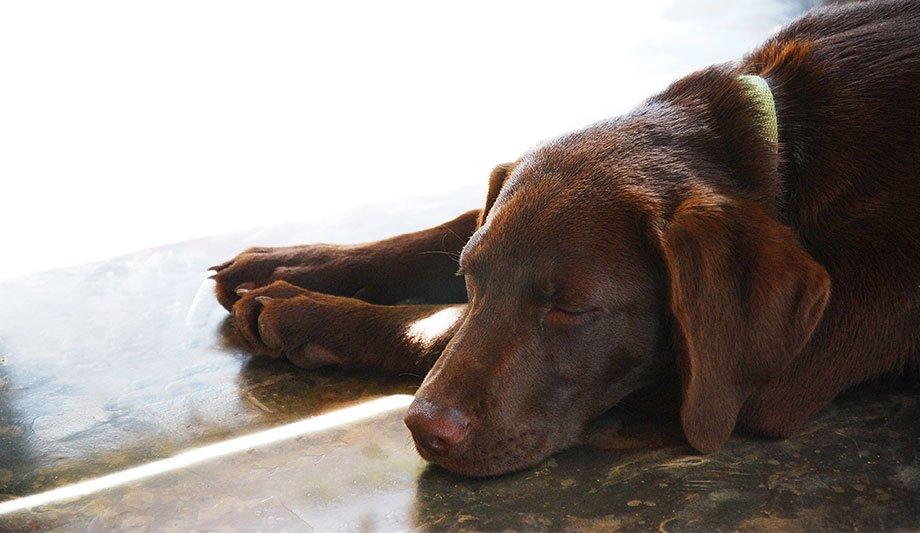
Dogs may “mark their territory” on an outdoor HVAC unit, and dog urine can cause damage and/or make components rust faster. If a pet frequently lies near the unit, the accumulated fur can interfere with how the system runs.
More frequent maintenance
Pet owners should plan for more frequent maintenance checks to address the issues above. (And installers may need to remind them!) Frequent checks by an HVAC professional can avoid the larger expense of replacing a system.
Air filters should be changed more often in homes with pets and should be checked at least once a month to be sure. The filter should be replaced as needed, or use a reusable filter that can be washed. Metal ductwork attracts pet hair and dander, so it should be checked often and cleaned as needed.
Minimizing impact on HVAC system
Pet owners likely make up at least half of any HVAC company’s customer base
Beyond addressing the specifics of maximizing HVAC performance in a pet owner’s home, the technician – and his or her employer – may provide additional services. One is education. Technicians can tell homeowners what they can do to minimize the impact of their furry friends on the HVAC system.
For example, getting pets groomed, or even brushing them often, can minimize loose hair and dander. Cleaning and vacuuming often help to ensure that there is less hair and dander lying about and being sucked up into the HVAC system.
Considering pets in HVAC services
More than half of U.S. households own some type of pet, and the numbers go up every year. One estimate puts the number at 77 million dogs and 58 million cats in the United States. Pet owners likely make up at least half of any HVAC company’s customer base, which is reason enough to consider their needs when offering HVAC installation and maintenance services.
One may consider enhanced services and offerings that might address any concerns and target this specific market. Whether it’s more frequent maintenance or they need a new system, these customers will be depending on HVAC professionals to keep their homes comfortable – for themselves and their furry friends.