Government Regulations - Expert Commentary

As HVAC professionals know, the heating and cooling industry is undergoing a transition from refrigerants like R-410A to low global warming potential (GWP), or A2L, refrigerants such as R-454B. When preparing customers for the changes that the refrigerant shift brings, contractors can stay ahead of the learning curve by investing in staff training, purchasing necessary new tools for their HVAC technicians, and educating their residential and commercial customers about the impacts. As the indus...

Meeting a project’s overarching design goals is vital in the building and construction sector. Creating a sustainable building could be one of these goals — driven by company commitments, federal policies, and state-based initiatives. However, the priorities of minimizing capital and long-term operating costs and maintaining project timelines often prevail. Frequently, the perception in the industry is that these priorities — especially cost — are incompatible with...

The HVAC industry stands at a critical juncture, facing substantial regulatory pressures aimed at reducing its environmental impact through the phased elimination of high Global Warming Potential (GWP) refrigerants. Driven by international agreements and local environmental guidelines, manufacturers, suppliers, and service providers are swiftly transitioning towards more sustainable alternatives. This shift is fundamentally reshaping compressor technologies, retrofitting procedures, and lifecyc...

As demand continues to grow for sustainable, energy-efficient solutions in refrigeration and heating, both Europe and North America are navigating a rapid transition toward natural refrigerants. There is a strong demand for new CO2 systems, including heat pumps and various other applications. Higher capacity compressors with larger operating envelope, such as Danfoss’ Bock HGX56 CO2 T series, will play a critical role in supporting this growing need. Air to water heat pumps As shown in...
“If you don’t like the weather in New England, just wait a few minutes.” To this day, Mark Twain’s quote is used to describe quickly changing weather conditions in regions throughout the United States, United Kingdom, and elsewhere. However, in contrast to the weather, the climate change being experienced globally is creating nontraditional conditions that are much more permanent. Consequently, HVACR systems are being subjected to a new set of conditions that, if not ad...

It’s often said the only constant in life is change. In the HVACR industry, that phrase has been especially true. We saw another year of transitions in 2024 that included evolving efficiency and refrigerant regulations, changing corporate net zero targets, the continued emergence of advanced heat pumps, and the impact of artificial intelligence (AI) in building management. Smart and sustainable Throughout these transformations, the industry continues to overcome challenges and in...
As environmental regulations become increasingly stringent, the HVAC/R industry is turning to sustainable refrigerants to minimize environmental impact. A3 refrigerants—flammable gases with low global warming potential (GWP)—are emerging as a preferred choice. However, their adoption introduces additional regulatory requirements. EPA regulations To address these challenges, the industry is leveraging innovative solutions like enhanced small-diameter copper tubes, which enable com...

Until a couple of years ago, most of the talk about heat pumps occurred around this time of year, when more than half the planet prepares for an autumn cooldown. These discussions were typically limited to regions that only experienced moderate winters. But as anyone who has recently perused an HVACR trade magazine or website—or participated in an industry webinar, event, or social media conversation—can tell you, the topic of heat pumps is virtually unavoidable. Not only do heat p...

By now, the HVAC industry is well versed in, and operating successfully with, various HFC refrigerant production and consumption reduction schedules put forth by regulatory bodies. Under the EPA American Innovation and Manufacturing (AIM) Act, for example, the U.S. experienced a significant reduction (another 30%) in January 2024, advancing the goal of an 85% HFC phasedown from historic baseline levels by 2036. And the EU is working toward its stated objective of an HFC phaseout by 2050. tech...
It’s an exciting and challenging time to be an HVACR professional. The industry is rapidly evolving to implement advanced technology and adapt to environmentally conscious regulations all while experiencing a skilled labor shortage. As contractors struggle to keep up, many are turning to HVACR press fittings for their efficiency, safety, and reliability. The demand for these press fittings has nearly doubled in the past five years alone. unique characteristics While the global sh...

By now, most of the HVACR industry is familiar with the HFC phasedown portion of the U.S. EPA American Innovation and Manufacturing (AIM) Act that was signed in 2020 and finalized in 2021. The first phasedowns started Jan. 1, 2020, with a 10% reduction in HFC refrigerant production, importation, and consumption, and was followed by an additional 30% reduction that began Jan. 1, 2024. As these regulations work to achieve a total 85% HFC phasedown from historic baseline levels by 2036, Tech...

Refrigerant transitions are imperative to comply with evolving emissions regulations and decarbonization agendas. The dynamic landscape necessitates continual adaptation to meet current requirements, with further changes anticipated. However, switching refrigerants poses numerous HVAC/R system design hurdles, affecting system performance and component selection. Energy efficiency standards Energy efficiency standards are a paramount concern, driving innovation towards systems that perform we...

I remember Dr. Dave Bowman from Kubrick's "2001: A Space Odyssey" commanding HAL 9000 to open the pod bay doors, and HAL chillingly responds, "I'm sorry, Dave. I'm afraid I can't do that." Fortunately, unlike the fictional HAL," ChatGPT and other GenAI tools remain compliant and helpful, far from refusing commands or leaving us stranded in space. In the rapidly evolving landscape of technology, artificial intelligence (AI) should play a pivotal role in transforming various aspects of our dai...
Hydrofluoroolefin (HFO) and so-called “natural” refrigerants have coexisted for more than two decades, with each serving the specific needs of the HVACR industry. However, over the past several years, the proverbial aisle has formed, with pro-HFO voices on one side and “natural” advocates on the other. EU F-gas regulations The debate is getting more “ink” these days, partly due to advances in proposed EU F-gas regulations as well as the acceleration of glo...

This time of year, a lot of planning is underway. Companies throughout the HVACR industry are mapping out the best path to maintain their current level of business, pursue growth while staying in their lane, or expand into a new area based on changing customer needs and industry opportunities. Whether you’re a small family-owned residential HVAC shop, a major player in commercial HVACR service or manufacturing, or anywhere in between, it’s helpful to be aware of the strong dynamics...
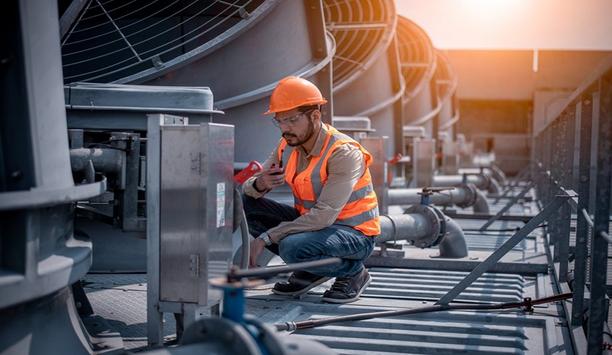
Nothing is immune to entropy. As buildings age, they suffer natural breakdowns in efficiency, performance, and useability, compromising occupant comfort and leading to higher energy bills. Luckily, they do not have to stay that way. Retro-commissioning brings existing structures up to speed so they can function their best. What Is Commissioning? Commissioning helps buildings operate as the owners intended and ensures staff maintains their equipment and systems. During new construct...

Using air conditioners and electric fans to stay cool accounts for nearly 20% of the total electricity used in buildings around the world, according to a report from the International Energy Agency. hybrid work model As a unique mix of key factors, such as the adoption of the hybrid work model and escalating heatwaves in certain regions of the United States keep people indoors for longer periods, this 20% share represents an increasingly costly line item on household budgets. Those within th...

According to some recent estimates, the cooling industry accounts for approximately 10% of global carbon dioxide (CO2) emissions. To place this in perspective, the transportation sector, as the highest contributor, accounts for approximately 20% of global CO2 emissions. While some may see this as a “glass half empty” scenario, the better approach is the one taken by key players in the HVACR space. As we see it, because the cooling industry has been a source of significant emis...

The importance of caring for the environment has become a top priority both around the world and increasingly in the United States. As regulations and social expectations become more stringent, future-proofing our infrastructure - beginning with energy consumption in buildings - is a natural first step. There are four key strategies a building owner or facility manager can focus on to improve energy efficiency and reduce a building’s carbon footprint, all while improving building performa...

Ventilation systems have never been more important as we battle against an ever-evolving pandemic, and crucially, they must be installed correctly to deliver good indoor air quality for years to come. David Millward, Group Product Manager at Elta Group, explains the practical considerations needed for contractors in charge of installing them. Good indoor air quality (IAQ) With a pandemic that has been raging for going on two years, there has never been a time where good indoor air quality (IAQ...

AI (Artificial Intelligence) is a smart buildings’ biggest ally. Without it, a building could hardly be classed as smart. For building owners and managers, AI is imperative to create a secure and comfortable experience for their occupants every day. What a building platform should do is gather data from various sources from the building management system and other smart technologies, to gather it all in one place. The data should then be fed into a flexible, scalable cloud-based platform...

Every six years, the United States Department of Energy (DOE) reviews how much energy certain home appliances and mechanical systems use and determines if an increase in energy efficiency requirements is justified. New energy conservation standards As a result of the 2017 assessment, the DOE has mandated new energy conservation standards that take effect on January 1, 2023, for all newly manufactured residential and commercial air conditioners, heat pumps, and gas furnaces. In addition t...

Even though the COVID-19 pandemic is seemingly drawing to a close, living, working and learning at home is set to continue. Under this new normal, home electricity use is expected to double by 2050. Simultaneously, as climate change devastates communities around the world, we are faced with a moral and economic obligation to cut CO2 emissions from houses. Our goal is to build Net Zero houses and we can't get there fast enough. Fossil fuels use in heating systems Many countries continue to rely...

Seasonal transitions are the perfect time to take inventory and inspect a building’s various systems. We’ve been reminded for years that when we set our clocks back, we should also replace the batteries in our smoke detectors. The same thought process can be applied in support of seasonal preventative maintenance for a building’s HVAC system. Now that the cooling season has passed for a large part of the country, it is time to ensure that HVAC systems have been shut down prope...

I am writing this the day after the Autumn Spending Review, which among many measures, included a huge focus on how the Government wants to ‘level up the country’, creating a new post-pandemic economy, with higher wages and higher skills. Part of this is the £500 million ‘Multiply’ scheme, which aims to increase numeracy and basic mathematics for adults in the United Kingdom via in person tutoring, digital training and flexible courses. Lack of basic skills to acce...

The development of digital technologies in the Heating, Ventilation and Air Conditioning (HVAC) sector has been transformational for the industry, as well as for those who run HVAC systems. While the electrification and digitalization of machines, and assets has made a lot of operations simpler, it has also meant that the collection of machine data has never been more critical. Given that engineers can now view lots of different metrics on a single screen, including things like heating control...

With the increase in climate protests and UN reports highlighting future net-zero challenges, industries are trying to focus their business practices on principles of sustainable development and responsible investment. In the building sector specifically, landlords are gravitating towards certification schemes such as BREAM, LEED, and WELL (among others) to promote the sustainability of their assets and boost green credentials. Tenants are now demanding that the spaces they live and work in ar...

It is now more common to read about cases of Legionnaires’ disease in the media than ever before, with outbreaks regularly being reported in cities around the world, all the time. Many of these cases are attributed to contamination of domestic systems, showers and spas, but some are the result of operating cooling towers. While this problem is not new, with the first reported case in Philadelphia, in 1976, the United Kingdom (UK) has been at the forefront in leading the battle with Legionn...

At the moment, it seems as though a day rarely goes by without low-carbon heating hitting the headlines. Whether it is reports of ‘revamping’ the Clean Heat Grant, to include a ‘boiler scrappage’ scheme, which may offer home owners up to £7000 to make the switch to a low-carbon alternative, to speculation that the Prime Minister is under pressure to push back the 2035 ban on gas boilers, the debate on how and when the low-carbon heating revolution will happen is ong...

In today’s world, we spend almost 90 per cent of our time indoors, in our workplaces, leisure areas and our homes. It is no secret that the built environment has been relatively slow in its embrace of information technology and automation. According to KPMG’s ‘Building a Technology Advantage’ report, fewer than 20 percent of construction and engineering executives, and major-project owners said they are re-thinking their business models, so as to incorporate new technolo...


