
In an era of rising energy costs and growing concerns about sustainability, organizations across industries are rethinking how they manage indoor climate control.
While central HVAC systems remain essential in most facilities, portable HVAC units have emerged as a complementary solution that addresses specific cooling needs with greater precision and efficiency.
By enabling targeted temperature control where and when it is required, portable systems can reduce wasted energy, improve occupant comfort, and extend the flexibility of existing infrastructure.
Conventional Cooling
Traditional HVAC systems are typically designed to regulate conditions across entire buildings
Traditional HVAC systems are typically designed to regulate conditions across entire buildings or large zones. While this approach ensures broad coverage, it is not always the most energy-efficient method.
Cooling or heating unoccupied areas, overcompensating for high-demand zones, or running equipment at maximum capacity during peak loads can all lead to energy waste and higher operational costs.
Additionally, some environments face rapidly changing conditions that central systems alone may struggle to address. Examples include temporary workspaces, seasonal demand spikes, equipment-intensive areas such as server rooms, and facilities undergoing maintenance or renovations. In these scenarios, the ability to deploy additional, localized climate control is highly valuable.
Portable HVAC Systems
Portable systems reduce the need to overcool large spaces just to manage one problematic area
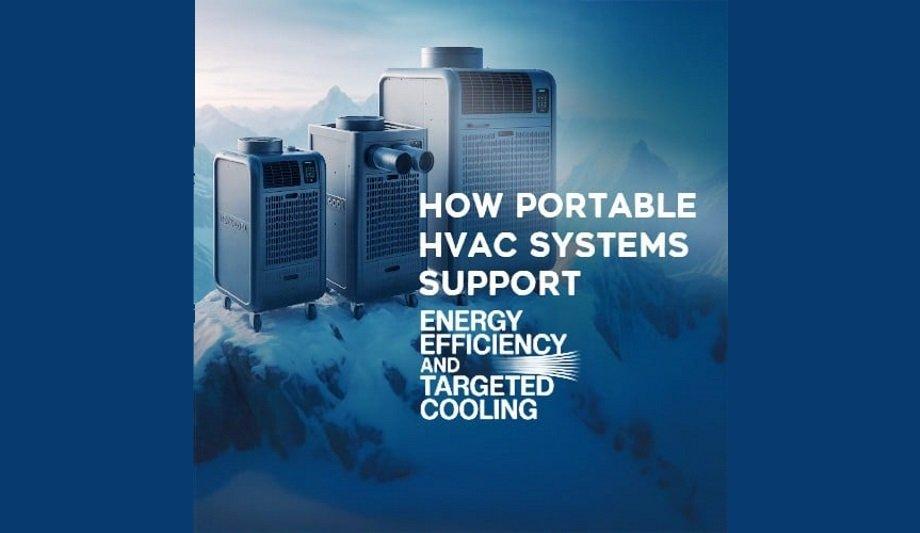
Portable HVAC units offer a flexible way to manage these challenges.
Unlike fixed systems, they can be deployed exactly where needed, whether that is a data center rack generating excess heat, a temporary medical facility requiring precise air control, or a manufacturing line where processes create hot spots.
Because they provide cooling (or heating) at the source of demand, portable systems reduce the need to overcool large spaces just to manage one problematic area. This targeted approach translates into significant energy savings and prevents central HVAC systems from being overburdened.
Energy Efficiency Benefits
The energy efficiency advantages of portable HVAC systems can be observed in several key areas:
Targeted Cooling and Heating
By conditioning only the necessary zones, portable systems minimize unnecessary energy consumption. For instance, rather than cooling an entire warehouse to protect a small set of sensitive materials, a portable unit can maintain the required temperature in that specific area.
Load Sharing with Central Systems
Portable HVAC can act as a supplemental resource during peak demand periods. Instead of scaling up the central system to handle short-term spikes, portable units provide additional capacity precisely where needed, reducing overall energy use.
Reduced Equipment Strain
By alleviating hotspots and load imbalances, portable HVAC systems prevent central equipment from running continuously at high capacity. This not only saves energy but also extends the lifespan of the primary system, lowering maintenance costs and downtime.
On-Demand Operation
Many portable systems are designed to be switched on and off as needed. This on-demand functionality avoids the inefficiency of maintaining constant cooling in areas that are only occasionally in use.
Adaptability to Renewable Integration
As organizations adopt renewable energy strategies, portable HVAC units can be strategically operated during periods of high renewable generation (e.g., solar peak hours), helping balance energy consumption with sustainability goals.
Applications Across Industries
The value of portable HVAC is evident in a wide range of sectors:
- Data Centers and IT Facilities: Heat generation from servers is highly localized, and portable cooling enables precise temperature control at the rack or aisle level without overcooling entire rooms. Industry resources, such as MovinCool, provide examples of how portable HVAC systems are deployed to address these concentrated heat zones efficiently.
- Manufacturing and Industrial Environments: Equipment and processes often create uneven temperature zones. Portable HVAC provides spot cooling for workers or machinery, improving both comfort and safety.
- Healthcare: Temporary clinics, isolation wards, or operating rooms often require rapid deployment of climate control. Portable HVAC offers the necessary flexibility without extensive infrastructure changes.
- Retail and Hospitality: Seasonal demand surges or facility renovations can strain existing systems. Portable HVAC allows businesses to maintain comfort without permanent installations.
- Events and Temporary Spaces: From outdoor tents to pop-up venues, portable units provide reliable climate control in environments where permanent systems are not practical.
Technical Considerations for Effective Deployment
While portable HVAC solutions provide many benefits, maximizing their efficiency requires careful planning:
- Sizing and Capacity Matching: Oversized or undersized units can lead to inefficiency. Proper load calculation ensures that the system delivers the required output without energy waste.
- Airflow Management: Ensuring adequate ventilation and proper ducting is crucial to prevent recirculation of hot air and to optimize cooling effectiveness.
- Placement and Mobility: Portable systems should be positioned for maximum coverage while allowing easy relocation as needs change.
- Integration with Existing Systems: Portable units work best when used in harmony with central HVAC systems. Thoughtful integration ensures balanced loads and consistent performance.
- Maintenance and Monitoring: Like all HVAC equipment, portable units require regular maintenance. Monitoring energy consumption and performance helps identify opportunities for further efficiency improvements.
Broader Sustainability Context
The adaptability of portable solutions supports a more resilient approach to climate control
Beyond immediate operational benefits, portable HVAC systems play a role in broader sustainability initiatives. Energy efficiency directly translates to reduced greenhouse gas emissions, helping organizations meet corporate responsibility targets and regulatory requirements.
Moreover, the adaptability of portable solutions supports a more resilient approach to climate control.
In an era of frequent climate extremes and evolving workplace dynamics, the ability to scale cooling resources up or down, without overinvesting in permanent infrastructure, ensures both economic and environmental advantages.
Looking Ahead
As buildings become smarter and more connected, the role of portable HVAC systems is expected to expand
As buildings become smarter and more connected, the role of portable HVAC systems is expected to expand.
Integration with building management systems (BMS), remote monitoring, and IoT-enabled controls will allow facilities to deploy portable units with even greater precision and automation. This evolution will strengthen their contribution to energy efficiency, comfort, and operational resilience.
Portable HVAC systems are no longer seen merely as temporary stopgaps. They have become strategic tools for improving energy efficiency, providing targeted cooling, and enhancing flexibility across a variety of environments.
Practical applications
For more examples of practical applications, see resources like MovinCool’s Industrial Applications. By reducing strain on central systems, lowering energy consumption, and adapting to dynamic demands, portable solutions offer organizations a practical pathway toward both operational efficiency and sustainability.
In a world where energy management and environmental responsibility are becoming top priorities, portable HVAC stands out as a versatile ally.