Data centers, operating continuously and bound by stringent Service Level Agreements (SLAs) ensuring 99.999% uptime, now find themselves under scrutiny for every kilowatt of energy used in the pursuit of sustainability goals. Striving for both redundancy and sustainability once seemed improbable, as traditional methods of ensuring redundancy, such as N+1 configurations, often counter sustainability initiatives.
However, forward-thinking operators are redefining the equation, achieving Tier 3 redundancy while driving Power Usage Effectiveness (PUE) below 1.3 without compromising uptime or sustainability commitments.
The New Equation for Data Center Efficiency
The dichotomy between redundancy and efficiency has been a significant design challenge for data centers
Historically, the dichotomy between redundancy and efficiency has been a significant design challenge for data centers. Conventional cooling systems, including legacy chillers and CRAH units, were built under an ethos that prioritized redundancy through resource multiplication, a method that is becoming increasingly unsustainable.
With evolving mandates, like Germany's Energy Efficiency Act requiring a PUE of 1.2 for new builds from July 2026, the landscape is changing, forcing data centers to find sustainable solutions while maintaining essential redundancy.
Redundancy Revisited: Reliability Meets Sustainability
Ensuring continuous availability is vital as any cooling failure could potentially result in millions of dollars in revenue loss and SLA penalties. Traditional redundancy methods often involve an N+1 configuration, using four units when only three are necessary, thereby increasing energy consumption and pushing PUE higher.
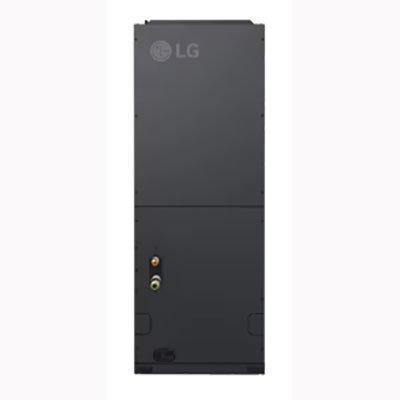
Alternatively, modern modular precision cooling, such as Airedale by Modine’s CDUs, offers scalable and efficient redundancy by deploying smaller units that adapt to real-time demands, maintaining both operational efficiency and redundancy.
The Sustainability Mandate: Pushing Towards PUE 1.0
The call for efficiency comes as much from economic incentives as from regulatory pressure
The call for efficiency comes as much from economic incentives as from regulatory pressure. Lowering PUE not only cuts costs but also garners sustainability credits within regions implementing carbon pricing.
Therefore, companies like Airedale provide solutions tailored to these demands, integrating AI-enhanced systems to reduce energy consumption dramatically and ensure efficient cooling across varying loads, thus aiding data centers in meeting both their redundancy and efficiency goals.
Bridging the Gap with Plans That Blend Efficiency and Reliability
By embracing AI and dynamic thermal management, data centers optimize cooling operations to match real-time conditions. Strategies such as predictive cooling use machine learning to anticipate thermal needs, enhancing cooling precision and efficiency.
Opting for modular infrastructure allows for scalable adaptation to demand changes, ensuring that redundancy is achieved without unnecessary resource use. These strategies balance redundancy with sustainability effectively, reducing resource wastage while maintaining necessary system reliability.
Real-world Applications
Technologies like Airedale’s SmartCool and TurboChill systems exemplify modern engineering that reconciles
A practical example involves a facility operating a traditional N+1 setup, which can transition to modular, intelligent systems for enhanced efficiency. By deploying smaller, variable-speed modules, such a facility can reduce PUE, lower energy consumption, and manage redundancy more effectively.
Technologies like Airedale’s SmartCool and TurboChill systems exemplify modern engineering that reconciles historic trade-offs, achieving optimal performance while remaining sustainable.
Striking the Perfect Balance
Redundancy and sustainability, once thought to be opposing goals, are now achievable through modern cooling technologies. Data centers can no longer rely solely on oversized systems to meet redundancy; instead, they must integrate adaptable, scalable solutions that optimize efficiency.
The path forward includes redefining traditional strategies using advanced modular cooling solutions, showcasing how data centers can harmonize operational demands without sacrificing their sustainability objectives.
Data centers run 24/7 and are now caught between the Service Level Agreements that demand 99.999% uptime and the ESG report that scrutinizes every kilowatt of energy used. Meanwhile, the board wants both redundancy and a path to net-zero emissions.
Traditional wisdom suggests they can’t have both, as every redundant backup chiller and N+1 configuration pushes them further from sustainability targets. That wisdom is outdated because smart operators are rewriting the rules. They’re already achieving Tier 3 redundancy while driving PUE below 1.3. They’re meeting stringent uptime requirements without sacrificing their sustainability commitments.
The old trade-offs no longer apply when they approach cooling infrastructure differently. Can redundancy and sustainability actually work together?
The New Equation for Data Center Efficiency
The tension between redundancy and efficiency has long defined data center design. You’ve probably spent countless hours defending the N+1 cooling configuration to sustainability teams who see nothing but excess capacity and wasted energy. Meanwhile, they’re explaining to operations why they can’t simply remove “unnecessary” equipment to improve PUE metrics.
Traditional cooling infrastructure forces this conflict. The legacy chillers and CRAH (Computer Room Air Handler) unit designs originated from a different era, when energy was cheap, carbon reporting was voluntary, and rack densities typically topped out at 5kW. These systems achieve redundancy through brute force multiplication. Need reliability? Double everything. The environmental cost was an afterthought.
However, the math has changed due to stricter mandates in many countries. For example, Germany’s Energy Efficiency Act mandates a PUE of 1.2 for new builds, effective after July 1, 2026.
Operating costs and corporate sustainability goals
The pressure to optimize is higher. Now, they have to compete on both uptime and efficiency metrics, which directly impact the operating costs and corporate sustainability goals.
Despite all of this, traditional cooling equipment still forms the backbone of most facilities. They can’t rip and replace overnight, nor should them. The question becomes: How do they realistically push toward a PUE of 1.0 without compromising the redundancy that keeps the servers running?
Redundancy Revisited: Reliability Meets Sustainability
The customers expect continuous availability, and compliance frameworks demand it. Unfortunately, a single cooling failure can trigger cascading outages that result in millions of dollars in lost revenue, damaged reputation, and potential SLA penalties.
The challenge lies in how they implement redundancy. Traditional approaches treat backup capacity as a form of insurance.
- An N+1 configuration means running four units when three would suffice, with that fourth unit consuming power even at minimal load.
- Moving to 2N redundancy means you’re running two parallel systems when one is sufficient.
- Distributed redundancy offers better efficiency, but it also adds complexity that many facilities struggle to manage effectively.
This resource multiplication directly opposes sustainability goals. Every redundant component increases the total facility power, pushing the PUE higher. Worse still, underutilized equipment often operates outside its optimal efficiency range.
Modern modular precision cooling solutions
Thankfully, modern modular precision cooling solutions, such as Airedale by Modine’s coolant distribution units (CDUs), offer an alternative path. Instead of oversizing individual units, they can deploy smaller, right-sized modules that scale incrementally.
These systems implement N+1 redundancy at a granular level. Designed for direct-to-chip and hybrid cooling environments, CDUs facilitate simplistic, modular, efficient, and performance-driven deployments.
The Sustainability Mandate, Pushing Towards PUE 1.0
The pressure comes from all directions. ESG investors scrutinize the environmental metrics, customers demand carbon-neutral operations, and regulators want strict efficiency standards.
Industry expectations have also shifted dramatically. A few years ago, a PUE of 1.5 was considered respectable; however, now, anything above 1.3 is no longer considered good enough.
The complexity of approaching these targets while maintaining redundancy can’t be overstated. They’re optimizing multiple variables simultaneously: cooling efficiency, power distribution losses, and redundancy overhead.
Incentives align with environmental goals
Improvement in one area might compromise another. For example, raising inlet temperatures improves chiller efficiency, but this may require faster fan speeds and consume more power.
However, financial incentives align with environmental goals. Lower PUE directly translates to reduced operating costs. In regions with carbon pricing, efficiency improvements have an immediate bottom-line impact. Government and utilities even offer rebates for efficient cooling technologies, offsetting upgrade costs.
That’s where Airedale comes in. Its high-efficiency precision cooling equipment specifically addresses these challenges. Airedale’s precision AC units and chillers feature variable-speed compressors, advanced economization cycles, and predictive AI controls that optimize performance across varying loads. For example, its AI-enhanced Cooling System Optimizer™ reduces energy consumption by up to 40%. All this leads to lower PUE and sustainability gains.
Bridging the Gap with Plans that Blend Efficiency and Reliability
The convergence of efficiency and reliability happens through intelligent design. Leading data center facilities are implementing strategies that enhance both metrics simultaneously.
One such example is AI-driven predictive cooling. Here, machine learning algorithms analyze thousands of data points to anticipate thermal demands before they materialize. This predictive capability allows them to run leaner cooling infrastructure without risking hot spots.
Dynamic thermal management takes this further. Instead of static setpoints, the cooling infrastructure continuously adapts to real-time conditions. During low-load periods, systems automatically reduce capacity, improving efficiency. When demand spikes, additional modules activate seamlessly. This approach maintains redundancy while ensuring active equipment operates at optimal efficiency points.
More best practices to balance redundancy
Here are a few more best practices to balance redundancy with sustainability:
- Right-sizing infrastructure requires a detailed analysis, but it pays enormous dividends. Many facilities operate with excessive cooling capacity based on their nameplate IT loads, which rarely materialize. Instead, they can analyze actual heat loads and implement containment strategies. By doing so, they make redundancy more efficient by default.
- Real-time monitoring and predictive analytics provide the visibility necessary to optimize operations continuously. Modern DCIM platforms integrate with cooling controls, which provide holistic views of thermal performance. With it, they can identify inefficiencies and track PUE in real-time.
- Smart modular designs completely change the redundancy equation. Instead of monolithic systems, they deploy building blocks that scale with demand. Need more redundancy? Add a module. Is efficiency suffering from underutilization? Redistribute loads across fewer units.
This flexibility is exactly what Airedale by Modine’s cooling portfolio represents — modularity, predictive intelligence, and optimized redundancy without waste. The Cooling System Optimizer coordinates multiple units, ensuring they work in harmony rather than in competition, thereby maximizing efficiency while maintaining the required redundancy levels.
Real-world Applications
Consider a 10MW facility struggling with a PUE of 1.45. It’s running a traditional N+1 configuration with four 1,000-ton chillers. Let’s say that, during typical operations, the IT load hovers around 7 MW, indicating that the cooling infrastructure operates well below optimal capacity. The fourth chiller provides redundancy but contributes to inefficiency.
By transitioning to a modular approach with intelligent controls, the same facility could deploy twelve 300-ton units with variable-speed compressors. Advanced sequencing would ensure optimal loading across active units while maintaining N+1 redundancy. During partial loads, fewer modules operate at higher efficiency, and the control system predictively stages units based on IT demand patterns learned over time.
The measurable outcomes transform both operational and sustainability metrics, including:
- PUE reduction
- Annual energy savings
- Operating cost reduction
- Enhanced reliability through intelligent redundancy management
- Reduction in water consumption through optimized cooling tower operations
This scenario mirrors what facilities achieve with modern cooling infrastructure. Products in Airedale’s SmartCool or TurboChill ranges demonstrate how contemporary engineering solves yesterday’s trade-offs. High-efficiency compressors, sophisticated economization, and intelligent controls work together to maintain redundancy while pushing the boundaries of efficiency.
Striking the Perfect Balance
Redundancy and sustainability are complementary objectives that require thoughtful integration. The outdated methods of achieving reliability through oversizing and excessive redundancy no longer serve data centers that compete on both uptime and efficiency metrics.
The best approach is to select cooling infrastructure that enhances operational flexibility and efficiency. Modern systems must adapt to varying loads, integrate with facility-wide optimization platforms, and scale incrementally as demands evolve. The technology already exists now to achieve Tier 3 and better redundancy while maintaining a lower PUE.
The next steps should focus on evaluating the current infrastructure against these modern benchmarks.
- Where are you sacrificing efficiency for redundancy?
- Which systems operate outside their optimal efficiency ranges?
- How could modular, intelligent cooling solutions transform the redundancy strategy?
The path forward requires partners who understand both the technical complexities and business imperatives you face. Airedale’s advanced modular cooling solutions can help you achieve these exact critical objectives.