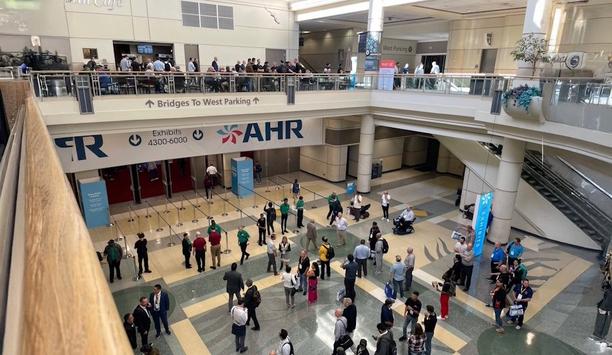

It’s great time to be in the HVAC industry. That was the optimistic vibe as the AHR Expo opened in Las Vegas, the first such in-person gathering of the industry since the beginning of the global pandemic. Attendance was moderate and steady throughout the first day of the show as HVAC professionals took stock of technology developments that have emerged over the last two years.
COVID changed the HVAC market, probably forever, and the changes extend beyond the masks that were dutifully worn by 99% of the AHR attendees. COVID has increased awareness of issues such as indoor air quality (IAQ) and ventilation, all of which spells opportunity for HVAC businesses.
Johnson Controls
However, beyond reacting to COVID, the industry is also on the cusp of a new wave of technology development built around electrification, decarbonization and greater energy efficiency. There is a trend toward digitization, making more things possible by applying computer technologies to complement and enhance improvements in equipment operation. Smarter systems that are more autonomous and/or deploy the principles of artificial intelligence are among the approaches.
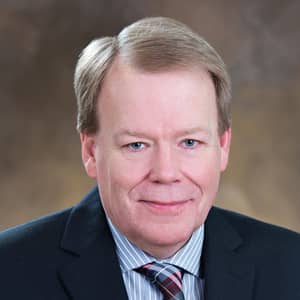
“It is an incredibly important moment in time that we can totally rethink buildings and what buildings are about in our business and on our balance sheet,” said Katie McGinty, VP and Chief Sustainability and External Relations Officer for Johnson Controls. “Right now, with the technology we are talking about, the building becomes a strategic asset to drive your business plan. I think we are in a place where we are not just beating down problems, such as climate change and COVID, but now buildings are a key strategic asset that drives your business, excites your employees and helps you meet and exceed your goals.”
 |
| “Right now, with the technology we are talking about, the building becomes a strategic asset to drive your business plan” - Katie McGinty, VP and Chief Sustainability and External Relations Officer for Johnson Controls |
New regulations from DoE
Regulations are driving much of the innovation in HVAC, including new U.S. Department of Energy (DoE) minimum efficiencies for central air conditioners and heat pumps that take effect in January 2023. Also on the horizon are limits on use of low-global warming potential (GWP) refrigerants that take effect in 2025. Throughout AHR Expo, there is evidence of how the industry is hard at work to achieve these requirements.
Prompting greater decarbonization are demands from the Securities and Exchange Commission to disclose carbon emissions in buildings and to draw down the amount of CO2 per square foot.
Also driving innovation is greater investment, such as the U.S. Infrastructure Bill, and legislation including the “Fit for 55” plan in the European Union.
LG Electronics
An important technical trend evident at AHR is the need for manufacturers to extend the effective temperature range of compliant technologies; in other words, to create heat pumps that are effective in even colder climates without being augmented by other means.
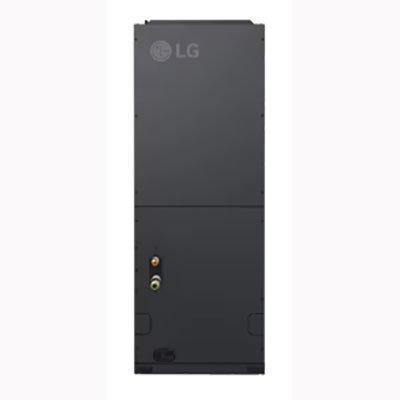
For example, LG’s Inverter Scroll Heat Pump Chiller provides heating and cooling from minus 22 degrees F to 122 degrees F, making it acceptable in Phoenix or in New York. Even if a system opts for supplemental heat, it can be provided by electrical sources.
Open Blue system
New business models are also emerging, including the “as a service” approach, in which companies provide a full range of services from the cloud in a “subscription” arrangement with the customer making monthly payments. An example is Johnson Controls’ “Open Blue” system, which provides “indoor air quality (IAQ) as a service.”
Indoor air quality matters and is directly connected to mitigating the spread of airborne infection, but it has broader implications, too.
“If we can make the pivot from reacting to COVID to being proactive about the benefits to better productivity provided by a well-managed building environment, then we win,” said Tyler Smith, Executive Director, Healthy Buildings, Services and Solutions, Johnson Controls.
Another trend evident at AHR Expo is a labor shortage in the industry. Approaches to the problem include remote maintenance and service systems that can analyze a problem before a truck rolls, thus saving on labor resources. Another approach is creation of technologies that are easier to install and new tools that simplify installation and save labor hours.
Look for more coverage of these trends and technologies after the show ends.