Nuaire - Experts & Thought Leaders







Latest Nuaire news & announcements
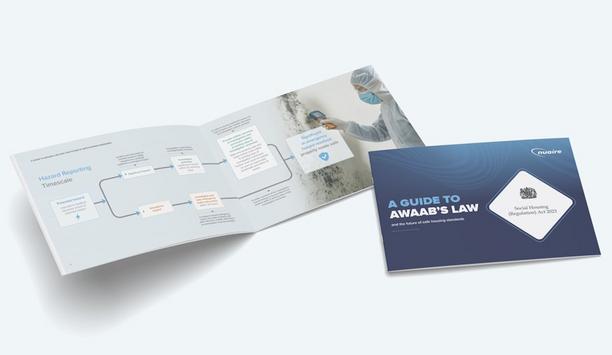
Nuaire has published A Guide to Awaab’s Law and the Future of Safe Housing Standards designed to help social housing organisations comply with Awaab’s Law, which came into effect on 27th October 2025. The legislation was introduced following the tragic death of two-year-old Awaab Ishak in 2020, caused by prolonged exposure to mould in his family’s rented home. Implementing Awaab's law The new guide clearly explains the requirements to investigate and address damp and mould hazards set out in Awaab’s Law, and the legally enforceable timescales set. It provides a clear overview of the changes, along with practical checklists and tailored ventilation advice to enable social housing providers to comply with the new law. Guide to better homes The new guide highlights Nuaire’s 50 years’ expertise in tackling condensation and mould in housing and features advice for housing providers on how to best define a ventilation strategy that not only meets part F requirements and helps manage costs, but creates a safe, comfortable home for residents. The guide gives an example of a whole-home ventilation approach that balances compliance, comfort and air quality together to create better homes. Preventing hazards Joe Lloyd-Allen, Residential Product Manager at Nuaire, comments, “Awaab’s Law represents a step-change in how damp and mould must be tackled in social housing. Our new brochure gives housing providers practical guidance on meeting these obligations and highlights proven ventilation strategies that can prevent hazards before they occur. At Nuaire, we are committed to supporting the sector in creating safer, healthier homes.”
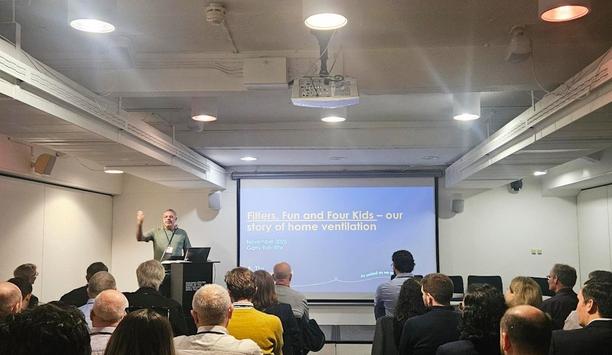
Indoor air quality and ventilation specialist Nuaire is proud to have sponsored the Ventil8 Day Exchange, which took place on Thursday 6th November at The Building Centre, London. Organized by the Building Engineering Services Association (BESA), the Ventil8 Day Exchange is part of the World Ventil8 Day initiative, bringing together professionals from across the built environment to share insights, innovations, and practical solutions for improving indoor air quality (IAQ). This year’s theme is ‘Collaborate to Ventilate’. This year’s event featured thought-provoking case studies, expert presentations, and panel discussions exploring key issues such as residential ventilation and mold, healthy, energy-efficient homes, and the future of commercial building air quality. Commercial and residential ventilation solutions Attendees also had opportunities to network and engage directly with industry pioneers, including sponsors and exhibitors. As a sponsor, Nuaire had a stand at the event, and provided visitors with information on the company’s range of commercial and residential ventilation solutions and advice on best practice. The event opened with a moving talk from Garry Ratcliffe, CEO of the Golden Thread Alliance, a multi-academy foundation of nine primary schools in Kent. Drawing on his experience with the BBC’s DIY SOS Big Build—where his family’s home was demolished and rebuilt in just over a week—Garry explored how installing a bespoke ventilation system dramatically improved life for his children, three of whom have complex disabilities. Nuaire was proud to be involved in this inspiring project, donating an MVHR system and providing the system drawing. Championing cleaner air Commenting on the company’s support of Ventil8 Day Exchange, Jessica Cook, Nuaire Strategic Marketing Director, said: “We’re delighted to once again support BESA in its mission to raise awareness of the critical role ventilation plays in our health and wellbeing.” “The Ventil8 Day Exchange provides an invaluable platform for collaboration—bringing together engineers, housing professionals, academics, and policymakers to tackle the real-world challenges of indoor air quality. At Nuaire, we believe in creating sustainable, healthy environments for everyone. Events like this are vital to driving forward innovation and best practice across the industry.” Nuaire’s involvement in the Ventil8 Day Exchange reflects its ongoing commitment to championing cleaner air and supporting initiatives that advance understanding of IAQ in both residential and commercial settings.
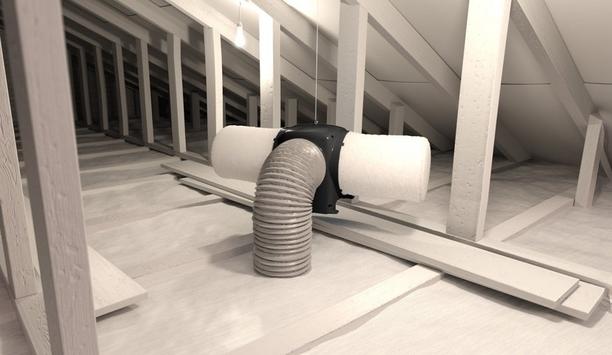
The UK’s first ever Positive Input Ventilation (PIV) system – and still the market pioneer after more than 50 years - the Drimaster from Nuaire, has evolved once more! As from October 2025, the Drimaster-Eco has swapped its casing from a virgin ABS plastic to a recycled plastic. The switch will result in a reduction of 167 tons of equivalent embodied carbon over the period of a year. Natural leakage gaps PIV technology was invented by Nuaire in 1972 and was recognized as a ground breaking, highly effective cure for condensation dampness and its associated problems – including harmful black mould - within residential properties. PIV systems draw fresh air present in the loft space, filter that air, then gently disperse it into the home via a central diffuser at a continuous rate. This creates a positive pressure within the home that forces stale, damp air and pollutants out through the natural leakage gaps found in every UK property, both old and new. Social housing providers Tried and tested, Drimaster PIV units are installed in over a million homes in the UK Tried and tested, Drimaster PIV units are installed in over a million homes in the UK, and are particularly popular with social housing providers due to their cost-effectiveness, speedy install (Drimaster-Eco can be installed in a loft in less than an hour), longevity (many Nuaire Drimaster PIVs have been in operation for over 20 years), and non-disruptive nature for residents. Moving from the virgin ABS plastic to 100% recycled plastic will not impact the quality of the Nuaire Drimaster-Eco PIV units, although customers will notice a change in color from the blue plastic to black. The units will continue to be made in Nuaire’s South Wales state-of-the-art manufacturing facility that covers over 71,000m2 and operates with minimal impact on the environment. Ensuring ultimate comfort Nuaire’s PIV technology and product range has continually evolved since the first iteration in 1972, with the latest incarnation – the Drimaster-Eco - using up to 20% less energy, meaning lower running and life cycle costs. In addition to the standard Drimaster-Eco, the Drimaster-Eco NOX is available which comes with two carbon cartridges which reduces NOX levels – a dangerous pollutant commonly caused by road traffic - within the home by up to 80%. Drimaster models are available with a 400W heating element fitted on the diffuser to temper the airflow should the temperature in the loft space drop below a set point, ensuring ultimate comfort in the home. For homes without lofts, the Flatmaster PIV unit is available. Carbon reduction targets This latest product development comes on the back of Nuaire’s announcement of its switch to the use of XCarb® low carbon-emissions recycled and renewably produced steel on many commercial units, which will directly result in a 68% reduction in CO2 emissions, and the use of recycled plastic for its ducting. As part of the Genuit Group, which has pledged to be net zero by 2050, Nuaire has set rigorous carbon reduction targets and, in 2024 alone, removed 2,000 tons of carbon from its product portfolio.
Insights & Opinions from thought leaders at Nuaire

This year’s Clean Air Day falls on Friday the 19th June. In its eighth year, Clean Air Day has become the UK’s largest campaign dedicated to raising awareness of air pollution and its impacts on health and the environment. It also encourages individuals and organizations to take practical steps to reduce pollution and protect public health, both inside and outside buildings. Air quality should be a concern for everyone, but certain sections of society are disproportionally impacted than others, children in particular, which is why this year on Clean Air Day we are urging policymakers, educators, and building professionals to prioritize clean air in and around our schools and homes. Children Face a Greater Risk Children are particularly susceptible to the harmful effects of air pollution Children are particularly susceptible to the harmful effects of air pollution. Unlike adults, their lungs and immune systems are still developing, and their smaller body size means they breathe in more air relative to their body weight. This increased inhalation rate, coupled with greater time spent outdoors—especially during commutes to and from school—results in elevated exposure to pollutants like nitrogen dioxide (NO₂) and particulate matter (PM). Serious health consequences for children 15,000 children under the age of five were admitted to London hospitals with breathing difficulties in 2023 The effects of breathing in polluted air can have serious consequences for children. Clean air campaign group Mums for Lungs revealed that 15,000 children under the age of five were admitted to London hospitals with breathing difficulties in 2023. Although it’s not possible to determine how many of the admissions are directly linked to air pollution, a study by the University of Dundee found that children are significantly more likely than adults to be hospitalized due to respiratory issues caused by air pollution. Mental effects of air pollution Air pollution is not only linked to physical ailments such as asthma and bronchitis but also to decreased attentiveness and slower cognitive response times in classrooms. What's also very concerning is that the damage to children’s lungs is often irreversible. The Royal College of Paediatrics and Child Health has called for "bold but necessary policies" to protect young people and improve air quality, particularly around schools and hospitals. Unfortunately, many new schools are being built in areas that exceed World Health Organization air pollution limits. Between 2017 and 2025, 147 new schools in England—86% of all planned or constructed—will be in such zones. Surprisingly, there is no legal obligation to consider air quality in school planning, despite children spending up to 35 hours a week in these environments. Identifying the Invisible Threat Indoors However, indoor air pollution is an equally serious, yet often overlooked, issue When we talk about air pollution, the conversation often focuses on outdoor sources like vehicle emissions. However, indoor air pollution is an equally serious, yet often overlooked, issue—especially in schools and homes. Recent research from Birmingham University at a Cardiff high school found that particulate matter concentrations inside classrooms were influenced not just by outdoor pollution, but also by indoor activities, classroom location, and even flooring materials. In homes, sources of indoor pollution include cleaning chemicals, cooking emissions, and even everyday items like candles or air fresheners that release volatile organic compounds (VOCs). Without adequate ventilation, these pollutants accumulate, leading to poor indoor air quality (IAQ) that can affect children's health and ability to learn or sleep well. Schools, which typically include a variety of spaces such as classrooms, kitchens, sports halls, and even swimming pools, present their own set of ventilation challenges. Each of these environments requires specific ventilation solutions to ensure a safe and healthy atmosphere. The Role of Ventilation in Healthier Environments Effective ventilation is one of the most important tools we have in the fight against indoor air pollution. Properly specified and maintained ventilation systems can significantly improve IAQ by removing pollutants and regulating CO₂ levels. In classrooms, balanced mechanical ventilation with heat recovery—such as the Nuaire XBOXER XBC range—is ideal. These systems are capable of ventilating multiple rooms and come equipped with filters to remove incoming pollutants, offering both health and energy efficiency benefits. School ventilation challenges challenges Sports halls present different challenges, particularly with high CO₂ levels and odours Sports halls present different challenges, particularly with high CO₂ levels and odours. Packaged Air Handling Units are well-suited to these environments, offering high-volume air movement and the option of occupancy or CO₂ sensors to control the system efficiently based on use. For indoor swimming pools, where humidity and chlorine levels are high, Air Handling Units are also ideal, although will need to be corrosion-resistant. Meanwhile, in school toilets—frequent sources of unpleasant odours and bacteria—twin fan technology ensures continuous extraction, even if one fan fails. Kitchens benefit from bifurcated fans, which position the motor outside the airstream to prevent grease build-up and reduce maintenance needs. These tailored solutions demonstrate how smart ventilation can enhance IAQ across varied school settings. A Call to Action This Clean Air Day Clean Air Day is more than a date on the calendar—it’s a call to action. Road transport is a key contributor to NO₂ emissions, and efforts to promote walking, cycling, and public transport are important. However, tackling indoor air pollution is equally critical. We must recognize that protecting children from air pollution is not optional; it is a moral and public health imperative. No child should have to breathe polluted air simply to learn, play, or sleep. By investing in targeted ventilation strategies and supporting evidence-based policy, we can give every child the clean air they deserve—and build a healthier future for all.


