Eurovent - Experts & Thought Leaders

































Latest Eurovent news & announcements
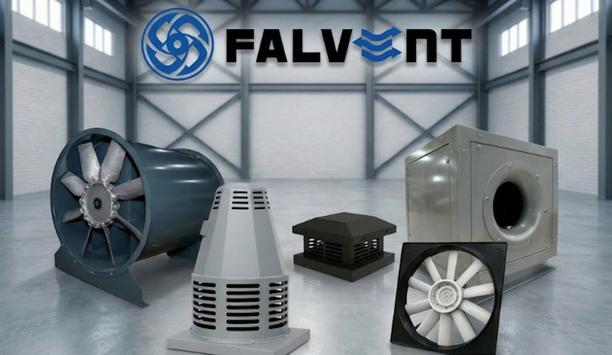
Falvent Middle East, a pioneering Saudi Arabian provider of ventilation solutions for commercial and industrial applications based in Riyadh, is the most recent addition to the Eurovent Middle East membership base. Established in 2013, Falvent Middle East began its journey as a trading company specializing in ventilation equipment, serving a wide range of industrial and commercial clients across the region. In 2022, the company made a strategic decision to transition into full-scale local manufacturing, enabling the design and production of high-performance axial fans and advanced ventilation solutions. Internationally recognized standards Highlighting the motivation to join Eurovent Middle East, Mohamed Sultan, Operations Manager at Falvent Middle East, mentioned, “We were motivated to join Eurovent Middle East to strengthen our engagement with the region’s ventilation industry, exchange technical expertise, and align our products with internationally recognized standards and certification schemes." "We believe that being part of this network will support our growth, enhance our credibility, and enable us to contribute to the advancement of high-quality, energy-efficient solutions in the Middle East market." Role of ventilation in energy efficiency Markus Lattner, Managing Director of Eurovent Middle East, added: “With Falvent, we welcome a true Saudi-made manufacturer among our group of manufacturers, distributors and service providers who join their efforts under Eurovent Middle East to contribute towards the region’s sustainability targets." "The role of ventilation in energy efficiency and indoor air quality is still overlooked. With every member supporting our work, we will be able to raise more awareness on standards, best practices, and the value of high-performance products in the market.”
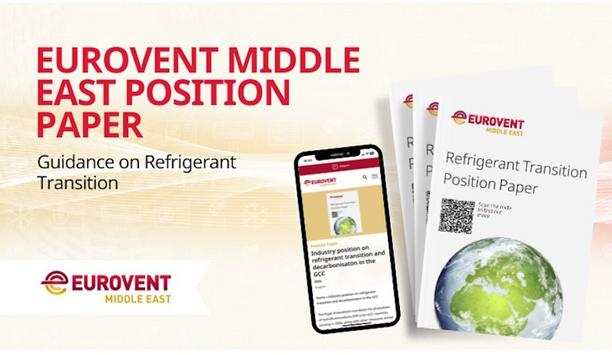
Following discussions alerting the industry about potential supply shortages of HFC-based refrigerants during its HVACR Next Generation Congress in Riyadh on 28 October 2025, Eurovent Middle East has published its first industry guidance on the impending refrigerant transition in the region. With the ratification of the Kigali Amendment by the Kingdom of Saudi Arabia in September, the GCC countries are set to phase down hydrofluorocarbon-based refrigerants (HFCs) starting with a baseline freeze in 2028, followed by phase-down from 2032. Shortages of HFC refrigerants While the phase down begins only gradually with reductions of HFCs consumed or produced in steps of 10% every 5 years initially, the industry will be faced with potential supply shortages of HFC refrigerants due to the economic growth and thus rising demand for cooling in the region. During the HVACR Next Generation Congress in Riyadh, Markus Lattner, Managing Director of Eurovent Middle East, warned: “The phase down will start from a baseline of HFCs produced or consumed over the period from 2024 to 2026." "This means that if we add the accumulated growth in the building sector in the next years to the 10% reduction in the first step, we can very likely look at a sudden shortage of HFC-based refrigerants in excess of 30%, when the first reduction happens in 2032. To prevent wider shortfalls and bottlenecks, it is imperative that industry and governments act now!" Implementation and harmonization of safety standards The Position Paper by Eurovent Middle East addresses alternatives and outlines recommendations to industry and governments on how to avoid bottlenecks in the future. It recommends the use of alternatives to HFCs immediately, wherever possible to be done safely, encourages upskilling initiatives to ensure that the workforce is prepared to handle alternative refrigerants, and calls for implementation and harmonization of safety standards and regulatory frameworks across the region to facilitate the switch towards cooling and refrigeration systems, which work with low global warming potential refrigerants. The association’s position paper can be downloaded free-of-charge on the Eurovent Middle East website.

Eurovent and UKHSA jointly release a scoping review examining the impact of indoor air quality and thermal conditions in educational buildings on health, well-being, performance, and absenteeism. Eurovent and the UK Health Security Agency (UKHSA) are pleased to announce the release of a comprehensive literature review published in Environments, an international, peer-reviewed, open-access journal on environmental sciences. How IAQ and thermal conditions impact The review synthesizes interdisciplinary studies to map current evidence and highlight gaps in the understanding The literature review titled ‘Impact of Indoor Air Quality, Including Thermal Conditions, in Educational Buildings on Health, Wellbeing, and Performance: A Scoping Review’, explores the far-reaching effects of indoor environmental quality (IEQ) in schools, nurseries, and universities on occupant health, well-being, academic performance, and absenteeism. The review synthesizes interdisciplinary research to map current evidence and highlight gaps in the understanding of how IAQ and thermal conditions impact psychological and physiological outcomes in educational settings. environmental interventions enhance learning Key insights include correlations between poor IEQ and increased absenteeism, diminished cognitive performance, and adverse health symptoms, particularly among children and young adults. UK Health Security Agency (UKHSA) Principal Public Health Specialist, Sani Dimitroulopoulou, stated that: "While evidence grows on how indoor environment affects school children’s health, we must better understand how environmental interventions enhance learning." Sani adds, "Together with Eurovent, we have mapped out how future gains in educational outcomes, driven by improved indoor environmental quality, can be quantified. This is the key to supporting every child’s academic growth and well-being." Long-term educational and societal benefits Eurovent Deputy Secretary General, Stijn Reneeboog, said: "In partnership with UKHSA and drawing on an extensive body of scientific literature, our project shows that poor classroom environments affect children’s health and learning. With these results now published, we hope to support investment in healthier schools that deliver long-term educational and societal benefits." Improve indoor health standards The review is designed to guide policymakers, school administrators, health authorities, building engineers, and educators in creating environments that support optimal learning and development. The publication, available as open access in Environments, marks an important milestone in Eurovent and UKHSA's joint efforts to improve indoor health standards across educational institutions.
Insights & Opinions from thought leaders at Eurovent

The HVAC market in Europe is expected to show sustained growth in the upcoming years, but with variation among product segments. The decarbonisation strategies in Europe stimulate a strong demand for energy-efficient heating and cooling solutions. The heat pump market in particular has done exceptionally well, with double-digit growth for several years in a row. That’s the outlook from Eurovent, Europe’s Industry Association for Indoor Climate (HVAC), Process Cooling, and Food Cold Chain Technologies. Its members from throughout Europe represent more than 1,000 organisations, the majority small and medium-sized manufacturers. Eurovent's Outlook “The growth perspectives of the HVAC market depend partly on the fate of the economy,” says Mr. Francesco Scuderi, Deputy Secretary General and Head of Heating and Cooling at Eurovent. The erosion of multilateral trade relations has created uncertainty in the global economy, which is hampering investment. The issue most close to home for European businesses is the withdrawal of the United Kingdom from the European Union. The issue most close to home for European businesses is the withdrawal of the United Kingdom from the European Union McKinsey Global Institute’s recent global survey of company executives shows that 75% of companies expect to change their strategy due to trade tensions and 33% consider trade uncertainty to be their top concern. “This is a regrettable development,” says Scuderi. “At Eurovent, we have always stood for closer integration and the free movement of goods without unfair trade barriers.” Because of the climate, comfort cooling needs in Europe have typically been dwarfed by the demand for heating, he notes. Still today, more than 60% of the final energy consumption in EU households is attributable to space heating, whereas space cooling represents only a fraction of that according to the latest figures from Eurostat. Expansion Of The European AC Market Even so, the AC market in Europe has significantly expanded. The International Energy Agency estimates that the stock of installed equipment has grown from 44m units in 1990 to some 110m in 2019 and is expected to grow further still to an estimated 275m units by 2050. “While it is hard to gauge precisely the effects of climate change on the need for comfort cooling, more and more frequent extreme heat events have undoubtedly boosted AC sales in Europe, especially in recent years,” says Scuderi. Installed equipment has grown from 44m units in 1990 to some 110m in 2019 The big-picture trends in AC demand follow patterns of economic development, including improved electrification and increases in disposable income. The growth of AC sales in Europe is quite modest compared to the global trends, which have steepened as a result of rapid development in emerging economies like China, India, Brazil, Indonesia, and Mexico. However, whether additional income is spent to satisfy comfort cooling needs will always depend on climate. “A more interesting potential for the European market is the uptake of heat pumps for space heating purposes,” says Scuderi. “Although the heat pump market has experienced tremendous growth, it still accounts for only a small fraction of all space heating appliances in the EU. Greater acceptance for air conditioners as a heating solution will require educating the market on its advantages, and further strengthening incentive programmes. Although efficient solutions have significantly lower costs over the life cycle of the product, the cost at the point of purchase is usually higher.” Panels discuss the importance of the expansion of the European HVAC industry Energy Efficiency In the EU The European Union has made extensive efforts to decarbonise the economy through a set of important regulatory instruments. The foremost ones for the HVAC industry are the Energy Efficiency Directive, the Energy Performance of Buildings Directive, the F-Gas Regulation, and the Ecodesign and Energy Labelling Regulations. The European Union has made extensive efforts to decarbonise the economy Eurovent strongly supports these initiatives, says Scuderi. “They make the building engineering sector more sustainable, encourage the uptake of highly efficient products, and stimulate further innovation and investment in R&D activities. All of this ensures that the European HVAC industry has a role to play in the built environment of tomorrow. Already today, the most energy efficient equipment is marketed in the EU, and the European building stock is on track to become carbon neutral by 2050. We need to work together with our international partners to ensure that the best market-available technologies prevail in more vulnerable markets as well.” Based on objective and verifiable data, members of Eurovent account for a combined annual turnover of more than 30bn EUR, employing around 150,000 people within the association’s geographic area. This makes Eurovent one of the largest cross-regional industry committees of its kind. The organization’s activities are based on democratic decision-making principles, ensuring a level playing field for the entire industry independent from organization sizes or membership fees. Members of Eurovent account for a combined annual turnover of more than 30bn EUR, employing around 150,000 people within the association’s geographic area Who Are Eurovent? As one of the oldest industry associations, Eurovent looks back at more than 60 years of association history. Eurovent today is the result of the merger of the associations CECMA, the European Committee of Constructors of Air Handling Equipment, and CECOMAF, the European Committee of Refrigeration Equipment Manufacturers, in June 1996. Eurovent’s Member Associations are major national sector associations from Europe that represent manufacturers in the area of Indoor Climate (HVAC), Process Cooling, Food Cold Chain, and Industrial Ventilation technologies. The more than 1,000 manufacturers within the network (Eurovent “Affiliated Manufacturers” and “Corresponding Members”) are represented in Eurovent activities in a democratic and transparent manner. Eurovent invites everyone to the 2020 EUROVENTSUMMIT, the next edition of Europe’s major gathering for Indoor Climate (HVAC), Process Cooling, and Food Cold Chain Technologies. The 2020 EUROVENTSUMMIT will take place between 22 and 25 September 2020 in Antalya, Turkey. The event will seek to build bridges between manufacturers and consultants, planners, installers, trade associations and policy makers, between Europe, the East and beyond, towards more sustainable and circular products, towards more socially and environmentally responsible industry.


