ASHRAE - Experts & Thought Leaders











Latest American Society of Heating, Refrigerating and Air-Conditioning Engineers (ASHRAE) news & announcements

Falls River Group (“FRG”) is pleased to announce that Daikin Applied Americas (“Daikin Applied”) has acquired the exclusive license to Sorbent Ventilation Technology® (“SVT®”) from enVerid Systems Inc. (“enVerid”), a recognized innovator in indoor air quality (“IAQ”) and energy-efficient HVAC solutions. FRG acted as the exclusive financial advisor to enVerid on this transaction. Terms of the agreement were not disclosed. “FRG played a critical role throughout the whole process beginning with developing our marketing materials, identifying and engaging targets, and negotiating the final agreement with Daikin Applied. Steve and his team’s passion for market-changing technologies, creative deal structuring expertise, and white glove partnership model made FRG the ideal partner for enVerid,” said Christian Weeks, CEO of enVerid. Market-changing technologies SVT is the HVAC industry’s pioneer sorbent-based air-cleaning technology, enabling commercial buildings to achieve high-performance IAQ with significantly reduced energy consumption. Backed by more than a decade of field adoption across commercial, education, and government sectors, SVT is the only independently validated technology that meets all contaminant requirements in ASHRAE Standard 62.1. The transaction gives Daikin Applied the sole right to manufacture, sell, and distribute SVT and related offerings across North America. The integration of SVT strengthens Daikin Applied’s commitment to delivering advanced, energy-efficient IAQ technologies that support decarbonization, sustainability, and improved occupant well-being. Wide range of airborne contaminants “Daikin Applied is an ideal steward for SVT,” said Weeks. “Their industry reach, product leadership, and commitment to innovation create a powerful platform to scale this technology and broaden its impact.” SVT captures a wide range of airborne contaminants—including VOCs, ozone, and carbon dioxide—through a proprietary sorbent media blend housed within a compact module that integrates with virtually all commercial HVAC systems. By reducing reliance on outside air ventilation, SVT allows building owners to lower energy loads, right-size mechanical equipment, and improve system resiliency in areas affected by pollution or extreme weather. Daikin Applied will reintroduce the technology under its brand in the coming months and will continue supporting existing standalone SVT installations while working toward deeper integration across its product portfolio. The transaction aligns with Daikin Applied’s broader sustainability and electrification strategy and expands its position as a leader in next-generation IAQ solutions.

Chrissie Walsh, Regional Head of Environmental Sustainability at GF Building Flow Solutions Americas, has been named to the Minnesota Chamber Environmental Sustainability Foundation (MCESF) Board of Directors. Walsh’s primary function will be providing governance to and community representation for the MCESF. Walsh was appointed on Sept. 9, 2025, and will serve a three-year term. Chrissie's leadership “Chrissie brings an exceptional mix of technical expertise, passion, and community focus to the Foundation,” says Sydney Henderson, Environmental Sustainability Director for the Minnesota Chamber Environmental Sustainability Foundation, adding “Her leadership will help advance our mission of supporting businesses in developing practical, effective solutions that drive resource optimization and move Minnesota toward a more sustainable future.” Action, mitigation, and innovation “I care deeply about sustainable action, mitigation, and innovation, and it’s evident the Minnesota Chamber values and works to enact these concepts,” says Chrissie Walsh, adding “As a board member, I’m eager to become more ingrained with the structures that define progress in our communities and play a pivotal role in Minnesota-based sustainable action in any way I can.” Prior roles of Walsh Walsh is also actively growing her involvement with the American Society of Heating, Refrigerating, and Air-Conditioning Engineers (ASHRAE), serving on the following technical committees: Global Climate Change, Building Impacts, and Sustainability and the Minnesota Chapter’s Sustainability Committee. In addition, she is a member of the Plastics Pipe Institute (PPI), where she works with task groups for the PEX Industry-Level Recycling and Takeback Program as well as Advanced Recycling. Walsh also maintains her membership in the American Meteorological Society (AMS).
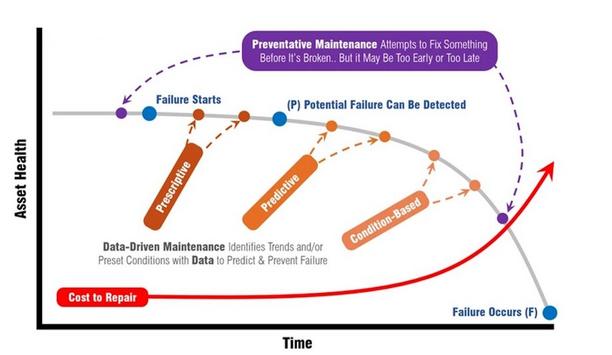
In the world of HVAC, maintenance is no longer just about fixing what’s broken — it's about predicting what will break before it does. As buildings become smarter and more reliant on digital systems, maintenance strategies are evolving too. The industry is seeing a major shift from traditional reactive maintenance toward predictive and condition-based maintenance models that leverage data and analytics to increase reliability and reduce costs. Let’s explore how these strategies differ, why the shift matters, and what it really takes to implement predictive/proactive maintenance in today’s buildings. Understanding the Maintenance Spectrum HVAC maintenance strategies can be visualized along a spectrum, ranging from purely reactive to highly prescriptive. Reactive maintenance is the most traditional form — systems are left to run until failure occurs, at which point emergency service is required. Preventive maintenance takes a slightly more proactive approach by servicing equipment at regular intervals, such as every six months, regardless of actual wear or performance. Condition-based maintenance (CBM) introduces real-time monitoring into the equation. By using sensors to assess equipment condition, maintenance is only performed when data indicates it’s necessary. Predictive maintenance Predictive maintenance builds on this by using historical data and analytics to forecast potential failures, allowing action before a problem even manifests. The most advanced strategy, prescriptive maintenance, not only predicts issues but also recommends specific actions based on the likely outcomes. These approaches reflect an evolution in maintenance thinking — one that shifts from reacting to problems to preventing them in the most efficient, data-informed possible way. The Hidden Cost of Reactive Maintenance While reactive maintenance may appear simple and cost-effective on the surface, it often leads to deeper, more expensive problems over time. Unplanned downtime is one of the most immediate risks. HVAC systems are prone to failure under peak load conditions — for example, during heatwaves or cold snaps — which can lead to uncomfortable indoor environments, tenant complaints, and, in commercial real estate, the risk of losing tenants altogether. In mission-critical facilities like hospitals or data centers, downtime can jeopardize safety or disrupt operations entirely. Beyond downtime, reactive maintenance results in much higher emergency repair costs. These include premium charges for after-hours labor, expedited parts shipping, and inefficient use of internal staff. Often, the urgency leads to temporary fixes rather than sustainable, long-term solutions. Secondary effects Failures rarely occur in isolation. One component breaking down can strain or damage others. A failed fan motor, for instance, might overheat adjacent sensors or wiring. Similarly, issues like clogged condensate lines or refrigerant leaks can cause water damage or mold growth. These secondary effects multiply the cost and complexity of repairs. Running systems to the point of failure also reduces their operational lifespan. Motors, bearings, compressors, and other components degrade faster when operating under stress. Issues like vibration, heat, and restricted airflow — often symptoms of neglect — shorten equipment life significantly. ASHRAE data suggests that systems under reactive maintenance may last five to ten years less than those maintained proactively. Lastly, there are serious safety and compliance risks. Poor air quality, undetected leaks, or temperature control failures can result in OSHA violations or noncompliance with ASHRAE standards, particularly ASHRAE 62.1, which regulates indoor air quality and ventilation. In regulated industries, this can lead to legal penalties or reputational harm. Shifting to a predictive/proactive maintenance strategy Shifting to a predictive/proactive maintenance strategy offers clear benefits, but it comes with its own set of challenges. One of the largest barriers is the upfront investment required. Sensors, data acquisition systems, and analytics platforms must be installed and integrated with existing HVAC infrastructure, which can be costly. Data management also poses a significant challenge. Predictive/proactive maintenance generates a constant stream of information that must be collected, stored, and analyzed in real-time. Without proper IT infrastructure and trained personnel, this data is underutilized or misinterpreted. Many buildings still operate on legacy systems that may not be compatible with modern sensors or platforms, requiring either upgrades or creative integration. At the same time, technicians and maintenance teams must be trained to understand and act on the insights these systems provide — a major cultural and educational shift for some organizations. Finally, successful implementation often depends on vendor coordination. Building operators must select and manage third-party tools and services that work within their broader ecosystem. Moving toward predictive and CBM strategies Despite these obstacles, the advantages of moving toward predictive and CBM strategies are compelling. One of the most immediate benefits is the significant reduction in unplanned downtime. By identifying issues before they lead to failure, operators can schedule maintenance during off-peak hours, minimizing disruptions to building occupants. Analytics and maintenance providers report that predictive strategies can reduce unplanned downtime by up to 50% (McKinsey & Company, 2025). There are also considerable financial benefits. Predictive/proactive maintenance ensures systems are only serviced when needed, avoiding unnecessary inspections and part replacements. Emergency repair costs are dramatically reduced, and budgets become more predictable. Siemens estimates that organizations can lower overall maintenance costs by 25% to 40% through predictive practices (SIEMENS, 2025). Preventing problems These strategies also extend equipment lifespan. By preventing problems like short-cycling, overheating, and unbalanced airflow, systems experience less stress and wear. ASHRAE reports that predictive maintenance can extend the life of HVAC equipment by five to ten years, which delays capital expenditures and reduces long-term costs (ASHRAE, 2025). Energy efficiency is another key advantage. Well-maintained systems run more efficiently, consuming less energy. Predictive analytics can fine-tune operations in real time, adjusting temperature setpoints or airflow based on occupancy trends or environmental data. The U.S. Department of Energy estimates potential energy savings of 10% to 20% in facilities using predictive maintenance (U.S. DOE, 2025). Planning and resource allocation also improve dramatically. With better visibility into asset health, facility managers can allocate technician labor more effectively and manage parts inventory based on actual need. This proactive approach turns maintenance from a reactive chore into a strategic function. Data-driven insights Perhaps most important is access to data-driven insights. Facility managers can benchmark performance across multiple assets or sites, identify patterns, and make smarter decisions about upgrades, retrofits, and replacements. When integrated with a building management system or digital twin, predictive systems can provide real-time optimization and forecasting tools that transform how buildings are managed. A Smarter Future for HVAC The evolution toward predictive and condition-based maintenance reflects a broader transformation in building management — one rooted in data, foresight, and continuous improvement. By adopting these strategies, building owners and operators can improve reliability, reduce costs, extend asset life, and improve occupant comfort and safety. While the path to predictive maintenance requires investment and change, the long-term benefits make it one of the smartest moves a building owner/operator can make. The future isn’t reactive — it’s predictive, and it’s already here.
Insights & Opinions from thought leaders at ASHRAE

In today's smart homes, traditional climate control meets modern automation and connectivity. Technologies such as smart thermostats, home automation platforms, sensors, zoned heating and cooling, and artificial intelligence are combining to yield new levels of comfort for homeowners who embrace the smart home concept. We asked our Expert Panel Roundtable: How is the changing smart homes market impacting HVAC systems?

Certifications are official documents given by professional organizations that confirm a staff member has the necessary knowledge and skills needed to do a specific job. In the HVAC industry, certifications provide multiple benefits for various stakeholders. For technicians, certifications can demonstrate enhanced skills and knowledge, increase earning potential, improve job security, and promote greater credibility and professionalism. Certified technicians In the long run, using certified technicians boosts customer satisfaction, enhances brand image For installing companies, using certified technicians is more likely to ensure correct and efficient installations with fewer errors, callbacks, and/or warranty claims. In the long run, using certified technicians boosts customer satisfaction, enhances brand image, and provides a competitive advantage. For manufacturers, certified technicians ensure proper installation for better product performance and longevity. For customers, employing certified technicians provides peace of mind. Proper installation ensures optimal product performance and longevity, maximizing the return on investment for customers. Certified technicians are less likely to make a mistake. Customers can have greater confidence in an installation's quality and reliability. Certification programs in the HVAC market Let’s take a look at several of the certification programs in the HVAC market. EPA 608 Certification is required by law for technicians to ensure the safe handling of refrigerants. Technicians are required to pass an EPA-approved test to earn Section 608 Technician Certification. Tests must be administered by an EPA-approved certifying organization. The U.S. Environmental Protection Agency (EPA) has a list of approved organizations on its website. Certification levels are Type I (small appliances), Type II (high-pressure appliances), Type III (low-pressure appliances), and universal (all levels) NATE Certification (North American Technician Excellence) ensures expertise in specific areas of HVACR systems, such as air conditioning, heat pumps, gas furnaces, etc. NATE is the largest non-profit certification organization for HVACR technicians in the United States and is considered the industry's gold standard. NATE certification proves that a technician has the knowledge and skills to properly install, maintain, and service HVACR systems. Technicians must pass a series of challenging exams, covering a range of topics, to become NATE-certified. HVAC Excellence Certification (provided by the ESCO Group) covers various aspects of HVAC systems, from installation to troubleshooting, validating technicians' proficiency and commitment to industry standards. ESCO Group is an organization focused on improving technical competency within the HVACR industry; they use the 'HVAC Excellence' label to denote their certification programs. HVAC Excellence’s series of certifications build upon each other, allowing technicians to progress through various levels of expertise. The organization validates educational programs, tracks content mastery at each stage of an individual’s career and provides educators with valuable resources to help them become more effective in their roles. Refrigeration Service Engineers Society (RSES) certification emphasizes fundamental principles, troubleshooting, and safety. The society offers a variety of certifications and training programs designed to enhance the skills and knowledge of HVACR professionals, including comprehensive training courses in essential HVACR disciplines, such as refrigeration, heating, electricity, and controls. After completing the relevant training, participants take exams to validate their knowledge. RSES is approved to administer EPA Section 608 Certification Testing, and Section 609 certification through the ESCO Group (focusing on motor vehicle air conditioning (MVAC) systems.) ASHRAE range of certification programs The American Society of Heating, Refrigerating, and Air-Conditioning Engineers (ASHRAE) offers a range of certification programs designed to recognize and validate the expertise of professionals in the built environment. Certifications include: Building Energy Assessment Professional (BEAP), focusing on the knowledge and skills needed to conduct comprehensive building energy assessments, analyze energy use, and recommend improvements. Building Energy Modeling Professional (BEMP), which certifies individuals who can effectively use building energy modeling software to analyze building performance and design energy-efficient systems. Building Commissioning Professional (BCxP), for professionals who lead, plan, and execute the commissioning process to ensure that building systems operate as intended and meet the owner's project requirements. Healthcare Facility Design Professional (HFDP), which focuses on the design of HVAC systems for healthcare facilities. High-Performance Building Design Professional (HBDP), a certification focusing on professionals who can design and integrate high-performance building systems to achieve energy efficiency, sustainability, and occupant well-being. Operations and Performance Management Professional (OPMP), which certifies individuals who can effectively manage and optimize the operation and maintenance of building systems to ensure energy efficiency, occupant comfort, and system reliability. Latest technologies and best practices Certifications make the HVAC market more professional by standardizing knowledge and skills and increasing credibility and trust. Certifications ensure that HVAC professionals have a baseline understanding that ensures more consistent and reliable service. Certification demonstrates a commitment to the profession and a desire to stay updated with the latest technologies and best practices. Many employers prefer or require certification, giving certified technicians a competitive edge in the job market and potentially leading to higher pay. {##Poll1738306775 - What is the biggest benefit of HVAC certifications for technicians?##}

Revised building codes, based on model “I-Codes” developed by the International Code Council (ICC), are being widely adopted to allow A2L refrigerants to be used in comfort air conditioning applications. Previously, the use of A2L refrigerants, which are “mildly flammable,” was not allowed by building codes in force in 2021 and before because of safety concerns. benefits of A2Ls However, the benefits of using A2Ls instead of refrigerants with higher global warming potential (GWP) have led to their acceptance as a replacement for hydrofluorocarbons (HFCs) in air conditioning applications. In response to the greater acceptance, driven by EPA refrigerant cutbacks, ICC has revised their building codes to permit the use of A2Ls, and local jurisdictions are in the process of adopting the revised building codes. 2024 I-Code changes Approved code changes in the 2024 IBC, IFC, and IMC allow commercial and residential use of A2L refrigerants The 2024 I-Code changes facilitate compliance with new refrigerant requirements and support producers and refrigerant appliance manufacturers already transitioning to lower-GWP solutions such as A2Ls. Approved code changes in the 2024 International Building Code (IBC), International Fire Code (IFC), and International Mechanical Code (IMC) allow commercial and residential use of A2L refrigerants to replace refrigerants. The use of A2L impacts all three intertwined sets of building codes, which have been undergoing the three-year amendment process since 2021. model codes and standards The International Code Council is a global source of model codes and standards and building safety solutions that include product evaluation, accreditation, technology, training, and certification. ICC is working with the Air-Conditioning, Heating, and Refrigeration Institute (AHRI) to partner with the construction industry and to facilitate legislation to navigate this positive change. The IBC, IMC, and IFC code revisions, all managed by ICC, have been approved; two finalized codes were published earlier in 2023 and the third is being released in November 2023. Building, mechanical, and Fire codes Building code revisions align with established safety standards regarding handling of A2L refrigerants The Building and Fire codes cover storage of A2Ls in a warehouse, while the Mechanical code covers requirements for installing equipment that uses A2Ls. Building code revisions align with established safety standards regarding handling of A2L refrigerants, including ASHRAE 15 (Safety Standard for Refrigeration Systems), UL 484 (Room Air Conditioners), UL/CSA 60335-2-40 (refrigerant detector requirements) and UL/CSA 60335-2-89 (enabling higher charge limits for flammable refrigerants). requirements of ASHRAE 15 In buildings where HVAC machinery is installed, the code changes reflect requirements of ASHRAE 15, such as no equipment with open flames, elevated temperature limits in a room, and refrigerant detection requirements that trigger a mechanical ventilation system in case of a leak. Any piping that carries A2L must be labeled as flammable with a warning. Condensers and evaporators will need to carry the familiar triangular flammability labels and “risk of fire explosion” verbiage, all consistent with the ASHRAE 15 standard. Diamond-shaped labeling An interlock requirement ensures ventilation processes are implemented in case “Diamond-shaped labeling must be displayed on packaging, storage, and containers so that anyone coming into a room knows there is flammable refrigerant there,” says Jim Cika, a director of technical resources for the International Code Council. The codes cover safety requirements such as leak detection, ventilation requirements, and “flammable” labeling. An interlock requirement ensures ventilation processes are implemented in case of a detected leak of A2L gas. storage and warehousing “The biggest concern is proper storage and warehousing,” says Jim Cika. “Due to flammability, there are significant additional storage requirements compared to HFC. Distributors have to be prepared with appropriate space and labeling requirements, especially when the materials are being stored in bulk and large quantities.” A2L code provisions The code changes are required to enable builders to transition to A2L refrigerants ICC has created a website that provides relevant A2L code provisions including documents with specific wording related to code changes. Some states adopt the codes state-wide, while other “home-rule” states leave the adoption of the codes to the individual local jurisdictions. The code changes are required to enable builders to transition to A2L refrigerants. new codes ICC has been publicizing the code changes with the help of a grassroots effort with AHRI. “We have put our code provisions out there so everybody knows what they need to be concerned about and to be ready for inspection,” says Cika. The new codes are coordinated with the EPA and the requirements of the SNAP programs. “We are all on the same page,” he says. installation of new equipment After 2025, new equipment will no longer use HFCs but will need to use A2Ls or another low-GWP refrigerant Up to 25 lbs. of A2L refrigerant can be transported without any hazardous material restrictions; in effect, installers and contractors can transport A2L just as they did HFC. Transitioning to A2L refrigerants involves the installation of new equipment since the legacy equipment that uses HFCs is not compatible with the new refrigerants. After 2025, new equipment will no longer use HFCs but will need to use A2Ls or another low-GWP refrigerant. transition to A2Ls Technicians will still be able to service and maintain existing equipment installed in the field for the rest of its useful life. With equipment using both types of refrigerant operating among various customers, technicians will need to be able to work on either type of system during the transition period. Phased down and limited supplies of HFCs, as ordained by EPA regulations, will likely push installers and their customers to the newer technologies using A2Ls.


