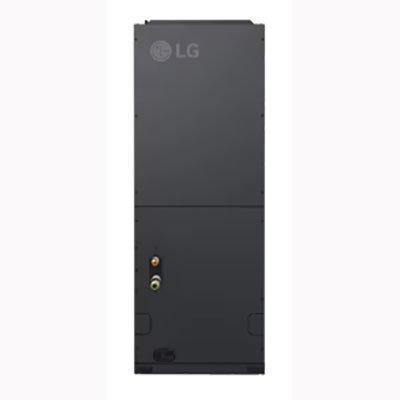

If there’s one thing one needs to live comfortably in Greenwood Village, CO, it’s reliable heat. With at least five months each year with subfreezing temperatures, one wouldn’t survive without it. It’s no wonder, then, that the state routinely ranks in the top 10 for highest home heating bills.
That reality makes investing in a high-efficiency heating system a wise choice here. Heat pumps, the most efficient option, have historically performed poorly in cold climates — that is until the latest generation of cold-climate heat pumps reached the market.
Heat Pump
A heat pump is an all-electric HVAC system that provides heating and cooling from a single system
A heat pump is an all-electric HVAC system that provides heating and cooling from a single system. Mechanically, heat pumps work similarly to air conditioners.
The big difference is that they can run in reverse to bring heat into the home instead of removing it. In heating mode, this appliance collects heat from the outside air to warm the home.
In ideal weather conditions, air-source heat pumps can be up to 400% efficient, which is about four times more efficient than gas boilers. The problem is that Greenwood Village’s climate isn’t suitable for the average heat pump.
Losing efficiency
Most heat pumps begin losing efficiency as temperatures approach freezing
Most heat pumps begin losing efficiency as temperatures approach freezing. When it reaches 20°F outside, a standard heat pump is no more efficient than the average gas furnace.
Below that, a standard heat pump will struggle to collect enough heat to heat the home.
At that point, it will engage a supplemental heating system that consumes far more electricity. The net result is that users will have a skyrocketing heating bill instead of the energy savings they expect.
Heat Pumps Struggle in the Cold
Since heat pumps collect heat from the outdoor air, freezing temperatures pose an obvious problem
Since heat pumps collect heat from the outdoor air, freezing temperatures pose an obvious problem. It’s that there’s less heat available for collection. Therefore, the heat pump must work harder to collect enough heat for the home’s needs.
Heat pumps use the refrigeration cycle as their means of operation. They collect and release heat energy by manipulating the temperature and pressure of a refrigerant. As long as the refrigerant is colder than the surrounding air, it will absorb heat from it. In cooling mode, getting a refrigerant to a lower temperature than the indoor air isn’t difficult.
And after collecting heat from the home, it’s trivial to compress a refrigerant to raise its temperature. That’s how heat pumps and ACs can expel heat outside, even on the hottest summer days.
Cons of standard heat pumps
The lower the temperature differential between the two, the less efficient heat transfer becomes
In the winter, however, the outside air gets much closer to a standard heat pump’s minimum refrigerant temperature. The lower the temperature differential between the two, the less efficient heat transfer becomes.
Unfortunately, standard heat pumps cannot compensate for low outdoor temperatures. That’s why they lean so heavily on inefficient electric resistance heat strips. However, it’s important to note that the problem isn’t a lack of heat in the outdoor air when it’s cold outside. Even sub-zero air contains ample heat energy.
The air would need to reach absolute zero, or -460°F before there would be no heat energy in it. The trick is finding an efficient way of collecting that energy at much lower temperatures. That’s precisely what cold-climate heat pumps can do.
Cold-Climate Heat Pumps
Cold-climate heat pumps employ advanced technology to remain efficient and effective at subfreezing temperatures. Depending on the system, they may include some or all of the following:
Next-Generation Refrigerants
One of the key differences between standard and cold-climate heat pumps is the refrigerants they use. A cold-climate model uses refrigerants with advanced chemistries and very low boiling points. That makes it possible for them to remain liquid at much lower temperatures.
That reduces freezing issues and allows for efficient heat absorption even in sub-zero temperatures. That’s one of the ways that cold-climate heat pumps remain efficient at temperatures as low as -15°F.
Variable-Speed Compressors
A variable-speed compressor allows a cold-climate heat pump to adjust its refrigerant operating pressures as needed. That gives them a wider effective operational temperature range. In heating mode, they can start the refrigeration process at a far lower refrigerant temperature.
Then, they can raise the refrigerant temperature enough to support efficient heating by employing a higher compressor speed. They can do the opposite in cooling mode, preventing any efficiency trade-offs due to their low-temperature capabilities.
Flash Vapor Injection
Cold-climate heat pumps may also use flash vapor injection to improve cold weather performance. It relies on an auxiliary refrigerant loop that lets the system separate liquid and vaporous refrigerant. The loop functions like a shortcut to the typical refrigerant path.
It routes any still-warm refrigerant back inside to shed additional heat and the colder refrigerant to the compressor. That fills the compressor with an optimized refrigerant mixture for maximum heat absorption. It also reduces wasted heat by recycling some refrigerant back inside.
More Environment-Friendly
Cold-climate heat pumps have various advantages besides efficiency
Cold-climate heat pumps have various advantages besides efficiency. One is that they’re environmentally friendly. For one thing, they don’t consume fossil fuels to function.
If users pairs one with a renewable energy source like wind or solar, their carbon footprint is nearly zero. Even their refrigerants pose less environmental risk than those found in conventional air conditioners.
Heat pumps also have the benefit of offering a year-round HVAC solution. They can replace user’s existing heating and cooling system. That lowers the overall costs of ownership and maintenance compared to the alternatives. Plus, the average heat pump lasts about 15 years with proper maintenance, so longevity is no issue.
Tax breaks and subsidies
Finally, cold-climate heat pumps can qualify for some excellent tax breaks and subsidies. Under the Federal Inflation Reduction Act, heat pumps qualify for tax credits worth up to 30% of their cost.
Plus, the same law authorizes point-of-sale heat pump rebates of up to $8,000, depending on the income. At the state level, users can get an up-front discount of at least $499.95 on a new heat pump.
For that, however, users must work with a state-registered contractor like Premier Heating and Air.