Siemens - Experts & Thought Leaders















Latest Siemens news & announcements
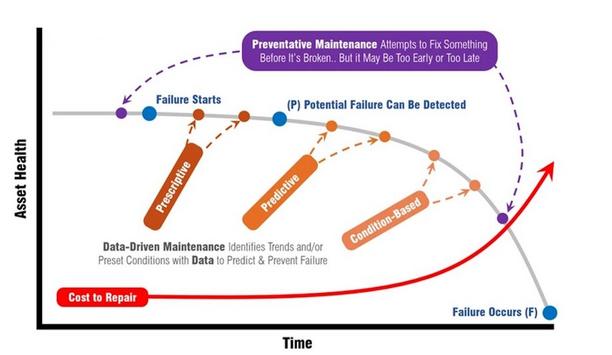
In the world of HVAC, maintenance is no longer just about fixing what’s broken — it's about predicting what will break before it does. As buildings become smarter and more reliant on digital systems, maintenance strategies are evolving too. The industry is seeing a major shift from traditional reactive maintenance toward predictive and condition-based maintenance models that leverage data and analytics to increase reliability and reduce costs. Let’s explore how these strategies differ, why the shift matters, and what it really takes to implement predictive/proactive maintenance in today’s buildings. Understanding the Maintenance Spectrum HVAC maintenance strategies can be visualized along a spectrum, ranging from purely reactive to highly prescriptive. Reactive maintenance is the most traditional form — systems are left to run until failure occurs, at which point emergency service is required. Preventive maintenance takes a slightly more proactive approach by servicing equipment at regular intervals, such as every six months, regardless of actual wear or performance. Condition-based maintenance (CBM) introduces real-time monitoring into the equation. By using sensors to assess equipment condition, maintenance is only performed when data indicates it’s necessary. Predictive maintenance Predictive maintenance builds on this by using historical data and analytics to forecast potential failures, allowing action before a problem even manifests. The most advanced strategy, prescriptive maintenance, not only predicts issues but also recommends specific actions based on the likely outcomes. These approaches reflect an evolution in maintenance thinking — one that shifts from reacting to problems to preventing them in the most efficient, data-informed possible way. The Hidden Cost of Reactive Maintenance While reactive maintenance may appear simple and cost-effective on the surface, it often leads to deeper, more expensive problems over time. Unplanned downtime is one of the most immediate risks. HVAC systems are prone to failure under peak load conditions — for example, during heatwaves or cold snaps — which can lead to uncomfortable indoor environments, tenant complaints, and, in commercial real estate, the risk of losing tenants altogether. In mission-critical facilities like hospitals or data centers, downtime can jeopardize safety or disrupt operations entirely. Beyond downtime, reactive maintenance results in much higher emergency repair costs. These include premium charges for after-hours labor, expedited parts shipping, and inefficient use of internal staff. Often, the urgency leads to temporary fixes rather than sustainable, long-term solutions. Secondary effects Failures rarely occur in isolation. One component breaking down can strain or damage others. A failed fan motor, for instance, might overheat adjacent sensors or wiring. Similarly, issues like clogged condensate lines or refrigerant leaks can cause water damage or mold growth. These secondary effects multiply the cost and complexity of repairs. Running systems to the point of failure also reduces their operational lifespan. Motors, bearings, compressors, and other components degrade faster when operating under stress. Issues like vibration, heat, and restricted airflow — often symptoms of neglect — shorten equipment life significantly. ASHRAE data suggests that systems under reactive maintenance may last five to ten years less than those maintained proactively. Lastly, there are serious safety and compliance risks. Poor air quality, undetected leaks, or temperature control failures can result in OSHA violations or noncompliance with ASHRAE standards, particularly ASHRAE 62.1, which regulates indoor air quality and ventilation. In regulated industries, this can lead to legal penalties or reputational harm. Shifting to a predictive/proactive maintenance strategy Shifting to a predictive/proactive maintenance strategy offers clear benefits, but it comes with its own set of challenges. One of the largest barriers is the upfront investment required. Sensors, data acquisition systems, and analytics platforms must be installed and integrated with existing HVAC infrastructure, which can be costly. Data management also poses a significant challenge. Predictive/proactive maintenance generates a constant stream of information that must be collected, stored, and analyzed in real-time. Without proper IT infrastructure and trained personnel, this data is underutilized or misinterpreted. Many buildings still operate on legacy systems that may not be compatible with modern sensors or platforms, requiring either upgrades or creative integration. At the same time, technicians and maintenance teams must be trained to understand and act on the insights these systems provide — a major cultural and educational shift for some organizations. Finally, successful implementation often depends on vendor coordination. Building operators must select and manage third-party tools and services that work within their broader ecosystem. Moving toward predictive and CBM strategies Despite these obstacles, the advantages of moving toward predictive and CBM strategies are compelling. One of the most immediate benefits is the significant reduction in unplanned downtime. By identifying issues before they lead to failure, operators can schedule maintenance during off-peak hours, minimizing disruptions to building occupants. Analytics and maintenance providers report that predictive strategies can reduce unplanned downtime by up to 50% (McKinsey & Company, 2025). There are also considerable financial benefits. Predictive/proactive maintenance ensures systems are only serviced when needed, avoiding unnecessary inspections and part replacements. Emergency repair costs are dramatically reduced, and budgets become more predictable. Siemens estimates that organizations can lower overall maintenance costs by 25% to 40% through predictive practices (SIEMENS, 2025). Preventing problems These strategies also extend equipment lifespan. By preventing problems like short-cycling, overheating, and unbalanced airflow, systems experience less stress and wear. ASHRAE reports that predictive maintenance can extend the life of HVAC equipment by five to ten years, which delays capital expenditures and reduces long-term costs (ASHRAE, 2025). Energy efficiency is another key advantage. Well-maintained systems run more efficiently, consuming less energy. Predictive analytics can fine-tune operations in real time, adjusting temperature setpoints or airflow based on occupancy trends or environmental data. The U.S. Department of Energy estimates potential energy savings of 10% to 20% in facilities using predictive maintenance (U.S. DOE, 2025). Planning and resource allocation also improve dramatically. With better visibility into asset health, facility managers can allocate technician labor more effectively and manage parts inventory based on actual need. This proactive approach turns maintenance from a reactive chore into a strategic function. Data-driven insights Perhaps most important is access to data-driven insights. Facility managers can benchmark performance across multiple assets or sites, identify patterns, and make smarter decisions about upgrades, retrofits, and replacements. When integrated with a building management system or digital twin, predictive systems can provide real-time optimization and forecasting tools that transform how buildings are managed. A Smarter Future for HVAC The evolution toward predictive and condition-based maintenance reflects a broader transformation in building management — one rooted in data, foresight, and continuous improvement. By adopting these strategies, building owners and operators can improve reliability, reduce costs, extend asset life, and improve occupant comfort and safety. While the path to predictive maintenance requires investment and change, the long-term benefits make it one of the smartest moves a building owner/operator can make. The future isn’t reactive — it’s predictive, and it’s already here.

The challenge of high energy prices is pushing heat pump OEMs to innovate their portfolio towards more efficient solutions. Heat pumps, the demand for which is soaring across Europe, are a more environmentally responsible alternative to traditional boilers, offering the potential for users to benefit from significant savings, but only with astute heat pump selection. Siemens’ magnetic expansion valve Siemens says its MVL702 is 10 times faster than conventional stepper valve solutions Refra, a Lithuanian manufacturer of HVACR equipment, identified a way to increase the efficiency of its reversible propane heat pumps by integrating Siemens’ proprietary MVL702 magnetic expansion valve. The valve rapidly and accurately adjusts the quantity of liquid refrigerant in the evaporator, allowing Refra heat pumps to achieve considerably more heating/cooling power than those featuring a stepper valve. Taking just 1 second to transition from closed to fully open, Siemens says its MVL702 is 10 times faster than conventional stepper valve solutions. This capability is thanks to the linear movement provided by magnetic force, rather than the far slower spindle-turning technology of a stepper valve. The mechanical clearances prevalent in spindle-turning technology lead to less accurate valve opening positions. Long-Term Cost Savings with Precise Superheat Control Rapid and precise valve response is mainly useful when the application features many load changes Key to the success of the MVL702 is its ability to reduce the superheat value by about 30%, from 9K to 6K for example, by reacting very quickly to load changes. Compared with stepper valve technology, this superheat reduction can be even more significant in certain applications. Low superheat leads to efficient evaporator operation. It reduces temperature difference across heat exchanger, resulting in lower temperature lift of the refrigeration cycle. Rapid and precise valve response is particularly useful when the application features many load changes, perhaps when commercial or industrial buildings experience large shifts in external temperature from night to day and applications with variable load profiles. For example such as conference rooms, where the sudden introduction of people can necessitate cooling, with demand switching to heating when people exit. The magnetic expansion valve allows the heat pump to react efficiently to specific climate control demands. Benefits and economic advantages of the new Siemens valve These thermodynamic improvements are not only theoretical but also have practical implications that translate into significant financial value. The same heat pump with the enhanced superheat circuit could potentially achieve up to 14% less energy consumption, while simultaneously providing a 21% increase in heating capacity. These results underscore the practical benefits and economic advantages of the new Siemens valve in enhancing the overall performance of Refra heat pumps, which deliver best-in-class efficiency. Refra customers can expect a more eco-friendly and sustainable solution that not only aligns with their energy-efficiency goals but also reduces costs without compromising performance. This means the customers can enjoy improved comfort levels while potentially reducing their overall energy expenditure. Of course, actual energy savings are very much application dependent, but Siemens is prepared to put forward an estimate of what end users might expect. Quality of the existing stepper valve solution “If we talk about a 300 kW system featuring our magnetic expansion valve, energy savings will likely be in the region of €300 per month,” suggests Richard Bork, Product Manager Refrigeration Valves at Siemens. “These calculations are based on 3500 full-load operating hours per year, an electricity price of €0.20 per kWh and 3K lower superheat values. The savings could of course be more or less, depending on factors such as the control quality of the existing stepper valve solution, exact operating conditions, load profile and defrosting needs, but it provides a good idea of the saving potential.” Field Test in Real Ambient Temperature Conditions Both circuits operated at 100% capacity due to the inability to reach the set point Claiming a product is efficient and proving it are two different things, which is why a comprehensive real-condition, real-time test was carried out by Refra in Lithuania, involving a Refra IGNIS reversible heat pump featuring two circuits: one with the Siemens valve with another featuring a bipolar stepper valve of another brand. The circuit cooling capacity is −6/50°C 21.9 kW, while the heating capacity is 31.1 kW. Both circuits feature an identical/symmetrical design. The trial took place under specific conditions: 50°C heating set point; 30-32°C supply water temperature; and −6°C outdoor temperature. Both circuits operated at 100% capacity due to the inability to reach the set point, allowing the assessment of valve performance in challenging scenarios. Analysis of the heat pump's performance Recorded data from the test was analyzed by splitting the investigated time period into 7-8 identical time frames randomly. This approach aimed to equalize deviations in fluctuating process values, ensuring reliable mean values for assessment. For calculation purposes it was necessary to make some assumptions and simplifications that would allow comprehensive analysis of the heat pump's performance and efficiency under controlled conditions: isentropic efficiency of 0.8; pressure drops assumed as 0 bar in the evaporator, condenser, suction and discharge lines; sensor tolerance not considered; and characteristics for the compressor in each circuit maintained a consistent 35.5 m³/h volume flow with constant volumetric efficiency. Side-by-Side Valve Comparison Reveals Clear Version Benefit The results of the analysis clearly show the profound impact of superheat control on heat pump efficiency The results of the analysis clearly demonstrate the profound impact of superheat control on heat pump efficiency. Lower superheat values, influenced by SH control, lead to a higher evaporating temperature, resulting in elevated COP values and reduced defrost cycles.In particular, when comparing the Refra heat pump circuit featuring the new Siemens valve with the stepper valve circuit, there is a noteworthy increase in COP by up to 8.3% in heating mode. Additionally, a direct comparison considering the entire heating cycle (including defrost mode), reveals an even more substantial increase in COP. Due to the longer heating mode of the magnetic expansion valve circuit, COP rises by up to 16.4% compared with the stepper valve circuit. MVL702 magnetic expansion valve After defrost transition, the superheat setpoint (2) starts from 7 K before increasing (due to high fluctuation) to 10 K. The best achieved control deviation of superheat value is +0.3/−0.6 K, while the evaporating temperature (1) shifts from −16°C down to −20°C and triggers defrost transition. The average fluctuation of suction gas temperature is ±0.5 K (3). Notably, the total heating period for the stepper valve circuit is 1:01:12 hours. The contrasting data record and analysis for the circuit featuring the MVL702 magnetic expansion valve, which has a completely different operating principal to a stepper valve. Average control deviation of the superheat The superheat setpoint (2) begins at 6 K prior to increasing within minutes to 6.2 K with a maximal overshoot of 0.4 K This circuit gets much faster into stable conditions after defrost transition, as indicated by the smooth (rather than wavy) graph lines. The superheat setpoint (2) begins at 6 K prior to increasing within minutes to 6.2 K with a maximal overshoot of 0.4 K. The average control deviation of the superheat value remains constant at +0.0/−0.2 K, while the evaporating temperature (1) shifts due to frost from −13.8°C down to −20°C and triggers defrost transition. The average fluctuation of suction gas temperature is again ±0.5 K (3). As a result of this performance, the total heating period (without defrosting) provided by the Refra heat pump with Siemens valve more than doubles to 2:11:00 hours. Minimising Defrost Time Unlocks Greater Energy Savings Another major advantage of using magnetic expansion valve technology in Refra A2W heat pumps involves the defrost function. A lower superheat makes it permissible to operate the system at higher evaporation temperatures, especially in part load, and make use of heat transfer from the evaporator. The result? Far less icing on the evaporator in air temperatures of ≤0°C. Less icing means less defrosting. All heat pumps use energy to defrost, so reducing the time needed for defrosting - and the quantity of defrost cycles - is of huge benefit to commercial and industrial users. In the test, the heat pump circuit with the stepper valve could operate its heating cycle for 3,787 seconds (around 63 minutes) without running a defrost cycle. In contrast, the circuit with the MVL702 magnetic expansion valve was able to operate for 7,961 seconds (approximately 133 minutes). It demonstrates the potential to save a little over 50% in energy consumption. Moreover, instead of defrosting, the system can use the saved defrost time to perform heating. This capability can have the effect of doubling the energy-efficiency performance of the heat pump. National Award Signals Refra’s Breakthrough in the UK Market Standard Line of Refra reversible A2W propane heat pumps and propane chillers now features the MVL702 valve Recognising the potential game-changing advance of Refra reversible heat pumps with Siemens magnetic expansion valve technology has led to a prestigious award. Absolutely Chilled Ltd, the exclusive UK distributor for Refra heat pumps since 2018, has been named as the winner in the Commercial Heat Pump Product category at the National ACR & Heat Pump Awards (awarded by ACR Journal and sponsored by Heat Pumps). The award, presented at a high-profile ceremony in Manchester, UK, reflects Refra’s long-standing commitment to environmentally responsible solutions that stretches back to 2011. As the first field test partner and early adopter of the Siemens magnetic expansion valve for natural refrigerants, the company is pioneering the way towards a more eco-friendly future. The entire Standard Line of Refra reversible A2W propane heat pumps and propane chillers now features the MVL702 valve. Most important points to promote Refra to the market Shane McKenzie, Business Development Director at Absolutely Chilled, says: “Winning the award is an amazing achievement as it gives us a great platform to introduce Refra to many new clients backed by a prestigious industry accolade for efficiency." "It gives us one of the most important points when promoting Refra to the market: credibility. With this award and the tangible efficiency gains demonstrated by comprehensive tests, why would you consider anything else? All other heat pump manufacturers are now playing catch-up.” Refra heat pump technology Refra heat pump technology after the country’s government set aside up to £20 billion to support The UK is expected to be a strong market for Refra heat pump technology after the country’s government set aside up to £20 billion to support the early deployment of carbon capture, usage and storage (CCUS). The Public Sector Decarbonization Scheme (PSDS) is part of this initiative, aiming to reduce CO2 emissions from public buildings by 75% by 2037 (compared with a 2017 baseline). In fact, ten DSEAR-compliant (corresponding to the European EN378 standard) Refra propane heat pumps with Siemens MVL702 valve and inverter-driven reciprocating compressors have been already installed in four schools throughout the country. Adoption of Refra heat pumps “The adoption of Refra heat pumps by project engineers, consultants and contractors in new buildings, or the replacement of traditional boilers in existing premises, is what I would call a no-brainer,” says Shane McKenzie. “The irrefutable data from Refra/Siemens speaks for itself, with a further compelling argument in the form of natural refrigerant, which Refra has been working with for over a decade.” Richard Bork has the final word: “We decided to work with Refra as one of our initial field-test partners and the first serial MVL702 adopter because of our long-standing and successful professional relationship, which is based on trust. Refra is also very flexible in its development programs, reacting quickly and providing feedback, which helps expedite the process of bringing a new product such as the MVL702 to market. Refra was the perfect early adoption partner and we really appreciate their co-operation.”

In the world of HVAC, maintenance is no longer just about fixing what’s broken — it's about predicting what will break before it does. As buildings become smarter and more reliant on digital systems, maintenance strategies are evolving too. They’re seeing a major shift from traditional reactive maintenance toward predictive and condition-based maintenance models that leverage data and analytics to increase reliability and reduce costs. Let’s explore how these strategies differ, why the shift matters, and what it really takes to implement predictive/proactive maintenance in buildings. Understanding the Maintenance Spectrum HVAC maintenance strategies can be visualized along a spectrum, ranging from purely reactive HVAC maintenance strategies can be visualized along a spectrum, ranging from purely reactive to highly prescriptive. Reactive maintenance is the most traditional form — systems are left to run until failure occurs, at which point emergency service is required. Preventive maintenance takes a slightly more proactive approach by servicing equipment at regular intervals, such as every six months, regardless of actual wear or performance. Condition-based maintenance (CBM) introduces real-time monitoring into the equation. By using sensors to assess equipment condition, maintenance is only performed when data indicates it’s necessary. Evolution in maintenance thinking Predictive maintenance builds on this by using historical data and analytics to forecast potential failures, allowing action before a problem even manifests. The most advanced strategy, prescriptive maintenance, not only predicts issues but also recommends specific actions based on the likely outcomes. These approaches reflect an evolution in maintenance thinking — one that shifts from reacting to problems to preventing them in the most efficient, data-informed possible way. The Hidden Cost of Reactive Maintenance Beyond downtime, reactive maintenance results in much higher emergency repair costs While reactive maintenance may appear simple and cost-effective on the surface, it often leads to deeper, more expensive problems over time. Unplanned downtime is one of the most immediate risks. HVAC systems are prone to failure under peak load conditions — for example, during heatwaves or cold snaps — which can lead to uncomfortable indoor environments, tenant complaints, and, in commercial real estate, the risk of losing tenants altogether. In mission-critical facilities like hospitals or data centers, downtime can jeopardize safety or disrupt operations entirely. Beyond downtime, reactive maintenance results in much higher emergency repair costs. These include premium charges for after-hours labor, expedited parts shipping, and inefficient use of internal staff. Often, the urgency leads to temporary fixes rather than sustainable, long-term solutions. OSHA violations or noncompliance with ASHRAE standards Failures rarely occur in isolation. One component breaking down can strain or damage others. A failed fan motor, for instance, might overheat adjacent sensors or wiring. Similarly, issues like clogged condensate lines or refrigerant leaks can cause water damage or mold growth. These secondary effects multiply the cost and complexity of repairs. Running systems to the point of failure also reduces their operational lifespan Running systems to the point of failure also reduces their operational lifespan. Motors, bearings, compressors, and other components degrade faster when operating under stress. Issues like vibration, heat, and restricted airflow — often symptoms of neglect — shorten equipment life significantly. ASHRAE data suggests that systems under reactive maintenance may last five to ten years less than those maintained proactively. Lastly, there are serious safety and compliance risks. Poor air quality, undetected leaks, or temperature control failures can result in OSHA violations or noncompliance with ASHRAE standards, particularly ASHRAE 62.1, which regulates indoor air quality and ventilation. In regulated industries, this can lead to legal penalties or reputational harm. Challenges of Going Predictive/Proactive Shifting to a predictive/proactive maintenance strategy offers clear benefits, but it comes with its own set of challenges. One of the largest barriers is the upfront investment required. Sensors, data acquisition systems, and analytics platforms must be installed and integrated with existing HVAC infrastructure, which can be costly. Data management also poses a significant challenge. Predictive/proactive maintenance generates a constant stream of information that must be collected, stored, and analyzed in real-time. Without proper IT infrastructure and trained personnel, this data is underutilized or misinterpreted. Technicians and maintenance teams Building operators must select and manage third-party tools and services Many buildings still operate on legacy systems that may not be compatible with modern sensors or platforms, requiring either upgrades or creative integration. At the same time, technicians and maintenance teams must be trained to understand and act on the insights these systems provide — a major cultural and educational shift for some organizations. Finally, successful implementation often depends on vendor coordination. Building operators must select and manage third-party tools and services that work within their broader ecosystem. Benefits of Shifting to Predictive-Based Maintenance Despite these obstacles, the advantages of moving toward predictive and CBM strategies are compelling. One of the most immediate benefits is the significant reduction in unplanned downtime. Predictive/proactive maintenance ensures systems are only serviced when needed By identifying issues before they lead to failure, operators can schedule maintenance during off-peak hours, minimizing disruptions to building occupants. Analytics and maintenance providers report that predictive strategies can reduce unplanned downtime by up to 50%. There are also considerable financial benefits. Predictive/proactive maintenance ensures systems are only serviced when needed, avoiding unnecessary inspections and part replacements. Emergency repair costs are dramatically reduced, and budgets become more predictable. Siemens estimates that organizations can lower overall maintenance costs by 25% to 40% through predictive practices. Life of HVAC equipment These strategies also extend equipment lifespan. By preventing problems like short-cycling, overheating, and unbalanced airflow, systems experience less stress and wear. ASHRAE reports that predictive maintenance can extend the life of HVAC equipment by five to ten years, which delays capital expenditures and reduces long-term costs. Energy efficiency is another key advantage. Well-maintained systems run more efficiently, consuming less energy. Predictive analytics can fine-tune operations in real time, adjusting temperature setpoints or airflow based on occupancy trends or environmental data. The U.S. Department of Energy estimates potential energy savings of 10% to 20% in facilities using predictive maintenance. Integrated with a building management system Proactive approach turns maintenance from a reactive chore into a strategic function Planning and resource allocation also improve dramatically. With better visibility into asset health, facility managers can allocate technician labor more effectively and manage parts inventory based on actual need. This proactive approach turns maintenance from a reactive chore into a strategic function. Perhaps most important is access to data-driven insights. Facility managers can benchmark performance across multiple assets or sites, identify patterns, and make smarter decisions about upgrades, retrofits, and replacements. When integrated with a building management system or digital twin, predictive systems can provide real-time optimization and forecasting tools that transform how buildings are managed. A Smarter Future for HVAC The evolution toward predictive and condition-based maintenance reflects a broader transformation in building management — one rooted in data, foresight, and continuous improvement. By adopting these strategies, building owners and operators can improve reliability, reduce costs, extend asset life, and improve occupant comfort and safety. While the path to predictive maintenance requires investment and change, the long-term benefits make it one of the smartest moves a building owner/operator can make. The future isn’t reactive — it’s predictive, and it’s already here.
Insights & Opinions from thought leaders at Siemens

AHR Expo 2024 was abuzz with activity, befitting a dynamic industry in the throes of change. Industry developments such as electrification and the refrigerant transition render business opportunities on the AHR Expo show floor, where exhibitors display a determination to meet the challenges and thrive in the process. Walking from booth to booth during the three-day show in Chicago, I saw the best the HVAC industry has to offer, up close and personal. Innovation and adaptability are the watchwords as the industry journeys into 2024 and beyond. Refrigerant Transition Top of Mind Patented R-454B refrigerant enables a simpler transition without redesigning equipment The technology transition is well underway for OEMs seeking to meet a pending AIM Act deadline at the end of the year. OEMs are choosing to embrace either R-32 or R454-B refrigerant to replace legacy R-410A, which is being phased out. Patented R-454B refrigerant enables a simpler transition without redesigning equipment, while R-32 offers advantages such as higher capacity, higher efficiency, and easier cradle-to-cradle management. Arkema Arkema is the only producer of R-32 refrigerant in the United States. The newer refrigerant is being embraced as HVAC OEMs seek to meet the deadline of Jan. 1, 2025, to use lower-GWP (global warming potential) refrigerants in their products. The technology transition is just part of the AIM Act implementation that will also limit allocation and require refrigerant management. Chemours Chemours is a manufacturer of R-454A, R-454B, and R-454C refrigerants. At AHR, they presented hourly education sessions on a variety of subjects. The refrigerant transition will impact everyone in the industry, including refrigerant producers, equipment manufacturers, contractors, and end users. R-454B refrigerant provides identical performance in HVAC systems compared to the previous refrigerant (R-410A). There is less need to redesign equipment; just adding sensors for leak mitigation can address the mild flammability of A2L refrigerants. Because of the 2025 deadline, 2024 will be the “year of new products” in the HVAC market. OEMs pioneering Innovation Carrier and others are offering smaller footprints, seeking to meet environmental targets Innovation in the HVAC market is led by companies such as Carrier, which has introduced 100 new products each year for the past eight years. Carrier and others are offering smaller footprints, seeking to meet environmental targets, and providing flexibility for customers. New products include the AquaSnap 30RC air-cooled chiller and the AquaEdge 19MV chiller with low GWP refrigerant to meet pending regulatory requirements. Copeland Copeland, recently divested from Emerson, also emphasizes innovation, including 12 research and development (R&D) facilities, 1,700 engineers, and more than 3,000 patents. At a press conference at AHR Expo, the 100-year-old company announced it is a “new” company owned by Blackstone Private Equity. Products featured Among the featured products at AHR are Copeland’s oil-free centrifugal compressor with Aero-lift bearing technology; and Copeland’s CC200 case controller, specifically designed to handle the unique challenges of the current retail grocery refrigeration environments. Copeland also pledges to play a role in educating the market about new trends and the transition to new refrigerants. Emphasizing a Smaller Footprint Trailblazer AGZ-F is an R-32 air-cooled scroll chiller that delivers 10% greater capacity and efficiency Daikin Daikin highlights the Atmosphera, a single-zone ductless split system (using R-32) that can reduce carbon emissions by 80% (compared to R-410A). Also, Trailblazer AGZ-F is an R-32 air-cooled scroll chiller that delivers 10% greater capacity and efficiency. Products emphasize a smaller footprint and less weight than their predecessors. Rebel Applied is a packaged rooftop unit that continually adjusts operation to address the building load, consuming less energy. Trailblazer HP is an air-to-water heat pump chiller with a reversing function that allows the product to switch between cooling and heating based on temperature requirements. Friedrich Air Conditioning Friedrich Air Conditioning features the Breeze universally flexible inverter heat pump, a ducted mini-split for upgrading traditional equipment. It works with any furnace or air handler, has side discharge, is 40% smaller, and is cold weather capable to minus 13. Friedrich's new Vert-I-Pak is a line of M1-compliant single package Vertical Heat Pumps (available in 9K, 12K, 18K, and 24K Btu), supporting decarbonization efforts with heat pump operation down to 10°F. High Efficiency for Commercial and Residential Johnson Controls Johnson Controls exhibits their highly efficient residential and commercial HVAC solutions designed for Department of Energy (DOE) 2023 compliance and helping customers achieve Net Zero goals through decarbonization. On display was the York High-Efficiency 18 SEER2 Side-Discharge Heat Pump with up to 30% smaller footprint than vertical-discharge equipment. Johnson Controls-Hitachi Air Conditioning's Aircore 700 single split system is aimed at light commercial and residential. Midea Their 3-ton model achieved 118% of rated capacity heating output at minus 15 degrees Fahrenheit Midea, known for selling consumer products, has kept a low profile in the professional sector, selling products that are either OEMed for Carrier or private-labeled by a contractor company. Seeking to promote the Midea brand, the Chinese company is staking its claim on the trade market with an emphasis on performance: The company exceeded performance in the Department of Energy’s “ColdClimate Heat Pump Challenge:” Their 3-ton model achieved 118% of rated capacity heating output at minus 15 degrees Fahrenheit. Heat pump awareness Results of a survey conducted by Midea show that more than half of homeowners are not fully aware of heat pumps and their function. Awareness lags among contractors, too: 70% of contractors indicate they do not know that the current’s advanced heat pumps can generate 100% heat output to a minimum temperature of minus 4 F. Wide Selection of New Products Mitsubishi Electric Trane HVAC US Mitsubishi Electric Trane HVAC US emphasizes all-electric heat pump solutions. The Deluxe Wall-mounted H2i sumo System connects with an outdoor unit, and the intelli-HEAT dual fuel system can determine the best source of heat – electric or gas – on cold days. Among commercial products, Heat2OHeat Pump Water Heaters are designed to produce high-volume domestic hot water for commercial facilities in any climate. LG Electronics LG Electronics’ booth includes a wide product range, including advanced heating, ventilating, air conditioning LG Electronics’ booth includes a wide product range, including advanced heating, ventilating, air conditioning, and building management solutions for residential and commercial applications. Home electrification products include the LG R32 Air-to-Water Heat Pump Monobloc system; the LG Inverter Heat Pump Water Heater the LG Electronics Home 8 Energy Storage System, and ThinQ, LG’s mobile app. LG Art Cool Gallery multi-zone wall-mount indoor unit The LG Art Cool Gallery multi-zone wall-mount indoor unit features a customizable picture frame that doubles as a cooling and heating vent. Also, LG’s Medium and High-Temperature Hydro Kit Systems use a refrigerant-to-water heat exchanger to produce chilled or heated water. LG’s Split Compact M3 DOAS with Multi V S is suited to light commercial use where single-phase power is available and as an HVAC solution for outdoor air treatment. Easier Access for Technicians Rheem Manufacturing New equipment at the Rheem Manufacturing booth at AHR Expo includes true multi-zone operation, smaller footprints, lighter weights, and components that are positioned for easy access by technicians. An LED in the control cabinet displays a fault code that identifies the problem to service technicians. The Resolute and Renaissance lines are commercially packaged heat pump units. The company is emphasizing the transition from R-410A to R-454B refrigerant by the end of 2024. Aeroseal Whether a new install or a retrofit, the product saves energy, saves money, and keeps customers compliant Aeroseal seals ducts by spraying a vinyl acetate polymer substance to increase HVAC efficiency. Whether a new install or a retrofit, the product saves energy, saves money, and keeps customers compliant, and a 30% tax deduction is available through the U.S. Inflation Reduction Act (IRA). Airzone Airzone is a Spanish company that controls inverters and VRFs (variable refrigerant flow units). Their communication gateway controller incorporates protocols from various manufacturers, and the Easyzone is an easy-to-install zoning system. Infinitum Infinitum manufactures a motor system that leverages a printed circuit board as a stator, making the motor system lighter weight and also smaller, quieter, and more efficient. The Aircore EC uses a standard printed circuit board manufacturing process to eliminate bearings. The component is used in blowers by OEMs Lau, Acme, Canarm, and Peerless, whose products are displayed at the booth. Bell & Gossett Bell & Gossett debuts its line of smart, connected products designed to improve sustainability Bell & Gossett, a Xylem brand, debuts its line of smart, connected products designed to improve the sustainability of commercial buildings and reduce complexity in the design process. Combining pumps and smart motors are the e-1510 end-suction pump, e-80 vertical in-line pump, and TECHNOFORCE e-HV packaged booster system. NIBCO Simplifying the job of an HVAC installer is the PressACR copper press connection system from NIBCO, which connects copper pipes without brazing, which involves soldering and high temperatures, thus a fire hazard. The patent-pending groove design and crimp pattern support the higher-pressure requirement of an HVACR system. Pipes are pressed together using PressACR jaws and adapter jaws in a variety of sizes. NIBCO also displayed its Webstone brand of residential and commercial valves. Control Products Provide Data Resideo Resideo displayed home system products, including the Honeywell Home T10+ thermostat with RedLINK 3.0; sensors enable temperature balancing for hot and cold spots. Pro-IQ Services provides software tools designed for the connected home, including insights on heating, cooling, water, and indoor air quality devices to help contractors track customers. Professional-grade water damage prevention, the First Alert L2 WiFi Water Sensor and Switch provide alarms if there is a water leak. Schneider Electric The EcoStruxure Building Operation system is open system software for building and facility management Schneider Electric seeks to be “digital partners for our customers,” working with Fortune 500 companies seeking to achieve ESG (environment, social and corporate governance) goals. They help customers establish where they are currently vis-à-vis their goals and then deploy science-based key performance indicators (KPIs) to direct them to where they want to be. The EcoStruxure Building Operation system is open system software for building and facility management, including two products for the small and medium building (SMB) market. Energy measurement Schneider measures energy usage through power meters, indoor air quality, and energy spent to achieve efficiency, compiling data according to what the customer wants to achieve. They sell through a national sales team, direct branch business (20 branches), and 200 system integrators (EcoXperts). Their customers include QSR (quick-service restaurant chains) that control climate centrally with data compiled in the cloud. Siemens Siemens displays solutions for smart, adaptable buildings for a sustainable tomorrow, including the Building X system and the Sustainability Manager application, providing an understanding of a building’s performance and tracking it against sustainability and compliance targets. The Building X Lifecycle Twin tracks operational building performance via a “digital twin,” providing an augmented reality (AR) headset through which one can view equipment with information superimposed on the screen. Uponor Uponor seeks to leverage the capital cost of heating systems to deliver heating and hot water. They make pipes and connectors and other technologies, including the AuqaPort, which improves water quality and energy savings in domestic hot water (DHW) applications. They seek to future-proof buildings by combining energy efficiency and comfort. Water recirculates and provides hot water on demand using 40% less piping. A “radiant roll-out mat” is preconfigured piping that can be rolled out to simplify installation.

The importance of caring for the environment has become a top priority both around the world and increasingly in the United States. As regulations and social expectations become more stringent, future-proofing our infrastructure - beginning with energy consumption in buildings - is a natural first step. There are four key strategies a building owner or facility manager can focus on to improve energy efficiency and reduce a building’s carbon footprint, all while improving building performance: Retrofit control solutions Upgrade HVAC controls – No matter the size of the building, there are opportunities to optimize HVAC equipment through better control. With millions of aging, inefficient rooftop units (RTUs) in the United States, a simple retrofit control solution is budget-friendly for a building owner, while proving easy for contractors to install and manage. Retrofit control solutions are an easy way for small or low complexity buildings to improve performance. Retrofit control solutions are an easy way for small or low complexity buildings to improve performance For larger building systems, controllers newly available to the market have more processing power and flexibility to adapt to new and unique system configurations. Motion sensors enable room level automation and improve efficiency when spaces are vacant, turning off lighting and altering room temperature settings to reduce unnecessary energy use. Connected lighting and shade control also delivers efficiency gains by effectively harnessing the building’s natural environment. Bull Valley Country Club and Bangor Savings Bank are just two examples that are ‘seeing green,’ with new approaches to RTU equipment and room optimization. Better project specifications Adopt standardized HVAC control sequences – As every building developed is unique, it is more difficult to carry efficiency knowledge from project to project. Uniform sequences of operation help maximize energy efficiency and performance in a building's HVAC system. ASHRAE published Guideline 36 that helps engineers deliver better project specifications for building systems. Guideline 36 provides a good balance of energy optimization through a combination of different ASHRAE specs that a manufacturer should meet including ASHRAE 90.1 for energy optimization, ASHRAE 55 for comfort standards, and ASHRAE 62.1 on indoor air quality (IAQ). Guideline 36 enables manufacturers to develop and test applications to deliver proven solutions for optimized HVAC efficiency. ASHRAE published Guideline 36 that helps engineers deliver better project specifications Balance energy consumption Improve building performance visibility with BAS – Monitoring electrical power, combined with a building automation system (BAS), helps to balance energy consumption while ensuring occupant comfort. Fully integrated building management systems provide easy visualization of energy consumption trends and mitigate costly problems. HVAC scheduling through a BAS can also reduce energy consumption by coordinating the use of heating, ventilation and air conditioning to synchronize with tenant occupancy schedules. By integrating schedules and calendars, the BAS can automatically adjust HVAC, lighting, and shades to accommodate areas when they are used, but turn off energy use when they are not. Beyond dashboards and graphics lies a wealth of actionable insight For those buildings that have a BAS in place, how that data is used after it is collected is an equally important step to optimizing performance and energy efficiency. Beyond dashboards and graphics lies a wealth of actionable insight. For instance, building data can be exported into a cloud-based fault detection and diagnostic (FDD) program to add an additional layer of usefulness. Predictive fault detection Predictive fault detection and reactive visualization provide alerts to end-users through rule-based parameters that help to counter-balance potential threats before a problem occurs. As smart buildings continue to move down a path to becoming autonomous, the more building data points there are, the more that data can be applied to improve the comfort, productivity, and energy efficiency of that building through Artificial Intelligence (AI). Although we are just beginning to scratch the surface on how we may apply AI to buildings fully, using building data will empower real-time insights to make actionable adjustments to its system components. Improving how building data is managed does not have to be a daunting project. For example, having the right insights allowed the Renasant Convention Center to reduce chilled water usage while adding square footage and thermal load. HVAC energy consumption Hydronic flow optimization is a prime way to reduce HVAC energy consumption by up to 30% Use the right valves for precise control in hydronic systems – Hydronic flow optimization is a prime way to reduce HVAC energy consumption by up to 30%, while increasing building efficiency, operational performance and overall comfort. Pressure independent control valves have greater control accuracy and simplify regulating flow, which prevents over-and under-supply of heating or cooling energy. With no shortage of strategies at hand, improving building performance and efficiency is a step not to be overlooked on the path to decarbonization. As a building owner, it is important to partner with a solutions provider that can help you unlock the true potential of your property. Controlling energy usage Look for a provider that is highly knowledgeable about building efficiency and has access to the full breadth of hardware and software to create a complete solution. This way, they can deliver the complete mix of devices and technology you need to monitor and control energy usage, optimize HVAC equipment, and reduce energy costs to transform your building into an asset rather than a liability. With approaches adapted to a building’s unique lifecycle, supported by reliable HVAC devices, automation controls, and software solutions, you can turn your building into a green machine that is energy efficient and high performing, without compromising on comfort or occupant satisfaction.

Multiple components work together to make an HVAC system run smoothly and efficiently. One of the newer components in today’s systems is data, whether it is information about historic performance trends or the weather outside. A variety of sensors work together to provide data that can be crunched by various algorithms to provide useful information to system installers and end-users, and to help systems run better and longer. We asked our Expert Panel Roundtable: How can data analytics be used to enhance HVAC solutions?


