Mitsubishi Electric Corporation - Experts & Thought Leaders


























Latest Mitsubishi Electric Corporation news & announcements
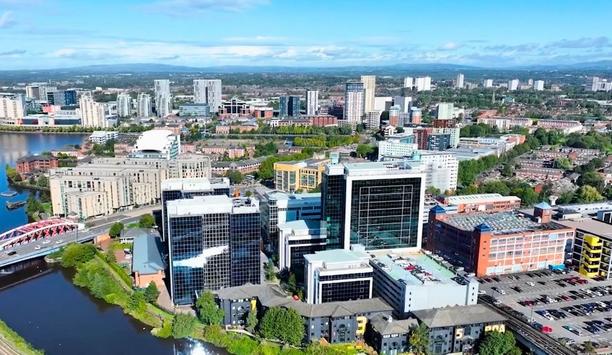
FSW UK partnered with Austin Broady Associates and Mitsubishi Electric to install sustainable HVAC upgrades at the Greater Manchester office campus, Exchange Quay. Investment Managers for Exchange Quay Till Asset Management were looking to upgrade the business complex, located on the Salford Docks, with a new sustainable and energy efficient heating system. The project began with Building 8, a ten storey structure housing 116,000ft2 of office space. FSW UK worked with air conditioning contractors Austin Broady Associates to assess their then-current 600kW gas boilers and design a sustainable alternative capable of meeting the requirements of Exchange Quay’s largest block. Most compatible hardware Oliver Broomfield identified Mitsubishi Electric’s CAHV-P500YB-HPB 40kW commercial air heat pumps FSW Projects Manager - Oliver Broomfield identified Mitsubishi Electric’s CAHV-P500YB-HPB 40kW commercial air heat pumps as the most compatible hardware for Building 8. These heat pumps were able to be retrofitted into the existing system, replacing the gas boilers while utilizing the building’s four-pipe fan coil units to create a low carbon, energy efficient, and sustainable HVAC system. The success of this project has established a new baseline for sustainable HVAC upgrades not just at the Exchange Quay, but nationwide. FSW’s application of heat pumps within an existing heating and cooling system is now being used as a blueprint for similar ventures in commercial properties across the UK because of its use of the building’s existing systems. This allows upgrades to be implemented with minimal disruption to its tenants, so property management can prepare their assets to meet future sustainability guidance. Demonstrating FSW’s sustainable HVAC systems Oliver Broomfield, Air Conditioning Projects Manager at FSW UK, said: “When Mark (Broady, Auston Broady Associates) commissioned FSW UK to upgrade Exchange Quay Building 8’s heating system, we recognized this project as an opportunity to demonstrate the capabilities of FSW’s sustainable HVAC systems.” He adds, “We’re immensely proud of what we’ve achieved here in Salford, and we’re looking forward to future projects which can continue to build on this success.”
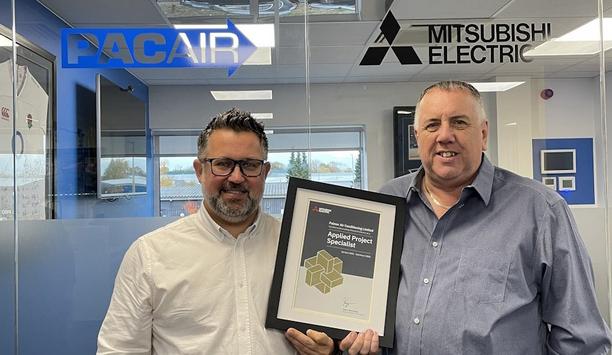
Mitsubishi Electric and PACAIR have agreed on a new contract that extends the relationship between the two companies to over 20 years. Director and Founder, Nigel Palmer, set up the company in 2003 and has since expanded PACAIR to include branch offices in Birmingham and Wigan to offer a nationwide service for customers. “Our relationship with PACAIR has grown stronger over the past 20-years, and throughout that time, Nigel and his team have consistently delivered the highest levels of professionalism and support,” explained Andy Hart, Commercial Products Sales Director for Mitsubishi Electric. Range of commercial Mitsubishi Electric products Andy Hart added: “Changes to refrigerants and new products mean that the world of HVAC is changing rapidly, so customers need a reliable and trusted partner. PACAIR offers its customers dedicated technical support and expertise across our commercial line-up, which is a fundamental reason why we are delighted to have them alongside our own brand.” PACAIR became Mitsubishi Electric’s only Applied Project Specialist (APS) in 2021, helping to create a real market differentiator and bringing added value for Mitsubishi Electric. APS status means that PACAIR is able to offer customers a full HVAC service right across the range of commercial Mitsubishi Electric products, bringing its own technical design expertise and support services for customers. Deliver sustainable HVAC solutions “At PACAIR, we have always sought to deliver a true customer-focused approach, which has really helped us stand out in the market,” said PACAIR Director, Nigel Palmer, adding “This new agreement with Mitsubishi Electric reinforces the strength of that relationship and demonstrates our shared commitment to deliver sustainable HVAC solutions that help our clients navigate changes in both legislation and the market." He continues, “We will continue to work closely together to drive innovation and excellence, combining Mitsubishi Electric’s quality with PACAIR’s technical expertise and support as we work towards a more sustainable future for the built environment.”

Despite 80% of UK homeowners saying they care about climate change, heat pump adoption in UK homes remains critically low, with only 6% making the switch. According to Mitsubishi Electric’s latest report, Heat Pumps: Accelerating the Switch, one of the biggest barriers isn't technology or awareness, but the cost of electricity. Average household electricity bill For many UK households, switching to a heat pump isn’t a question of willingness, but the affordability of electricity. The current energy pricing structure actively penalizes greener choices by loading environmental levies onto electricity. These levies add around £140 a year to the average household electricity bill, while gas is taxed less heavily. Even though heat pumps are up to three times more efficient than a gas boiler, they can still cost more to run, putting off environmentally conscious homeowners who are already feeling the squeeze from rising living costs. Electricity pricing is holding back heat pump adoption The new research of 2,000 UK homeowners from Mitsubishi Electric and Opinion Matters shows that 33% of homeowners would consider switching to a heat pump if electricity cost the same or less than gas. But for many, the bar is even higher: 15% of those surveyed said they would only consider switching if their annual energy bill was at least £500 cheaper. New academic modeling in the report by Dr Ed Manderson, Lecturer in the Department of Economics at the University of Manchester, reveals that an increase in electricity pricing clearly correlates with a decrease in heat pump installations. A 7% fall in electricity prices (equivalent to a 10-point drop in the price index) would lead to about a 9% rise in domestic heat pump installations. The same trend appears in the commercial market: rebalancing electricity prices could boost uptake by around 9%, of which the true effect across the whole market would likely be considerably larger. Residential and commercial heating installers Russell Dean, Deputy Divisional Manager, Mitsubishi Electric, said: "Our research reveals a critical tipping point in public sentiment: the desire to reduce emissions is being outweighed by the reality of energy bills." He adds, "If we are to bring about considerable reform in how we heat our buildings in the UK, we must look at reforming an electricity pricing system that disproportionately penalizes those who opt for low-carbon alternatives." Mitsubishi Electric’s own research of residential and commercial heating installers also shows that they are ready to help accelerate the shift, with 93% believing they have the skills and experience to install heat pumps – an increase from 61% last year. Urgent reform is needed It’s clear that a significant disruption to the status quo of how heating is fueled in the UK is required if the UK government’s target of 600,000 heat pump installations per year by 2028, or the Climate Change Committee’s 7th Carbon Budget recommendation that by 2040 half of UK homes are heated with a heat pump, is achieved as a pathway to net zero emissions by 2050. George Clarke, Architect and Mitsubishi Electric Ecodan Ambassador, comments, "The technology is ready, and installers are ready to make the switch from gas heating to heat pumps, but the inflated price of electricity remains a major issue for both consumers and businesses. That’s why we’re calling on the government to remove green levies from electricity to encourage more people to move away from carbon-intensive gas and oil heating." Mitsubishi Electric is calling for urgent action to remove the cost barriers holding back heat pump adoption. To overcome this, government and industry must work together to create a fairer and more affordable path to low-carbon heating. Key actions recommended in the report Rebalance green levies: Shift green levies away from electricity to reflect the UK’s net zero goals. Current levies add £140 to electricity bills, but just £50 to gas, making heat pumps more expensive to run than gas boilers. Decouple electricity from volatile gas prices: Decouple electricity prices from volatile gas markets. With more electricity now coming from renewables, this move would lower running costs for heat pump users and improve energy fairness. Expand and promote financial support schemes: Expand and promote support schemes like the Boiler Upgrade Scheme. One in three homeowners, unaware of the grant, said it would make them more likely to switch. Affordability must be addressed — especially as 15% of households say they need £500+ annual savings before they’d consider a heat pump. Net zero ambitions "Opting for sustainable heating solutions must be a viable solution to the volatile cost-of-living problems facing UK homeowners. Rebalancing the cost of electricity and gas could turn the tide on heat pump adoption and will be key to meeting net zero ambitions," said Russell Dean. He adds, "Heat pumps are ready. Installers are ready. Consumers and businesses are interested. Now the energy system needs to catch up."
Insights & Opinions from thought leaders at Mitsubishi Electric Corporation

Although energy efficiency continues to be a focus of home renovation, HVAC professionals are sometimes hesitant to work on older homes. The potential costs and complexities of replacing outdated HVAC systems or installing a solution where one doesn’t exist can make them nervous. However, installing all-electric, all-climate heat pumps in homes built decades ago, even a century ago, is an everyday occurrence in the northeastern U.S. Heating and cooling systems A sizable portion of Jay Moody Heating & Air Conditioning consists of installing and servicing energy-efficient heating and cooling systems, especially heat pumps, in older homes in central Massachusetts. Updating older homes with heat pump solutions is more feasible than many think — it’s a matter of overcoming common barriers and being the right, experienced HVAC professional for the job. Common barriers when heating and cooling an older home In Massachusetts, it’s common to have one or more 275-gallon tanks of oil in the basement to heat homes Barriers to renovating older homes are surmountable. Commonly, older homes lack adequate filtration and insulation and are equipped with older electrical panels that might need upgrading or replacing. In Massachusetts, it’s common to have one or more 275-gallon tanks of oil in the basement to heat homes. However, whether an older home is heated with oil or gas, outside air infiltration occurs because these structures generally lack a tight building envelope. More recently built homes have these systems to prevent outside air and water from penetrating the structure. Similarly, many older homes are insufficiently insulated. Size of the structure and other electrical loads As a first step, owners of older homes should get an energy audit and find out what can be done to eliminate infiltration, such as having air sealing performed and having more insulation blown into their houses. Once weatherization is complete, installing an all-electric heat pump system becomes more feasible. Another important requirement would be an appropriately sized electrical panel. Older homes might have 100 amps of service, for example, when it will need 200 amps for the new heat pump, depending on the size of the structure and other electrical loads such as electric stoves/ovens, water heaters, and electric vehicles. In some cases, an electrical panel upgrade may be required. Attributes homeowners look for in an HVAC company HVAC companies that specialize in heat pumps should ensure their HVAC technicians are shared and ongoing training When upgrading an older home with a heat pump system, it’s a best practice for homeowners to get multiple quotes from experienced contractors in their service area. To stand out and offer more value during this process, my business conducts monthly heat pump workshops that help educate customers. Additionally, I recommend that any experienced, reputable HVAC company should post online reviews, have a professional website and online presence, and show relevant work examples to help familiarize homeowners with their work. HVAC companies that specialize in heat pumps should ensure their HVAC technicians are experienced and undergo ongoing training. In fact, the Jay Moody team is part of the Mitsubishi Electric Diamond Contractor® program, which provides in-depth training on heat pump solutions. Homeowner’s comfort preferences During the in-home consultation, the salesperson should discuss the homeowner’s comfort preferences, HVAC concerns, and short- and long-term plans for the home and its HVAC system. The contractor should conduct an in-house Manual J to calculate the heating and cooling loads of the home, ensuring proper HVAC equipment sizing for efficient and comfortable performance. Lastly, the HVAC salesperson should make suggestions for keeping the aesthetics of an older home intact. For instance, my team would not use mini-splits in certain rooms in a Victorian home because they might detract from the style. Instead, they would likely suggest a ducted heat pump system with air handlers and stylish vents. HVAC salesperson should make suggestions for keeping the aesthetics of an older home intact. Heat pumps offer the right fit for homes of all ages In the Northeast, many of the homes are older – whether that means built in the 1960s, the 1860s, or the 1760s. There’s little reason that any HVAC contractor should shy away from installing heat pump systems in older homes. Further, contractors can learn how to teach homeowners about heat pumps, train their teams, and recommend the right system for the character of the house. Refurbishing these beautiful houses is a challenge well worth tackling to create homes as energy-efficient and comfortable as they are charming.

“Decarbonising home heating represents one of the biggest challenges to the government achieving net zero,” was a conclusion of the recent National Audit Office report ‘Decarbonising home heating’. The facts, the report states clearly in the opening are: 18% of the UK’s greenhouse gas emissions in 2021 were from home heating and 55,000 heat pumps were sold in the UK in 2022. decarbonizing home heating Crucial to decarbonizing home heating is the government’s ambitious goal to install 600,000 heat pumps annually by 2028 – just four years away. To achieve this, installations need to increase 11-fold on current levels. To foster the uptake of heat pumps several actions can be taken including rebalancing the cost of electricity and gas, training more installers to meet demand, and generating more awareness of heat pumps by consumers. Rebalance the cost of electricity and gas In fact, from April 2024, gas prices were capped at 6p/kWh while electricity prices were capped at 24p/kWh In the UK, the wholesale price of electricity is pegged to an expensive source of energy - gas. This means electricity prices are artificially inflated by the price of gas despite more and more of the country’s electricity being generated from renewables. In fact, from April 2024, gas prices were capped at 6p/kWh while electricity prices were capped at 24p/kWh. Decoupling the price of electricity There is an imbalance of social and environmental levies which are loaded onto electricity bills. These add an average of £131 to a customer’s annual electricity bill, compared to just £34 for the average annual gas bill, meaning that the cost of running a heat pump is artificially high compared to a gas boiler. This can be addressed by rebalancing the cost of electricity with a more progressive and environmentally conscious distribution of levies and by de-coupling the price of electricity from the price of gas. This would make electricity more affordable, which is particularly relevant at a time when the cost of living is causing huge strain across the UK. Growing the green economy It would also move household energy requirements away from fossil fuels and volatile oil and gas prices, back UK energy security as the nation moves to renewable energy sources, and help to grow the green economy and employment in the UK. In the long term, the removal of levies on electricity bills would help to balance these costs. In the short term, the Heat Pump Associations’ call for a Domestic Heat Pump Tariff Discount would reduce the price of electricity used for hot water and heating produced by a domestic heat pump. Train heating engineers We need 33,700 full-time heat pump installers in the UK to support the government’s ambitions Improving upskilling, capacity building, and infrastructure investment is also required to provide the number of heat pump installers needed to meet the government’s annual target. Significant progress has already been made in training heat pump installers. In 2023, close to 8,000 individuals became qualified heat pump installers – compared to just under 3,000 in 2022. The Heat Pump Association estimates that we need 33,700 full-time heat pump installers in the UK to support the government’s ambitions for heat pump uptake. Heat Pump Training Grant We are currently at around 11,000 so we must continue the upward trajectory of the last few years to meet this goal. The government’s Heat Pump Training Grant is supporting this effort by offering £500 towards the cost of training to become a heat pump installer. Beyond this, support for building the UK’s capacity and capability to manufacture heat pumps and their components is vital to be able to meet demand as it increases in the future. Building skills as heat pump engineers Our heat pump manufacturing facility in Livingston, Scotland, already employs some 1,800 people in green jobs and supplies heat pumps for installation across Britain and export to the rest of Europe. As of this year, in addition to our training facility in Hatfield for installers to build their skills as heat pump engineers, we have added new centers in Livingston and Manchester, and are planning for more. We are also proudly working with colleges, supporting them as they take on young people to learn skills in renewable energy. Increase consumer awareness Ipsos revealed that over 70% of consumers still know little to nothing about how heat pump technology works To increase the uptake of heat pumps, consumer awareness needs to be raised. Research commissioned by Ipsos revealed that over 70% of consumers still know little to nothing about how heat pump technology works. This means that educating consumers on the importance of heat pump technology will also be crucial to encouraging wider uptake. Greater awareness of the benefits of heat pumps, driven by the government, media, and organizations within the heat pump industry, will ultimately accelerate adoption, help decarbonize home heating, and help us hit the all-important net zero goal. Getting to net zero calls for a heat pump boost It is well documented that heat pump uptake needs to grow, or we risk missing our climate goals. The technology to help us achieve this already exists in the form of heat pumps. However, steps must be taken to raise awareness about their potential and benefits, reduce their running cost by rebalancing electricity and gas prices, and ensure there are enough trained heat pump installers to meet demand as it increases.

In 2019, the UK became the first major economy in the world to pass laws to end its contribution to global warming by 2050 - a landmark moment on the road to net zero. To meet that target, owners and managers of commercial buildings are increasingly facing more standards, regulations, and legislation to promote carbon reduction. This may pose challenges when it comes to investing in building service technologies, but the net-zero goal also provides an opportunity to embrace new approaches to the design and operation of commercial buildings. Heat commercial buildings When we look at reducing the carbon impact of a building, heating is an important factor to consider. Heating and hot water are significant contributors to a building’s carbon emissions. In fact, they create nearly a third (32%) of the total carbon emissions in the UK. Luckily, the technology to heat commercial buildings in a more energy-efficient, renewable way is already out there - in the form of heat pumps. There is legislation focused on the provision of heat to commercial buildings that need to be considered So, what benefits can heat pumps offer, and how can building managers be sure that they are the right solution for a commercial space? There are already regulations in place to help reach net-zero – from the Climate Change Act in 2008 to the Green Growth Strategy in 2017. More specifically, there is legislation focused on the provision of heat to commercial buildings that need to be considered. Energy efficiency standards Part L of the Building Regulations states that non-domestic buildings should be moving to low-carbon heat sources, the minimum energy efficiency standards means it’s illegal to let any property with an EPC rating of less than band ‘E’, and the Non-Domestic RHI has been extended until 2022, in order to help overcome barriers to investing in renewable heating. There is also growing interest in embodied carbon in commercial buildings, and considering the amount of carbon produced by a building across its whole lifecycle, it’s important to understand the full environmental cost of the extraction, processing, manufacture, delivery, and assembly of every single product or material used. Conventional electric heating The government has already set a target of 600,000 heat pump installations per year by 2030 Needing to consider all of these factors may seem like a lot, but it serves to show that focusing on renewable heating now is the best way to future-proof commercial buildings for years to come. Heat pumps are central to reaching this decarbonized future, with the Carbon Trust finding that heat pumps have the potential to deliver CO2 savings of up to 70% compared to conventional electric heating, and up to 65% compared to an A-rated gas boiler. The government has already set a target of 600,000 heat pump installations per year by 2030, and the Committee on Climate Change estimates that 19 million heat pumps will need to be installed by 2050 to achieve the net-zero goal. Offering renewable heating To reach this goal, uptake needs to maintain momentum. As well as offering renewable heating, heat pumps allow for a reduction in running costs and increased efficiencies, and are increasingly becoming the first choice for building managers planning renovations - because they are designed for both retro-fit and new build, are easy to design and install, and are scalable to work with other systems. In the years since heat pumps first became available, the choice of heat pumps has expanded This means they’re a suitable solution for almost any space, and are even able to work alongside existing heating systems in a hybrid situation if required. A heat pump is an ideal solution for commercial buildings, it’s just a case of finding the right one for the job. In the years since heat pumps first became available, the choice of heat pumps has expanded, and building owners are now able to select exactly the right equipment for a building’s requirements. Combining residential homes For example, heat pumps can now work at higher temperatures, meaning they are a great option for spaces like hotels, hospitals, and leisure centers where there is a high demand for hot water at peak times – removing the need to use a gas boiler. This is also a compelling case for heat pumps in mixed-use buildings – which is a burgeoning space in the UK-built environment. Buildings which combine residential homes and commercial businesses have a wide variety of heating and cooling requirements within the same structure. Traditionally, this is where gas boilers, combined heat and power systems, or electric water heating would have come in. Heat pump installations Modern heat pumps can also be applied in buildings alongside other technologies Now, high-temperature heat pumps – like the 40kW Ecodan QAHV – can deliver hot water up to 90°C, helping businesses increase the efficiency of hot water production while slashing their carbon footprint. Other heat pumps can offer options for a modular approach, so that multiple devices can operate in one system. This means that the multiple-unit system can cascade available units on and off, to meet the required load of a building. It also means heat pump installations are scalable, and can work for a small doctor's surgery through to entire district heating projects. Modern heat pumps can also be applied in buildings alongside other technologies, and boost the renewable element of a project – reducing the requirement for heat energy. Commercial heat pumps Finally, to satisfy these needs without compromising on sustainability and the green imperative would have been challenging, before the advent of commercial heat pumps. Reaching net-zero and moving to renewable technology is now a priority for everyone. For building services professionals, there is a real opportunity to lead the way, and encourage clients to take a new approach to heating and hot water in commercial buildings. The heating equipment we install will be in a building for at least a decade, so installing a heating system based on fossil fuels might risk leaving the building as a ‘stranded asset’ in the future. Making the move to renewable heating will help ensure buildings are meeting efficient and environmental standards for years to come.

Safety Certification Of IT Equipment Cooling In Data Centers
Download
The Advantages Of Cooling Tower Retrofits Using EC Fan Arrays
Download
The Water Is Fine: Diving Into Air-To-Water Heat Pumps
Download
Heat Pumps: Expert Insights
Download
The Hidden Energy Drain
Download
Mitsubishi Electric PLA-ZM35EA Power Inverter Heat Pump (Single Phase)
Mitsubishi Electric PLA-ZM140EA Power Inverter Heat Pump (Single Phase)
Mitsubishi Electric PLA-ZM125EA Power Inverter Heat Pump (Single Phase)