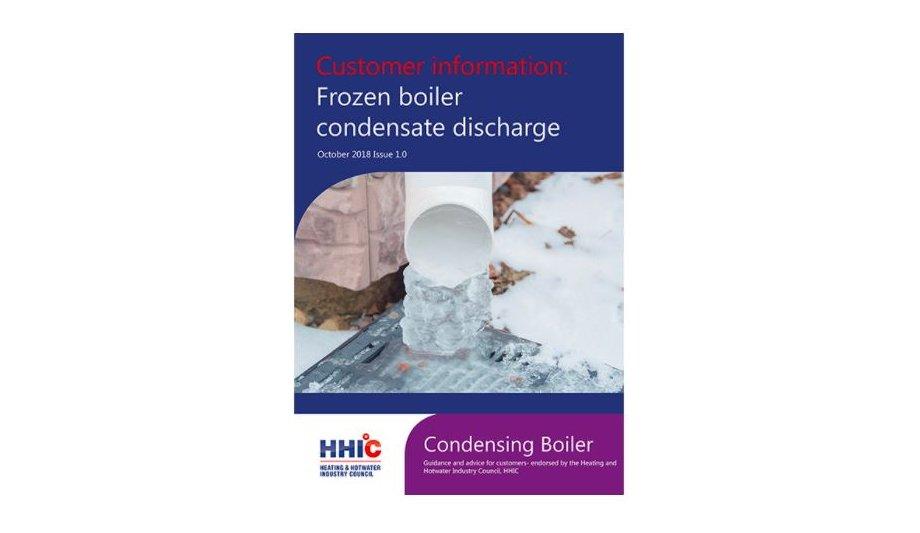

Following a Met Office warning of potential extreme UK weather such as a return of ‘The Beast From The East’ the Heating and Hotwater Industry Council (HHIC) are reissuing their consumer information guide to ‘protecting home heating systems’, which can be used by a heating engineer to explain the risks and the remedial action required, as well as what action customers can take should their condensate pipe freeze.
Stewart Clements, Director, HHIC said, “We are acutely aware that in extreme weather conditions external pipework carrying water is at risk of freezing, particularly when there is a high wind chill factor. If a boiler condensate discharge pipe freezes, it will cause the boiler to go into “shut off” at a time when householders need their heating and hot water the most. Particularly as many are more reliant on their heating systems, given that a large proportion of the UK is now working from home.”
“In the vast majority of cases, such problems occur where the condensate discharge pipe is located externally to the building for some part or all of its length and pipe insulation has not been fitted. Condensate discharge pipes should be connected to an internal drainage point. Where it is not possible to connect the boiler condensate discharge pipe to an internal point, the HHIC have an additional guide for heating engineers, which details what action should be taken- such as external pipe insulation.”
The Beast From The East 2.0
To prepare for The Beast From The East 2.0, we are urging homeowners and engineers to;
- Ensure that all new boiler installations conform to the appliance manufacturers’ instructions.
- Include a condensate discharge pipe ‘check’ during any remedial or servicing work on the boiler. With any remedial action required explained to homeowners who have an installation that is ‘not to current standards or manufacturers instructions’.
- If consumers are concerned, e.g. it is clear that a smaller bore pipe such as 21.5mm has been used, and/or no insulation is present, they may wish to consider having it insulated appropriately, using suitable materials.
- If consumers are confident and comfortable to undertake the work themselves then exercise caution, e.g. if working at height is required, and they would still recommend a check by a registered engineer in due course, to confirm the installation now complies with industry guidance (or recommend any further work required for it to do so).
“Prevention is always better than cure. However, if the pipe does become frozen we want homeowners to know what to do – our guide details a step by step explanation of what you would need to do to resolve the problem should the condensate pipe freeze. Alternatively, ring your local Gas Safe Registered installer who will be able to explain the situation, rectify the problem, and get the system working in no time.”