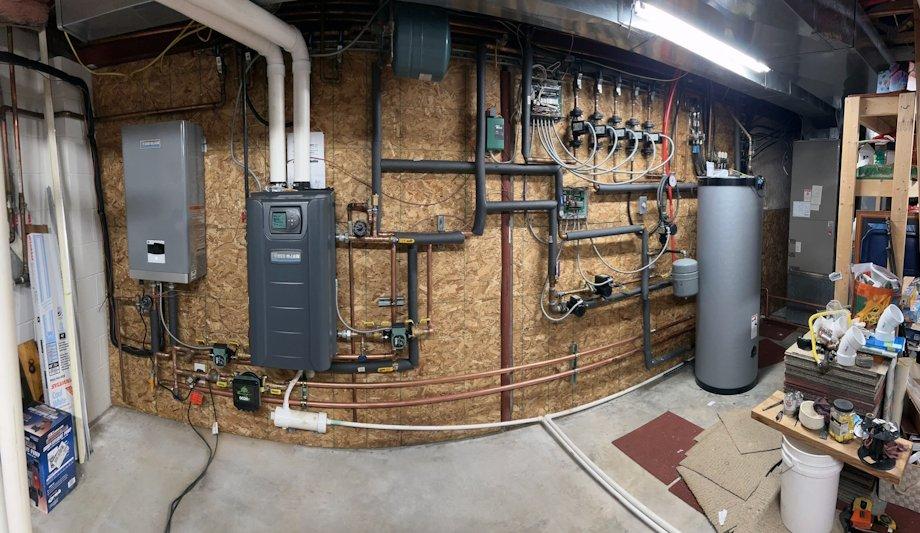
Aiming to enhance energy efficiency and decrease propane heating expenses, a homeowner near Chicago turned to contractor James Downs of JMD Associates for assistance. Downs recommended the implementation of the ECO Hybrid Dual Fuel Hydronic System by Weil-McLain. Installed in a two-decade-old house close to Lake Michigan, this innovative system synergistically combines an air-to-water heat pump with a high-efficiency gas boiler, ensuring optimal performance across varying temperature ranges.
The homeowner's existing setup included a hydronic radiant floor heating system and a snow melt arrangement for external surfaces, both powered by a high-efficiency propane boiler from Weil-McLain. Downs recognized this property as perfect for a hybrid adaptation due to its low-temperature heating configuration and the owner's goal of sustainable and economy-driven decisions. "With radiant floor heating already in place in the home and the climate conditions in the Chicagoland area, this was a great opportunity for a hybrid setup," mentioned Downs.
The selected Weil-McLain ECO Hybrid System includes an outdoor air-to-water heat pump and a compact indoor unit. Designed to work seamlessly with the existing high-efficiency modulating propane boiler, the system balances performance with comfort. Downs highlighted the system's functionality: "The heat pump is designed to handle most of the heating season efficiently, and the boiler only kicks in when needed."
The ECO HP effortlessly integrates with Weil-McLain's high-efficiency condensing boilers by combining an inverter-driven outdoor heat pump with an indoor unit, maximizing energy efficiency while minimizing fuel usage. Ideal for residential properties, it offers quiet operation and long-term reliability while reducing energy costs by intelligently sharing the heating load. Ensuring optimal function, the outdoor unit is mounted to prevent snow build-up, vital for the Lake Michigan area.
Incorporating an indirect tank for domestic hot water needs, the system also features a dedicated heat exchanger for external snow melt capabilities. The home’s heating is managed across six zones, each controlled by a centralized panel, ensuring efficient distribution.
The ECO Hybrid Dual Fuel System was straightforward to install, akin to a conventional central air system. Downs explained, “The indoor unit was lightweight and compact — easy to mount with standard tools.” The intuitive system controls, along with standard electrical connections, simplified the process significantly. Weil-McLain’s ECO Calc Application Sizing Tool further assisted in configuring the system parameters and optimizing the switch between heat pump and boiler operation.
Although newly installed, the system is structured for the heat pump to meet demands down to approximately 15°F, with the boiler supporting during colder periods without shutting down the heat pump. This strategic setup achieved about $600 in propane savings in its first season, as Downs noted, “The propane deliveries noticeably dropped.” The home enjoyed consistent temperatures, quieter operations, and reliable hot water supply, with water stored at 140°F and tempered via a mixing valve.
While initial expenses for hybrid systems might be higher than traditional setups, the long-term benefits, such as reduced operating costs and environmental impact, are evident. Downs emphasized, “This was about reducing environmental impact and operating costs. With the heat pump carrying the load for much of the year, that’s exactly what we achieved.”
Zachary Golden, Product Manager at Weil-McLain, commented, “This installation is a prime example of how a well-matched hybrid system can deliver real value. With contractors like James leading the way, we’re seeing high-efficiency systems work smarter for homeowners.” The success of this ECO Hybrid Dual Fuel System sets a precedent for future heating system upgrades in colder climates, emphasizing the importance of matching systems to appropriate applications.
When a homeowner in the Chicagoland area wanted to improve energy efficiency and lower propane heating costs, contractor James Downs of JMD Associates recommended an innovative solution: the ECO Hybrid Dual Fuel Hydronic System from Weil-McLain.
Installed in a 20-year-old home near Lake Michigan, the system combines an air-to-water heat pump with a high-efficiency gas boiler to deliver optimal performance and flexibility across a wide range of temperatures.
Ready for Hybrid
Downs described the property as an ideal candidate for a hybrid installation
The home featured an existing hydronic radiant floor heating system, as well as a snow melt system for the driveway and sidewalk, which were powered by a propane-fired high-efficiency Weil-McLain boiler.
Downs described the property as an ideal candidate for a hybrid installation due to its low-temperature heating setup and the homeowner’s desire for greater sustainability and cost control. The homeowner was motivated not only by rising fuel costs but by a desire to make more climate-conscious decisions and maximize efficiency with their existing radiant system.
Weil-McLain ECO Hybrid System
“With radiant floor heating already in place in the home and the climate conditions in the Chicagoland area, this was a great opportunity for a hybrid setup,” said Downs.
“The heat pump is designed to handle most of the heating season efficiently, and the boiler only kicks in when needed – striking a smart balance between performance and comfort.”
The chosen solution featured a Weil-McLain ECO Hybrid System, which included an outdoor air-to-water heat pump and a compact indoor wall-mounted unit, both designed to work with the existing high-efficiency modulating propane boiler.
Seamless integration
The ECO HP is designed to integrate seamlessly with Weil-McLain's high-efficiency condensing boilers
The ECO HP is designed to integrate seamlessly with Weil-McLain's high-efficiency condensing boilers. By combining a durable, inverter-driven outdoor heat pump with a compact indoor unit, the system intelligently shares the heating load – maximizing energy efficiency and minimizing fuel consumption.
It features an intuitive user interface, integrated staging control capabilities and compatibility with indirect water heaters. Ideal for residential applications using radiant floor heating or low-temperature hydronic systems, the ECO HP delivers quiet operation, long-term reliability and measurable reductions in energy costs.
In this case, the outdoor unit was mounted on a stand to prevent snow accumulation and ensure proper drainage – an important consideration in Lake Michigan’s lake-effect climate.
Hot water needs
As a bonus for the home's domestic hot water needs, an indirect tank was integrated into the system, while a dedicated heat exchanger handled the snow melt functionality for exterior surfaces.
Heating throughout the residence was divided into six zones, each managed through a centralized zone control panel for efficient distribution.
Smooth Installation
According to Downs, the installation was straightforward and similar to setting up a conventional central air system.
“The indoor unit was lightweight and compact – easy to mount with standard tools,” he said. “The outdoor unit connected via flare fittings, and the line set was within the range for the unit’s pre-charge, so everything aligned perfectly.”
The 120V indoor unit and 240V outdoor unit required standard connections. Controls were intuitive, and the system relied on Weil-McLain’s guidelines to set compressor runtime limits and optimize switchover from the heat pump to the boiler.
Energy savings
The hybrid system is designed to allow the heat pump to meet demand down to approximately 15°F
Downs noted that while the system was new, the manual was easy to follow. “If you're already doing mini-splits and hydronics, this is very manageable,” he said. The installer also credited Weil-McLain’s ECO Calc Application Sizing Tool, which guided setup of system parameters and switchover logic.
For this application, the hybrid system is designed to allow the heat pump to meet demand down to approximately 15°F. In colder conditions or during long domestic hot water calls, the boiler supplements the heat pump without shutting it down, maintaining comfort while maximizing efficiency.
In this installation, a 30-minute runtime threshold on the compressor triggers the boiler, ensuring fast response without sacrificing energy savings.
Propane savings
Downs reported approximately $600 in propane savings in the first season alone. “The propane deliveries noticeably dropped,” he noted. “That, combined with stable indoor temperatures and quieter operation, made it a win for the homeowner.”
Comfort remained consistent with no cold spots. Domestic hot water is stored at 140°F and tempered with a mixing valve for safe delivery, providing reliable service even during peak use.
While the upfront investment for hybrid systems can be higher than traditional replacements, the propane fuel source made the business case compelling. Downs believes additional savings will become evident over time, especially as rebates become more accessible.
A Thoughtful Investment
“This was about reducing environmental impact and operating costs. With the heat pump carrying the load for much of the year, that’s exactly what we achieved,” he added.
Downs views the ECO Hybrid System as an ideal choice for this low-temperature hydronic application. “The ECO Hybrid is a really smart upgrade as long as you evaluate the heat emitters and understand your reset curves,” he said.
“It’s not a one-size-fits-all solution, but if you’re working with radiant floors or low-temp baseboards and looking to cut fuel costs, especially with propane, it’s a great fit,” said Downs.
Well-matched hybrid system
Zachary Golden, Product Manager, Channel Development with Weil-McLain, added: “This installation is a prime example of how a well-matched hybrid system can deliver real value. With contractors like James leading the way, we’re seeing high-efficiency systems work smarter for homeowners.”
The hybrid installation offers long-term benefits in efficiency, comfort and performance – making it a model for future heating system upgrades in cold climates.