Technology & Trends - Cooling

College was never the only path to success. There are many other nontraditional avenues to success, and I had the privilege of blindly venturing down one myself. My path included a short stint in college, then trade school, an apprenticeship, a role building a training program, a managerial role running a branch, and ultimately a leadership role running a large region of companies. I started my career as a heating, ventilation, and air conditioning technician, and I didn’t think I’...
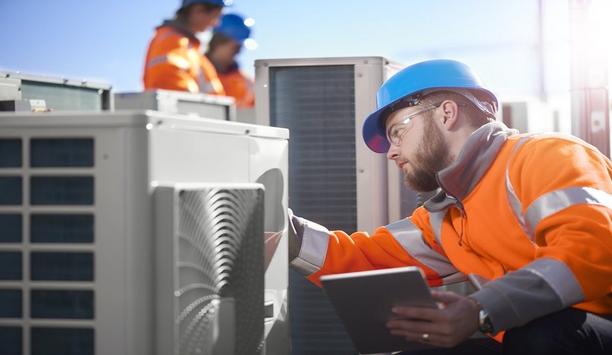
This time of year, a lot of planning is underway. Companies throughout the HVACR industry are mapping out the best path to maintain their current level of business, pursue growth while staying in their lane, or expand into a new area based on changing customer needs and industry opportunities. Whether you’re a small family-owned residential HVAC shop, a major player in commercial HVACR service or manufacturing, or anywhere in between, it’s helpful to be aware of the strong dynamics...
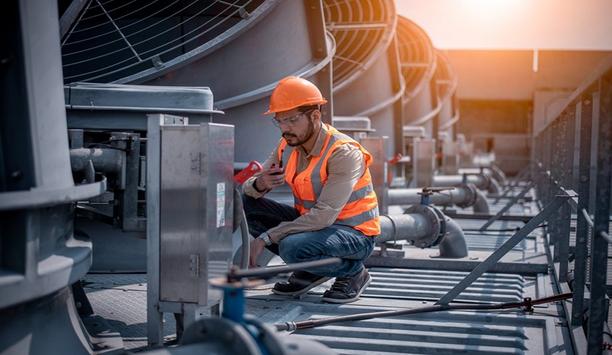
Nothing is immune to entropy. As buildings age, they suffer natural breakdowns in efficiency, performance, and useability, compromising occupant comfort and leading to higher energy bills. Luckily, they do not have to stay that way. Retro-commissioning brings existing structures up to speed so they can function their best. What Is Commissioning? Commissioning helps buildings operate as the owners intended and ensures staff maintains their equipment and systems. During new construct...

Circularity. Some may call it a “hot topic.” But in reality, the concept and practice of circularity is here to stay, indefinitely, for the simple reason that the sustainability of our planet depends on it. Whatever type of product you sell, “widget” you manufacture, or service you provide, achieving circularity, that is, putting practices in place so that materials remain in circulation and never become waste is finding its way onto the priority list of every business....

Using air conditioners and electric fans to stay cool accounts for nearly 20% of the total electricity used in buildings around the world, according to a report from the International Energy Agency. hybrid work model As a unique mix of key factors, such as the adoption of the hybrid work model and escalating heatwaves in certain regions of the United States keep people indoors for longer periods, this 20% share represents an increasingly costly line item on household budgets. Those within th...

According to some recent estimates, the cooling industry accounts for approximately 10% of global carbon dioxide (CO2) emissions. To place this in perspective, the transportation sector, as the highest contributor, accounts for approximately 20% of global CO2 emissions. While some may see this as a “glass half empty” scenario, the better approach is the one taken by key players in the HVACR space. As we see it, because the cooling industry has been a source of significant emis...

Most consumers choose an HVAC contractor based on their online reviews. Before making a final decision, potential customers actively look for what others have to say about your business, and having plenty of online positive reviews automatically positions you as a top pick. Reviews Reviews also help you rank higher in search results, and buyers are willing to pay more for brands with lots of strong reviews. So how do you get more of them? First, you have to create great customer experiences....
Energy bills for small businesses have become a major issue throughout 2023. As prices have risen drastically over the last twelve months, SMEs have been relying on the government’s Energy Bill Relief Scheme. Originally set up to support livelihoods, energy bills for businesses in the public sector were capped at £2,500 per year. However, in March, the government support scheme was replaced with the scaled-down Energy Bill Discount Scheme, leaving businesses and public sector organ...

Today’s HVAC contractors are acutely aware that they need visibility on the internet and in their community if they want the phones to ring with requests for new business. As a result, HVAC company leaders have become savvy about marketing and advertising and know that search engine optimization, direct mail flyers, and flashy truck wraps attract attention. Public relations But what they don’t stop to think about is that their competitors likely have a very similar marketing strat...

You’re looking for ways to increase revenue for your HVAC business, and texting is one more tool you can add to your arsenal. 70% of people report that texting is the fastest way to reach them, and 99% of texts are read within just a few minutes. That kind of speed can help you secure more appointments, get paid faster, land more referrals, and boost sales in general. Scheduling service appointments So where do you begin? Below, we’ll show you five tactics your HVAC business can...

Any time you enter into an agreement with a business or partner, they may want to check that everything is shipshape. What Is a Certificate of Insurance? - If you own a business, chances are you have certificates of all kinds on your wall, whether they be your hard-earned college degree or the certification needed by your city to run your business. These certificates prove that you’ve passed your classes or have met the requirements set out by the city. A certificate of insurance is simil...

Coastal and tropical areas present their own unique challenges for business and residential HVAC units. For these machines, which we use to create comfortable, safe air for occupants, corrosion is enemy number one in high moisture environments. Due to the high level of moisture and salts in the air along the coast, HVAC solutions are more susceptible to corrosion. These salts can negatively impact unprotected coil fins and metal surfaces, causing them to corrode, which can ultimately lead to s...

When your HVAC system isn't working correctly, it's often difficult to pinpoint the exact issue. Does your home have hot and cold spots? Do doors randomly close on their own? Is your A/C blowing warm air on a hot summer day? If so, your HVAC might have an uneven airflow. There are many symptoms of uneven airflow and many solutions. Amid the increasing demand for HVAC repair, homeowners need to learn how to keep their home system operating at its best. Understanding the potential causes of unev...
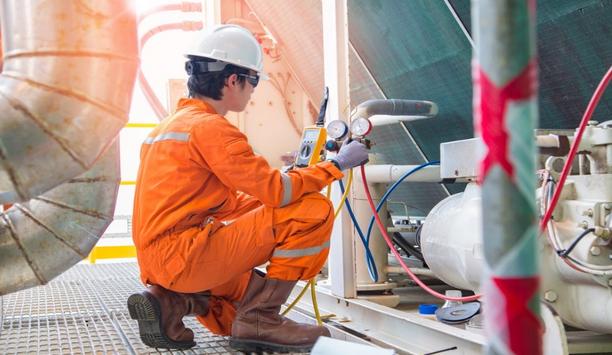
Each day we’re reading headlines about decarbonization ambitions for buildings while challenged with supporting day-to-day operational needs. Yet, we’re still tasked with delivering energy and cost reductions. Given the magnitude of energy consumption and the importance to occupant/tenant comfort, HVAC systems warrant significant attention. There are a lot of options with new equipment and controls to drive energy use down and enhance overall comfort that are very impactful, when bu...

Poor indoor air quality (IAQ) has been a longstanding problem within educational institutions, where it has been known to affect productivity and performance, as well as mental and physical health. And it’s not just the pupils at risk, with studies finding that this deleterious phenomenon can also compromise teaching performance and delivery, which inevitably affects the quality of the information received. CO2 concentrations This has recently been evidenced in a study conducted by the U...

With the UK experiencing increasingly warmer summers and more frequent heatwaves, we’re equally seeing more air conditioning units installed in both commercial and residential spaces. As the demand for air conditioning continues to increase, so too will the demand for copper pipes. Copper is a trusted and reliable material that air conditioning installers have been using for many years and, not only that, it’s also infinitely recyclable – making it a sustainable alternative to...

The importance of caring for the environment has become a top priority both around the world and increasingly in the United States. As regulations and social expectations become more stringent, future-proofing our infrastructure - beginning with energy consumption in buildings - is a natural first step. There are four key strategies a building owner or facility manager can focus on to improve energy efficiency and reduce a building’s carbon footprint, all while improving building performa...

Achieving carbon neutrality has, once more, become a business priority. Whilst COVID-19 distracted attention away from the drive towards Net Zero, green issues are once more back on the agenda and rising to the top of it. Building specifications The built environment accounts for around 28-40% of global emissions, so there is a collective ambition to start specifying buildings with as low a carbon footprint as possible. This is particularly true of commercial office spaces where operational...

Energy consumption continues to be one of the primary contributors to a building’s carbon emissions and its operational costs. Around 40% of this energy is used to power HVAC systems. To improve sustainability and reduce operating costs, it’s in a building owner’s best interest to find ways to make their building’s heating and cooling systems more efficient. Identifying areas that will make the biggest difference starts with knowing which systems consume the most energy...

Net-zero is high up on the agenda. And to achieve the UK’s carbon-neutral pledge by 2050 the country’s building stock must be decarbonized. Embodied carbon When we talk about decarbonizing buildings, there are two distinct categories of emissions that come into play. The first is embodied carbon. Here, the embodied carbon of a building includes emissions deriving from the construction materials, the building process, and the fixtures and fittings inside. It also covers emissions f...

Environmental ventilation is an incredibly important element of any building. It uses the natural, external airflow through a building to make the internal climate healthier. When appropriate environmental control is implemented, the benefits include better air quality, reduced CO2 emissions, and lower overhead costs. However, it’s not all sunshine and roses. This presents some issues that must be addressed. Residential buildings often use centralized heating systems, boilers, and ho...

Housing market dynamics, pressures on global supply chains, and the rising costs of materials and labor are a few of the trends that are impacting the HVAC industry. While COVID-19 restrictions may have been largely lifted throughout the U.S., many of these lingering trends can be traced back directly, or indirectly, to the pandemic. Jobber’s Home Service Economic Report: Record Growth Fuels Labor Shortage explores these trends and their true impact on home service businesses’ abili...

AI (Artificial Intelligence) is a smart buildings’ biggest ally. Without it, a building could hardly be classed as smart. For building owners and managers, AI is imperative to create a secure and comfortable experience for their occupants every day. What a building platform should do is gather data from various sources from the building management system and other smart technologies, to gather it all in one place. The data should then be fed into a flexible, scalable cloud-based platform...

Even though the COVID-19 pandemic is seemingly drawing to a close, living, working and learning at home is set to continue. Under this new normal, home electricity use is expected to double by 2050. Simultaneously, as climate change devastates communities around the world, we are faced with a moral and economic obligation to cut CO2 emissions from houses. Our goal is to build Net Zero houses and we can't get there fast enough. Fossil fuels use in heating systems Many countries continue to rely...

Seasonal transitions are the perfect time to take inventory and inspect a building’s various systems. We’ve been reminded for years that when we set our clocks back, we should also replace the batteries in our smoke detectors. The same thought process can be applied in support of seasonal preventative maintenance for a building’s HVAC system. Now that the cooling season has passed for a large part of the country, it is time to ensure that HVAC systems have been shut down prope...

I am writing this the day after the Autumn Spending Review, which among many measures, included a huge focus on how the Government wants to ‘level up the country’, creating a new post-pandemic economy, with higher wages and higher skills. Part of this is the £500 million ‘Multiply’ scheme, which aims to increase numeracy and basic mathematics for adults in the United Kingdom via in person tutoring, digital training and flexible courses. Lack of basic skills to acce...

The development of digital technologies in the Heating, Ventilation and Air Conditioning (HVAC) sector has been transformational for the industry, as well as for those who run HVAC systems. While the electrification and digitalization of machines, and assets has made a lot of operations simpler, it has also meant that the collection of machine data has never been more critical. Given that engineers can now view lots of different metrics on a single screen, including things like heating control...

With the increase in climate protests and UN reports highlighting future net-zero challenges, industries are trying to focus their business practices on principles of sustainable development and responsible investment. In the building sector specifically, landlords are gravitating towards certification schemes such as BREAM, LEED, and WELL (among others) to promote the sustainability of their assets and boost green credentials. Tenants are now demanding that the spaces they live and work in ar...

It is now more common to read about cases of Legionnaires’ disease in the media than ever before, with outbreaks regularly being reported in cities around the world, all the time. Many of these cases are attributed to contamination of domestic systems, showers and spas, but some are the result of operating cooling towers. While this problem is not new, with the first reported case in Philadelphia, in 1976, the United Kingdom (UK) has been at the forefront in leading the battle with Legionn...

At the moment, it seems as though a day rarely goes by without low-carbon heating hitting the headlines. Whether it is reports of ‘revamping’ the Clean Heat Grant, to include a ‘boiler scrappage’ scheme, which may offer home owners up to £7000 to make the switch to a low-carbon alternative, to speculation that the Prime Minister is under pressure to push back the 2035 ban on gas boilers, the debate on how and when the low-carbon heating revolution will happen is ong...
Browse expert commentaries
Related videos


2026 Live from AHR Podcast Pavilion!
AHR Expo Vegas - Explore new options for your customers
AHR Expo is HVACR's Main Event since 1930