Daikin - Experts & Thought Leaders








Latest Daikin Industries, Ltd. news & announcements
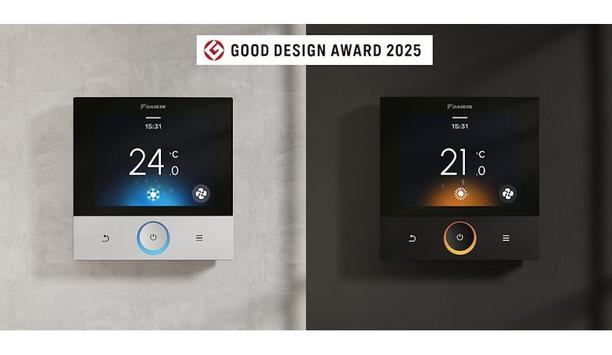
Daikin Europe NV introduces Madoka Plus, its next-generation Madoka controller that redefines simplicity, comfort and energy-efficient control for commercial environments. With an elegant and compact design, intuitive touchscreen navigation and future-ready smart features, this award-winning controller marks the next evolution in Daikin’s control solutions. Madoka Plus was unveiled during the Climatización y Refrigeración trade fair in Madrid (from 18-20 November). Intuitive control designed around simplicity Madoka Plus was designed and tailored for modern, intuitive, and dynamic spaces like hotels, offices, and retail environments. Daikin puts simplicity at the core, placing the four most-used functions on the home screen for instant access. Smart visual cues such as color-coded modes, animations, and multilingual navigation make the system status clear at a glance. For users and installers alike, usability is enhanced through streamlined screen flows and responsive touch interactions. These improvements cut commissioning time and reduce callbacks - ensuring faster, more efficient on-site work. Award-winning design and future-ready efficiency Madoka Plus proudly earned the Good Design Award 2025 for its premium aesthetics and user-centric design. It’s sleek 86×86 mm glass design — the size of a standard wall socket — blends seamlessly into modern interiors. Available in timeless black or white, it delivers a clean, sophisticated look without compromise. Its timeless design pairs advanced energy-saving capabilities with connectivity via the refreshed Madoka Assistant app. This empowers businesses to optimize comfort and efficiency effortlessly. Backed by Daikin’s proven HVAC expertise, Madoka Plus delivers reliability and performance for demanding commercial environments. Following its teaser debut at the Climatización y Refrigeración trade fair in Madrid (18–20 November), Madoka Plus will launch across EMEA in summer 2026.

American Air Filter Co. Inc., a member of the Daikin Group and global pioneer in air filtration solutions, introduces the BioCel® VXL RC and VariCel® VXL RC V-Bank Class of air filters, ushering in a new generation of high-performance air filters designed to perform better, last longer, and reduce maintenance time and total cost of ownership. Designed for use in HVAC systems in hospitals, schools, manufacturing plants, hotels, and other commercial facilities, the VariCel VXL RC and BioCel VXL RC each feature an 8-panel design with multiple recessed, mini-pleat media packs assembled into a series of V-banks, allowing them to contain up to 50 percent more media than standard rigid cartridge filters. This increased media area provides greater airflow capacity and reduces initial resistance by up to 20 percent compared to conventional V-Bank filters, lowering overall energy usage and extending filter life. Near-HEPA filtration The BioCel VXL RC is AAF’s highest performing MERV 16/16A HVAC filter with near-HEPA-level filtration efficiency and a low initial pressure drop, making it an excellent choice against airborne biological contaminants in hospital critical areas as well as in food and pharmaceutical processing plants. The BioCel VXL RC allows for an easy high-efficiency upgrade of existing rigid-style filters without requiring special frames or latches, making it a perfect solution for air handling systems that require the highest level of ASHRAE-grade efficiency. The BioCel VXL RC filter offers greater than 99% average efficiency on 1.0µ to 5.0µ particles, which encompasses the sizes of most bacteria harmful to human health, weighs significantly less, and is much easier to handle and install when compared to traditional 12"-deep, box-style ASHRAE-grade filters with metal cell sides, saving valuable change-out time and money. Best Efficiency in Its Class The VariCel VXL RC is the most efficient v-bank air filter in its class The VariCel VXL RC is the most efficient v-bank air filter in its class, dramatically reducing airflow resistance to enable systems to operate using less energy. It is specially designed to deliver consistent air quality even in challenging operating conditions, including variable air volume systems, turbulent airflow environments, repeated fan shutdown scenarios, and moderate to high humidity settings. The VariCel VLX RC’s dual-density design allows dirt particles to be collected throughout the entire depth of the media pack, utilizing the full filtering potential of the media and maximizing dust holding capacity, extending the life of the filter while minimizing operating costs. VariCel VLX RC Additional features The VariCel VLX RC also features a strengthened frame for added durability with industry-pioneer burst pressure resistance is available in single- and double-header models, with MERV 15/15A, MERV 14/14A efficiencies, and meets LEED® Project Certification efficiency requirements. "Facility managers are under tremendous pressure to improve indoor air quality while reducing energy consumption," said Kent Mertz, product manager at AAF International. "These new V-Bank filters represent AAF's commitment to lowering our customers' total cost of ownership without compromising air quality, health, and safety. By combining reduced resistance, extended filter life, and ease of installation, we've created filtration solutions that deliver immediate and long-term value, while improving the air quality at facilities that use them." Easy Installation Both the VariCel and BioCel offer indentions on the top and bottom of the filter header for easy installation, are lightweight, are available in antimicrobial versions, and are fully incinerable. All models are available today through AAF International's distribution network.
Daikin, a global major in Heating, Ventilation, Air Conditioning and Refrigeration (HVAC-R), anticipates substantial long-term growth in the heat pump market, despite a recent slowdown in the residential heating market. At ISH25 event, the Daikin Europe team presented Daikin’s refrigerant strategy to support the European decarbonization agenda. All this week, Daikin is showcasing its latest innovations, including the Daikin Altherma 4 generation and CO2 VRV, designed to offer low-carbon heating and cooling solutions for all types of buildings. Daikin supports Europe’s 2030 climate goals “We are committed to supporting Europe’s 2030 climate goals and believe in long-term heat pump growth despite the current market slowdown. With a projected market growth of 250% by 2030, Daikin will be at the forefront of heat pump adoption in the coming years,” says Carl Lievens, General Manager Residential SBU at Daikin Europe. Long-term heat pump market growth and path to full decarbonization by 2050 within reach Carl Lievens adds, “At Daikin, we see several market trends. In the residential sector, high upfront costs and high electricity prices slow down the shift from fossil-fuel based heating to heat pumps, despite EU mandates pushing for greener energy.” He continues, “The commercial sector sees growing interest in decarbonization and low global warming potential (GWP) heat pump technologies, though progress remains gradual. Meanwhile, industrial applications still heavily rely on fossil fuels, with digitalization and heat recovery solutions presenting opportunities for change.” Heat pumps market faces economic challenges The market is facing economic challenges and is being impacted by varying regulations across Europe Although technological advancements have made heat pump systems reliable and mature alternatives to fossil-fuel-based heating, the market is facing economic challenges and is being impacted by varying regulations across Europe. In 2024, the residential heat pump market saw a decline compared to 2023, leading to the loss of over 4,000 jobs in the sector across Europe. Despite the current market situation, the long-term market outlook remains positive as the EU remains committed to its 2030 climate goals. Key policies Patrick Crombez, (Deputy) General Manager - Environment Research Center at Daikin Europe, said, “Key policies, such as the Fit for 55 Package, the Energy Performance of Buildings Directive (EPBD), and the upcoming Emissions Trading System (ETS2) expansion in 2027, will drive demand up. We strongly believe a widespread adoption of heat pump systems is required to achieve net-zero heating by 2050.” He adds, “Decisive action, including phasing out incentives for fossil fuels, stronger new-build regulations, and implementing renewable heating standards will increase the replacement rates of fossil-fuel based solutions by low carbon heat pumps. Adopting the right policies and incentives today will bring the path to full decarbonization by 2050 within reach.” Flexible refrigerant choices to help decarbonize heating Refrigerants are a key component of heat pumps and refrigerant policies play a vital role in tackling energy efficiency Refrigerants are a key component of heat pumps and refrigerant policies play a vital role in tackling energy efficiency and climate impact of heating systems. The shift towards low GWP refrigerants in heat pumps, along with a decarbonized electricity grid, will further increase the advantage of heat pumps over fossil fuel systems. The selection of the right refrigerant is crucial to achieve optimal performance for heating, cooling, and hot water production in all applications and in all climate conditions. Various refrigerants exist, each with their own characteristics, advantages, and limitations. Daikin developed unique and flexible refrigerant approach Daikin has developed a unique and flexible refrigerant approach to address these concerns, ensuring compliance with evolving EU regulations and supporting the shift to low-carbon heating, cooling, and hot water solutions. “By carefully selecting the most balanced refrigerant for each application, we prioritize energy efficiency, affordability and safety throughout the entire product lifecycle, from production and installation to maintenance and decommissioning. Meanwhile, we consider the European regulations on F-gases. We are committed to advocate for the flexibility of refrigerant choices: there is no one-size-fits-all solution to help decarbonize heating.” concludes Carl Lievens. Heat pump technology pioneer continues innovations Daikin introduces a multi-split with R-454C and a (low capacity) single split using R-290 At ISH25, Daikin is introducing a multitude of innovative solutions that prioritize safety and quality in both product and installation. These include residential solutions like the Daikin Altherma 4 H on R290, the Daikin Altherma 4 X on R454C, a VRV range with CO2 as refrigerant, and its latest chiller on R290. As future alternatives for the current R-32 air-to-air residential split type heat pumps, Daikin introduces a multi-split with R-454C and a (low capacity) single split using R-290. Explore the details of the latest products here: Residential Daikin Altherma 4 H Available in classes 6, 8, 10, 12 and 14 Running on R-290 Operates down to -28°C Low sound generation of only 28dBA at 3 meters distance Ideal for replacement of fossil fuel boilers Increased user friendliness and comfort Daikin Altherma X Simultaneous air-to-air & air-to water heating and cooling One single outdoor unit using R-454C refrigerant, ideal for both new built and replacement Powerful space heating, either low (underfloor heating) or high temperature (radiators) Flexible connection for up to four Stylish indoor units (air-to-air heating and cooling) Possibility to integrate a domestic hot water (DHW) tank Commercial CO2 VRV Strengthens VRV range running on R-32 Running on CO2, a natural refrigerant with a GWP of only 1 Classified as A1 to ISO817, meaning low-toxic and non-flammable Ideal for shops and industrial buildings Cost-effective and affordable solution EWYK-QZ Air-to-water heat pump running on R-290 Modular design, with easy expansion and flexibility to adapt to changing energy demands Capacity of 100 – 125 kW per single module, up to 500 kW with up to 4 models in master/slave CLWT up to 75°C Future-ready, meeting F-Gas regulations Attendees can still visit Daikin at ISH25 March 17-21, 2025 Messe Frankfurt, Ludwig-Erhard-Anlage 1, 60327 Frankfurt am Main, Germany Hall 12.0 Stand E41
Insights & Opinions from thought leaders at Daikin

AHR Expo 2024 was abuzz with activity, befitting a dynamic industry in the throes of change. Industry developments such as electrification and the refrigerant transition render business opportunities on the AHR Expo show floor, where exhibitors display a determination to meet the challenges and thrive in the process. Walking from booth to booth during the three-day show in Chicago, I saw the best the HVAC industry has to offer, up close and personal. Innovation and adaptability are the watchwords as the industry journeys into 2024 and beyond. Refrigerant Transition Top of Mind Patented R-454B refrigerant enables a simpler transition without redesigning equipment The technology transition is well underway for OEMs seeking to meet a pending AIM Act deadline at the end of the year. OEMs are choosing to embrace either R-32 or R454-B refrigerant to replace legacy R-410A, which is being phased out. Patented R-454B refrigerant enables a simpler transition without redesigning equipment, while R-32 offers advantages such as higher capacity, higher efficiency, and easier cradle-to-cradle management. Arkema Arkema is the only producer of R-32 refrigerant in the United States. The newer refrigerant is being embraced as HVAC OEMs seek to meet the deadline of Jan. 1, 2025, to use lower-GWP (global warming potential) refrigerants in their products. The technology transition is just part of the AIM Act implementation that will also limit allocation and require refrigerant management. Chemours Chemours is a manufacturer of R-454A, R-454B, and R-454C refrigerants. At AHR, they presented hourly education sessions on a variety of subjects. The refrigerant transition will impact everyone in the industry, including refrigerant producers, equipment manufacturers, contractors, and end users. R-454B refrigerant provides identical performance in HVAC systems compared to the previous refrigerant (R-410A). There is less need to redesign equipment; just adding sensors for leak mitigation can address the mild flammability of A2L refrigerants. Because of the 2025 deadline, 2024 will be the “year of new products” in the HVAC market. OEMs pioneering Innovation Carrier and others are offering smaller footprints, seeking to meet environmental targets Innovation in the HVAC market is led by companies such as Carrier, which has introduced 100 new products each year for the past eight years. Carrier and others are offering smaller footprints, seeking to meet environmental targets, and providing flexibility for customers. New products include the AquaSnap 30RC air-cooled chiller and the AquaEdge 19MV chiller with low GWP refrigerant to meet pending regulatory requirements. Copeland Copeland, recently divested from Emerson, also emphasizes innovation, including 12 research and development (R&D) facilities, 1,700 engineers, and more than 3,000 patents. At a press conference at AHR Expo, the 100-year-old company announced it is a “new” company owned by Blackstone Private Equity. Products featured Among the featured products at AHR are Copeland’s oil-free centrifugal compressor with Aero-lift bearing technology; and Copeland’s CC200 case controller, specifically designed to handle the unique challenges of the current retail grocery refrigeration environments. Copeland also pledges to play a role in educating the market about new trends and the transition to new refrigerants. Emphasizing a Smaller Footprint Trailblazer AGZ-F is an R-32 air-cooled scroll chiller that delivers 10% greater capacity and efficiency Daikin Daikin highlights the Atmosphera, a single-zone ductless split system (using R-32) that can reduce carbon emissions by 80% (compared to R-410A). Also, Trailblazer AGZ-F is an R-32 air-cooled scroll chiller that delivers 10% greater capacity and efficiency. Products emphasize a smaller footprint and less weight than their predecessors. Rebel Applied is a packaged rooftop unit that continually adjusts operation to address the building load, consuming less energy. Trailblazer HP is an air-to-water heat pump chiller with a reversing function that allows the product to switch between cooling and heating based on temperature requirements. Friedrich Air Conditioning Friedrich Air Conditioning features the Breeze universally flexible inverter heat pump, a ducted mini-split for upgrading traditional equipment. It works with any furnace or air handler, has side discharge, is 40% smaller, and is cold weather capable to minus 13. Friedrich's new Vert-I-Pak is a line of M1-compliant single package Vertical Heat Pumps (available in 9K, 12K, 18K, and 24K Btu), supporting decarbonization efforts with heat pump operation down to 10°F. High Efficiency for Commercial and Residential Johnson Controls Johnson Controls exhibits their highly efficient residential and commercial HVAC solutions designed for Department of Energy (DOE) 2023 compliance and helping customers achieve Net Zero goals through decarbonization. On display was the York High-Efficiency 18 SEER2 Side-Discharge Heat Pump with up to 30% smaller footprint than vertical-discharge equipment. Johnson Controls-Hitachi Air Conditioning's Aircore 700 single split system is aimed at light commercial and residential. Midea Their 3-ton model achieved 118% of rated capacity heating output at minus 15 degrees Fahrenheit Midea, known for selling consumer products, has kept a low profile in the professional sector, selling products that are either OEMed for Carrier or private-labeled by a contractor company. Seeking to promote the Midea brand, the Chinese company is staking its claim on the trade market with an emphasis on performance: The company exceeded performance in the Department of Energy’s “ColdClimate Heat Pump Challenge:” Their 3-ton model achieved 118% of rated capacity heating output at minus 15 degrees Fahrenheit. Heat pump awareness Results of a survey conducted by Midea show that more than half of homeowners are not fully aware of heat pumps and their function. Awareness lags among contractors, too: 70% of contractors indicate they do not know that the current’s advanced heat pumps can generate 100% heat output to a minimum temperature of minus 4 F. Wide Selection of New Products Mitsubishi Electric Trane HVAC US Mitsubishi Electric Trane HVAC US emphasizes all-electric heat pump solutions. The Deluxe Wall-mounted H2i sumo System connects with an outdoor unit, and the intelli-HEAT dual fuel system can determine the best source of heat – electric or gas – on cold days. Among commercial products, Heat2OHeat Pump Water Heaters are designed to produce high-volume domestic hot water for commercial facilities in any climate. LG Electronics LG Electronics’ booth includes a wide product range, including advanced heating, ventilating, air conditioning LG Electronics’ booth includes a wide product range, including advanced heating, ventilating, air conditioning, and building management solutions for residential and commercial applications. Home electrification products include the LG R32 Air-to-Water Heat Pump Monobloc system; the LG Inverter Heat Pump Water Heater the LG Electronics Home 8 Energy Storage System, and ThinQ, LG’s mobile app. LG Art Cool Gallery multi-zone wall-mount indoor unit The LG Art Cool Gallery multi-zone wall-mount indoor unit features a customizable picture frame that doubles as a cooling and heating vent. Also, LG’s Medium and High-Temperature Hydro Kit Systems use a refrigerant-to-water heat exchanger to produce chilled or heated water. LG’s Split Compact M3 DOAS with Multi V S is suited to light commercial use where single-phase power is available and as an HVAC solution for outdoor air treatment. Easier Access for Technicians Rheem Manufacturing New equipment at the Rheem Manufacturing booth at AHR Expo includes true multi-zone operation, smaller footprints, lighter weights, and components that are positioned for easy access by technicians. An LED in the control cabinet displays a fault code that identifies the problem to service technicians. The Resolute and Renaissance lines are commercially packaged heat pump units. The company is emphasizing the transition from R-410A to R-454B refrigerant by the end of 2024. Aeroseal Whether a new install or a retrofit, the product saves energy, saves money, and keeps customers compliant Aeroseal seals ducts by spraying a vinyl acetate polymer substance to increase HVAC efficiency. Whether a new install or a retrofit, the product saves energy, saves money, and keeps customers compliant, and a 30% tax deduction is available through the U.S. Inflation Reduction Act (IRA). Airzone Airzone is a Spanish company that controls inverters and VRFs (variable refrigerant flow units). Their communication gateway controller incorporates protocols from various manufacturers, and the Easyzone is an easy-to-install zoning system. Infinitum Infinitum manufactures a motor system that leverages a printed circuit board as a stator, making the motor system lighter weight and also smaller, quieter, and more efficient. The Aircore EC uses a standard printed circuit board manufacturing process to eliminate bearings. The component is used in blowers by OEMs Lau, Acme, Canarm, and Peerless, whose products are displayed at the booth. Bell & Gossett Bell & Gossett debuts its line of smart, connected products designed to improve sustainability Bell & Gossett, a Xylem brand, debuts its line of smart, connected products designed to improve the sustainability of commercial buildings and reduce complexity in the design process. Combining pumps and smart motors are the e-1510 end-suction pump, e-80 vertical in-line pump, and TECHNOFORCE e-HV packaged booster system. NIBCO Simplifying the job of an HVAC installer is the PressACR copper press connection system from NIBCO, which connects copper pipes without brazing, which involves soldering and high temperatures, thus a fire hazard. The patent-pending groove design and crimp pattern support the higher-pressure requirement of an HVACR system. Pipes are pressed together using PressACR jaws and adapter jaws in a variety of sizes. NIBCO also displayed its Webstone brand of residential and commercial valves. Control Products Provide Data Resideo Resideo displayed home system products, including the Honeywell Home T10+ thermostat with RedLINK 3.0; sensors enable temperature balancing for hot and cold spots. Pro-IQ Services provides software tools designed for the connected home, including insights on heating, cooling, water, and indoor air quality devices to help contractors track customers. Professional-grade water damage prevention, the First Alert L2 WiFi Water Sensor and Switch provide alarms if there is a water leak. Schneider Electric The EcoStruxure Building Operation system is open system software for building and facility management Schneider Electric seeks to be “digital partners for our customers,” working with Fortune 500 companies seeking to achieve ESG (environment, social and corporate governance) goals. They help customers establish where they are currently vis-à-vis their goals and then deploy science-based key performance indicators (KPIs) to direct them to where they want to be. The EcoStruxure Building Operation system is open system software for building and facility management, including two products for the small and medium building (SMB) market. Energy measurement Schneider measures energy usage through power meters, indoor air quality, and energy spent to achieve efficiency, compiling data according to what the customer wants to achieve. They sell through a national sales team, direct branch business (20 branches), and 200 system integrators (EcoXperts). Their customers include QSR (quick-service restaurant chains) that control climate centrally with data compiled in the cloud. Siemens Siemens displays solutions for smart, adaptable buildings for a sustainable tomorrow, including the Building X system and the Sustainability Manager application, providing an understanding of a building’s performance and tracking it against sustainability and compliance targets. The Building X Lifecycle Twin tracks operational building performance via a “digital twin,” providing an augmented reality (AR) headset through which one can view equipment with information superimposed on the screen. Uponor Uponor seeks to leverage the capital cost of heating systems to deliver heating and hot water. They make pipes and connectors and other technologies, including the AuqaPort, which improves water quality and energy savings in domestic hot water (DHW) applications. They seek to future-proof buildings by combining energy efficiency and comfort. Water recirculates and provides hot water on demand using 40% less piping. A “radiant roll-out mat” is preconfigured piping that can be rolled out to simplify installation.

Businesses in the HVAC market were high-profile participants at the COP28 conference in Dubai. Several big HVAC companies had a presence at the conference, and the industry’s technologies are an important tool to achieve the conference’s stated climate goal of net-zero global greenhouse gas emissions by 2050. COP28 The Conference of Parties of the United National Framework Convention on Climate Change (COP28) took place Nov. 30-Dec. 12 in Dubai. Some 35,000 people were involved in negotiating the next stage of strategies to address the climate crisis. Attendees included pioneers from international organizations, national and local governments, non-governmental organizations (NGOs), and pioneering companies. About 15% of attendees at COP28 represented various business and industry sectors. Global Cooling Pledge They pledge to pursue the goals through better energy efficiency, a climate-friendly approach An outcome of the conference is the “Global Cooling Pledge,” intended to increase efforts and cooperation through joint targets to reduce greenhouse gas (GHG) emissions related to cooling. The pledge is a series of commitments by governments to accelerate emission reductions from energy use and refrigerants toward near-zero emissions. They pledge to pursue the goals through better energy efficiency, a climate-friendly approach, and expanding access to sustainable air conditioning. Decarbonization “Decarbonization of the buildings sector is an imperative for meeting global climate targets,” commented Katie McGinty, Vice President and Chief Sustainability Officer of Johnson Controls. “The technology exists to make near-zero emissions and climate-resilient buildings the new normal by 2030.” net-zero building technologies Working together, pioneers across civil society and the private sector can rapidly deploy these climate solutions" Johnson Controls is committed to helping to drive leadership on net-zero building technologies into the future. At COP28, the company sponsored a kick-off event panel discussion on decarbonizing the built environment. “Working together, pioneers across civil society and the private sector can rapidly deploy these climate solutions affordably, accelerating adoption of the technologies at a time when they are most needed, and can do the best,” said McGinty. sustainable cooling Recognizing the need to act on cooling, industrial equipment provider Danfoss joined with more than 60 government and other pioneering corporations to endorse the Global Cooling Pledge to support sustainable cooling. Action is needed to limit global warming to 1.5 degrees C (2.7 degrees F). “Cooling is one of the biggest societal opportunities of our time,” said Jürgen Fischer, President, of Danfoss Climate Solutions. “It is needed everywhere to cool our food, our buildings, and our vaccines. It brings health, growth, and food security for the world’s population.” climate-friendly cooling technologies However, the Global Cooling Pledge needs to extend beyond a pledge and result in action However, the Global Cooling Pledge needs to extend beyond a pledge and result in action, says Fischer. “We must now see [the implementation] of technologies readily available today [to] spread sustainable, energy-efficient and climate-friendly cooling technologies around the globe.” In addition to commitments by governments in the Global Cooling Pledge, there are also calls for cooperation in the private sector. It requires the support of private companies, financial institutions, and other entities to help governments achieve the goals outlined in the pledge. centrally powered chiller Cooling of buildings represents more than half of electricity consumption from cooling and is the most important driver for peak electricity demand. Energy demand from the cooling of homes is expected to grow threefold by 2050 if no measures are taken. One approach to minimizing global warming is district cooling, which saves up to 50% of energy usage by circulating chilled water through pipelines to cool buildings. A centrally powered chiller can shift cold-water production away from peak hours and adapt to renewable energies. cooling-related emissions Daikin Industries exhibited its highly efficient inverter air conditioners, which contribute to 50% energy savings “District cooling and the phase-out of refrigerants with a high impact on global warming are two examples of many that can make a difference,” says Fischer. “Technologies and solutions to reduce cooling-related emissions are already in use around the world, and I urge the pioneers behind the Global Cooling Pledge to see them in action. Seeing is believing.” At the COP28 Japan Pavilion, Daikin Industries exhibited its highly efficient inverter air conditioners, which contribute to 50% energy savings. low-GWP refrigerant R32 “As a pioneering air conditioning company with global operations, Daikin has led the industry in promoting the use of high-efficiency inverter air conditioners and the low-GWP refrigerant R32,” says Katsuyuki Sawai, Senior Executive Officer, of Global Environment, for Daikin. “These efforts are in line with the direction of the Global Cooling Pledge and will continue to expand these initiatives around the world to help achieve the goals of the pledge.” high-efficiency inverter air conditioners Variable-speed high-efficiency inverter air conditioners precisely control the rotation speed of the air conditioner Variable-speed high-efficiency inverter air conditioners precisely control the rotation speed of the air conditioner compressor in line with ambient conditions to reduce electric power consumption. While the ratio of air conditioners equipped with inverter technology has reached nearly 100% in the Japanese and European markets, such levels are still low in the rest of the world, including the United States, the Middle East Africa, and Asia. More awareness of this equipment is needed. Broader usage would have an immediate impact, says Daikin. reducing carbon footprints Emerson, a global automation software and technology company, also lent its voice and expertise to the conversations at COP28. “It is encouraging to see how many companies are working to reduce their carbon footprints and engage with clean energy innovations,” said Mike Train, Emerson’s Chief Sustainability Officer. “Across the globe, there are ground-breaking, at-scale examples in hydrogen, EV batteries, biofuels, energy and emissions management, circularity, grid resiliency, and more.” Reimagine the Future of Energy Mathias Schinzel, Emerson’s Middle East and Africa President, participated in the world’s largest youth energy summit Train says collaboration is key to designing and building projects, putting productive policies and processes in place, and driving investment into broader adoption. At COP28, Mathias Schinzel, Emerson’s Middle East and Africa President, participated in the world’s largest youth energy summit under the theme of “Reimagine the Future of Energy.” digitalization and artificial intelligence The company also participated in Climate Action’s Sustainable Innovation Forum panel discussion on how digitalization and artificial intelligence (AI) can accelerate business models to support sustainable circularity. In addition to participating in other panels, Emerson was a Climate Supporter for COP28 and provided an innovation exhibit in Expo City highlighting technologies to decarbonize traditional industries while accelerating energy sectors like hydrogen, biofuels, and electrification.

With the UK committed to reducing greenhouse gas emissions to zero by 2050, drastic action is needed by the government. For new-build homes, there’s a gas boiler ban coming in less than five years’ time. And for older properties, it’s likely that gas prices will continue to rise, to encourage homeowners to switch to a more sustainable alternative. Renewable heating market With this in mind, the renewable heating market is growing rapidly, albeit from a very small base – but with targets in place to keep the momentum up. The government has committed to install 600,000 heat pumps into new homes by 2028. The government has committed to install 600,000 heat pumps into new homes by 2028 People who are already living in (old and new) properties heated by renewable technology should be applauded for pioneering it – but understandably, not everyone has the confidence to give up a solution they’re familiar with, and to step into the relative unknown. And that’s why the value of transitional technologies cannot be over-estimated– both to homeowners who want to live more sustainably and to installers looking to adapt and future-proof their businesses. But the role that hybrid heat pumps can play in accelerating progress on the road to zero has been somewhat overlooked to date. Hybrid heat pumps Hybrid heat pumps combine the power of a heat pump with the familiarity of a high-efficiency boiler. The two appliances work together to provide heating and hot water, providing the ideal replacement for a combi boiler as a first step towards introducing renewable heating technology into the home. Compared to a traditional gas boiler, hybrid heat pump systems can reduce CO2 emissions by as much as 55% and have been proven to deliver up to a 50% reduction in energy bills in homes in the UK. Our Daikin Altherma hybrid heat pump’s smart programming helps to save up to 35% more energy than a traditional condensing boiler by automatically determining the most economically and energy-efficient operating combination based on energy prices, outdoor temperatures, and indoor heat capacity. Heat pump share The hybrid system’s operating mode can be shifted to more electric heat pump share As well as being quick to install, hybrid systems are designed to look and operate like a conventional boiler system and deliver like-for-like performance and comfort levels. And to give homeowners peace of mind, the heat pump can act as a back-up for the boiler, and vice-versa – meaning they’ll never be caught short. Hybrid systems are best-suited to smaller homes in urban areas, that are likely to have a combi-boiler, and where the shell of the building is not energy-efficient enough to rely on electricity alone. But as the efficiency of the building is improved and upgraded over time, the hybrid system’s operating mode can be shifted to more electric heat pump share. And while there’s a lot of talk about new homes in the renewable heating debate, hybrid technology is ideal for renovations and boiler replacements. Heating system replacements We estimate that there are 1.1 million homes across the country that would be well-served by a hybrid system. That, combined with the benefits of hybrids for both installers and consumers, is why we firmly believe in hybrid heat pumps’ potential to support a faster, easier, and more affordable transition to low carbon heating in this country. Every homeowner who buys a Daikin Altherma hybrid system gets a high-efficiency boiler for free When consumers are looking at heating system replacements, we know that complexity and disruption are barriers to purchase. Fortunately, neither is an issue with hybrids. While hybrid heat pump systems can be installed with a household’s existing boiler, to help increase uptake, we’re running a special offer at the moment whereby every homeowner who buys a Daikin Altherma hybrid system gets a brand-new, high-efficiency boiler for free. Low carbon technology And there’s no need to lose valuable floor space to a hot water cylinder or to make changes to the radiators. Hybrids aren’t just good news for homeowners; they represent a real opportunity for installers, too. At the moment, there are 1,000 heat pump installers in the UK and around 125,000 gas boiler installers. We need to transition these boiler installers towards low carbon technology – not just to drive progress on the road to net zero, but to help their businesses stay relevant and competitive. This year, in partnership with 11 of our Daikin Sustainable Home Centres across the UK, we’re running a free nationwide training program to help installers enter the renewable heating market with hybrid heat pumps. eco-Friendly hybrid solution Reducing electricity prices isn’t enough to encourage people to change the way they heat their homes Installers who complete the day-long course can expand their portfolio and gain the skills to upgrade customers to an eco-friendly hybrid solution. Reducing electricity prices isn’t enough to encourage people to change the way they heat their homes; more needs to be done to make new, clean technologies accessible and appealing. We’re doing what we can to incentivize homeowners – and installers – to embrace the possibilities of a hybrid heat pump system, but a clear funding mechanism from Government is needed as well, specifically to help with the upfront cost of upgrading (free boiler or no free boiler). While the now-closed Green Homes Grant explicitly included hybrid heat pump technology, there’s a big question as to whether the same hybrid solutions will be included in the Clean Heat Grant – the details of which are expected later this year. The answer to that question needs to be ‘yes’.