Bosch Home Comfort Group - Experts & Thought Leaders




Latest Bosch Home Comfort Group news & announcements
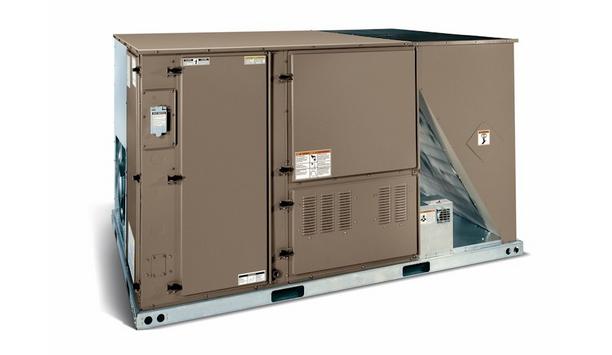
Bosch Home Comfort Group will make its landmark debut at AHR Expo 2026. The recent milestone of incorporating the YORK® and Hitachi brands in its portfolio sparks a new era for the company fueled by the strength of these iconic brands. From Feb. 2–4 in Las Vegas, attendees will be the first to experience the Bosch Comfort Revolution through an immersive booth experience that demonstrates how the expanded portfolio creates a single, powerful ecosystem that redefines comfort for contractors and homeowners alike. Transformation and progress for contractors “By bringing together the Bosch, YORK® and Hitachi brands, we’re redefining what comfort means, merging intelligence, reliability and electrification into one seamless experience,” said David Budzinski, deputy CEO global, president Americas, Bosch Home Comfort Group. “The future of comfort is forged through the shared innovation, engineering excellence and decades of expertise each of these iconic brands bring, forming a unified core positioned to drive true transformation and progress for contractors and for the HVAC industry at large.” Greater energy efficiency and improved comfort The heating and cooling innovations prove greater efficiency and enhanced comfort can go hand-in-hand. The Bosch Home Comfort Group booth at AHR Expo 2026 will feature the latest heating and cooling systems equipped with high-performance technologies that cut utility costs while delivering consistent, precise temperatures for occupants. Bosch Ci and Ri Series Water Source Heat Pumps are now equipped with inverter technology. The Ci and Ri Series offer improved comfort and humidity control compared to non-inverter systems, while achieving superior energy efficiency and lower utility bills for home and business owners. Available in 1.5, 3, and 5 tons, both systems have a compact footprint, making for easy and seamless installation. New Hitachi air365 Max with R-32 The new Hitachi air365 Max with R-32 offers highly efficient, zone-based heating and cooling simultaneously. Using R-32, an A2L refrigerant with low global warming potential, the system includes an A2L built-in detection and mitigation device for compliant installations. Outdoor units are offered as both universal heat pump and heat recovery, for greater application flexibility and further energy savings. Reliable comfort in every building, every climate Advancements in commercial rooftop unit (RTU) technology and design have significantly improved system efficiency and dependability. Built-in redundancies help ensure reliable operation for every application. As the very first commercial rooftops offered by the brand, the Bosch Pro RTUs feature a premium cabinet with best-in-class options and are among the most efficient dual-circuit rooftop units on the market. The product showcases new options like a dual fuel heat pump with gas furnace backup, hot gas reheat dehumidification in a heat pump, and a direct drive plenum supply fan. Available in AC models with three efficiency tiers from 3 to 12.5 tons and in both standard heat pump and dual fuel heat pump configurations from 6.5 to 12.5 tons, Bosch Pro RTUs offer the perfect combination of serviceability, flexibility and efficiency to maximize value over the full life of the unit. YORK® Sun™ Choice Dual Fuel RTUs YORK® Sun™ Choice Dual Fuel RTUs combine a heat pump with a gas or propane furnace as a backup heat source to deliver efficient heating and cooling and consistent comfort year-round in colder climates. The systems feature direct drive plenum supply fans, and integrated intelligence automatically transitions heating operation to the most optimal energy source based on outdoor conditions. Ideal for a wide range of light commercial applications, Sun™ Choice Dual Fuel RTUs help reduce utility bills and support long-term energy goals. Innovative technologies driving electrification across applications As the movement to decarbonize residential heating and cooling continues, improvements in heat pump designs make it possible to electrify a greater range of homes and buildings. Advancements in compressor technology extend climate range while compact footprints and multiple configuration options fit in more spaces. The Inverter Ducted Split Edge Heat Pump from Bosch introduces a new compact outdoor solution to the flagship Inverter Ducted Split (IDS) Family product line. Built on inverter and VRF-based technology, the IDS Edge is a compact, flexible, and efficient solution for both residential single-zone and multi-zone applications and will be available in both standard and high-performance versions. The YORK® YC8 18 SEER2 Air Conditioner achieves excellent energy efficiency, humidity control and precision comfort with a modulating compressor ideally suited to meet the cooling demands of many climates. Available in 2, 3 and 5 ton sizes, the YC8 offers temperature stability and quiet comfort with sound levels as low as 67 dBA. Flexible designs and low-GWP refrigerants “From advanced controls and cutting-edge engineering to flexible designs and low-GWP refrigerants, the new, unified product offering from Bosch Home Comfort Group offers contractors unparalleled access to the performance features driving outcomes that matter most to their customers,” said Budzinski. “By bringing together the best of three well-established brands, we are redefining comfort in new and crucial ways, driving innovation, efficiency, and reliability in a cohesive experience designed for every season and every building.”
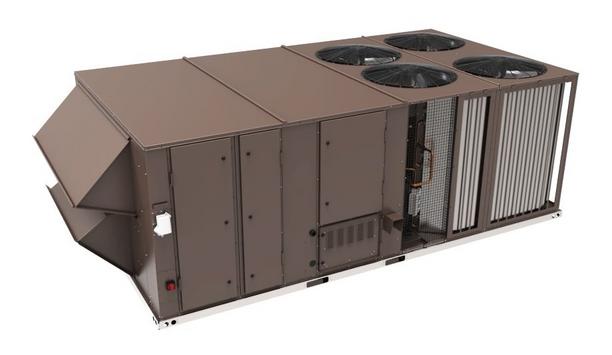
YORK, a licensed brand of Bosch Home Comfort Group, has launched the Sun Pro and Sun Choice Dual Fuel Rooftop Units (RTUs), which combine a heat pump with a gas or propane furnace as a supplemental heat source to deliver more efficient heating and cooling year-round, compared to previous models. Ideal for a wide range of light commercial applications, Sun Pro and Sun Choice Dual Fuel RTUs help building owners in colder climates reduce utility spending and support long-term energy goals while reliably maintaining occupant comfort. Innovations in heat pump technology have rapidly advanced in recent years, making dual fuel systems a viable solution across many building types and environments, even those that experience colder temperatures. Auxiliary backup heating When outdoor temperatures drop below the heat pump’s operating range, the system transitions to the furnace as auxiliary backup heating. According to the U.S. Department of Energy, dual fuel heat pump RTUs can reduce energy costs in commercial buildings by up to 50 percent compared to traditional RTUs. The long-term utility cost savings, plus rebates and incentives that offset the upfront system cost, are driving adoption. Dual fuel RTUs “With dual fuel RTUs, building owners in more regions can depend on the optimized efficiency of heat pumps for cooling and heating most of the year and rely on the furnace for heating on the coldest days,” said Matthew Schlegel, senior product manager, commercial, Bosch Home Comfort Group. “Built upon the proven YORK heat pump and furnace platforms, the YORK Sun Pro and Sun Choice Dual Fuel RTUs are engineered with embedded intelligence that automatically transitions to the most optimal energy source based on outdoor conditions and customizable settings programmed to the operational goals of the facility.” Innovative controls The seamless transition between fuel sources is automated through innovative controls, which make the Sun Pro and Sun Choice dual fuel RTUs practical and efficient. The controls enable operators to set a balance point to determine the outside temperature at which the system will transition between heat pump heat and gas heat to maximize comfort and efficiency. The balance point can be customized to prioritize comfort or lower emissions. System redundancy for long-term reliability System reliability is significantly enhanced through built-in redundancy and reliability. In addition to controlling the heat source by outdoor temperature setpoint, the RTUs include a backup heat setting that allows the unit to engage either source of heat when there is a lockout or failure with the other source of heat, ensuring at least some heat is provided to the space in all conditions. Optional hot gas reheat (HGRH) helps control humidity, and simplified controls support easy operation. Units also feature a dual-circuit design for refrigerant. In the event of a refrigerant leak or compressor issue on one circuit, the system will continue to operate at 50 percent capacity until it can be serviced. Technician-friendly features The Sun Pro model (6.5–12.5 tons) is designed for easy serviceability with a slide-out blower and hinged panels for tool-less access. The Sun Choice model (12.5–25 tons) features a direct-drive plenum fan that improves efficiency, simplifies service, speeds commissioning and expands airflow capability. For most installations, Sun Choice units do not require curb adapters, which can significantly reduce installation costs. Jason Carter, senior product manager, commercial, Bosch Home Comfort Group said, “Our new direct drive plenum fans are a game changer. By eliminating belts and moving to a slide-out design, contractors save time on commissioning and maintenance, while building owners gain a more efficient, reliable system.” Savings calculator To help facility managers estimate the financial impact of dual fuel efficiency, Bosch Home Comfort Group developed the YORK Dual Fuel Heat Pump Operating Cost and Emissions Estimator tool, available in Solution Navigator, an all-in-one app for product selection and literature. The Estimator tool helps customers compare annual costs and emissions for dual fuel systems versus standard AC with gas heat or a standard heat pump. It also estimates outcomes at different balance points. Pro and Choice Dual Fuel RTUs are available from the YORK, Johnson Controls, TempMaster, Luxaire, Coleman, Champion, Fraser-Johnston and Kenmore brands as part of the Bosch Home Comfort Group portfolio and brands and are backed by a one-year parts warranty.

Bosch Home Comfort, a major source of high-quality heating, cooling and hot water systems, has unveiled a new electric replacement to gas furnaces in the Bosch 115V Modular Blower – which can be paired with a Bosch Cased Coil and Inverter Ducted Split (IDS) outdoor unit to provide a 115V electric heat pump solution. While many heat pump-compatible air handlers require 240V breakers, the Bosch 115V Modular Blower can utilize the 115V/120V breaker sizes most frequently paired with furnaces – forgoing the need for electrical upgrades when switching from a gas-powered solution to an electric heat pump. Energy-efficient home comfort solutions "Expanding access to energy-efficient home comfort solutions starts with making the transition to electrified systems simpler and more affordable,” said Amanda Ng, Senior Product Manager at Bosch Home Comfort, adding “By leveraging the existing electrical infrastructure in furnace-compatible homes and removing the need for upgraded breakers, the Bosch 115V Modular Blower makes adoption easier than ever — offering a solution that’s as efficient to operate as it is effortless to install.” The Bosch 115V Modular Blower is available in cabinet sizes A through D, able to assume any space previously occupied with an industry standard-sized furnace with ease. The unit can be installed in a variety of positions – upflow, downflow, vertical, horizontal or left-right – promising flexibility that further simplifies the installation process. Bosch 115V Modular Blower features The Bosch 115V Modular Blower also boasts the following features: Highly efficient operation with a 5-speed ECM motor Compact design, with a height of 33” that’s ideal for tight spaces Easy to install thanks to compatibility with 115V and 120V electric breakers Optimal serviceability with a removable bottom for side or bottom return applications Qualifies for up to $8,000 in federal IRA tax rebates & credits for installing an electric heat pump solution
Insights & Opinions from thought leaders at Bosch Home Comfort Group

With the acquisition of Johnson Controls’ residential and commercial HVAC business, Bosch’s Home Comfort Group has vastly expanded its global footprint. The acquisition, which was finalized on July 31, expands Bosch’s North American presence to complement its already dominant positions in the rest of the world. Champion in the HVAC and water space The newly combined businesses will include 26 research and development facilities globally and 33 factories worldwide. Previously, about 80% of Bosch’s Home Comfort Business was in the Europe, Middle East, and Africa region “Bosch has really expressed their desire to be a global champion in the HVAC and water space, so that’s really the premise behind the global acquisition,” says David Budzinski, President, Bosch Home Comfort Group, Americas. Previously, around 80% of Bosch’s Home Comfort Business was in the Europe, Middle East, and Africa region. The acquisition adds particular strength in the North America and Asia-Pacific regions, resulting is a trinity of big regional businesses combined under the Bosch global umbrella. Tremendous potential for growth in US There will be no immediate changes noticeable in how the businesses operate, according to David Budzinski. Over the next several years, one can expect more integration where it makes sense, yielding eventual cost benefits. “We are always looking at ways to decrease the cost of our products for contractors and consumers alike,” said Budzinski, adding “We want to leverage the strengths from both sides.” The acquisition provides tremendous potential for growth in the United States. “Bosch is very serious about growing in the Americas, and so it’s an incredibly important market, arguably one of the most important for the company,” adds David Budzinski. Residential and light commercial HVAC businesses Bosch will continue to use the brand names Hitachi and York under licensing agreements The acquisition includes the Johnson Controls-Hitachi Air Conditioning joint venture in addition to JCI’s other residential and light commercial HVAC businesses. Bosch will continue to use the brand names Hitachi and York under licensing agreements, in addition to their Bosch branding. The businesses are merging with Bosch Home Comfort Group, part of the global company’s Energy and Buildings business, one of four main pillars of the vast company. JCI residential and light commercial businesses The combination of the legacy JCI residential and light commercial businesses with Bosch’s existing business in North America positions Bosch as one of the “Big Six” HVAC manufacturers in North America. Bosch was already a North American pioneer in heat pumps and water technologies. An advantage of the combined companies is a larger product portfolio, included ducted and ductless technologies provided by the JCI-Hitachi unit. It’s a whole new side of the portfolio, joining Bosch’s strength in air-to-air and air-to-water heat pump technologies. Bosch was already a North American pioneer in heat pumps and water technologies. Economics of scale and synergy A regional approach allows the company to cater the strategy to each individual region “Being a global HVAC company allows us to continue and expand our existing economics of scale and synergy,” says David Budzinski. A regional approach allows the company to cater the strategy to each individual region, whether North America, China, Japan, or Europe. The goal is, in effect, to do “whatever it takes for us to win,” said David Budzinski. “It takes a slightly different strategy to win in the U.S. versus what it takes to win in Europe versus Japan or China,” says David Budzinski, adding “Bosch has been a global player for over 100 years, and we have a very strong strategy.” Switch to lower-GWP refrigerants Investment in research and development (R&D) is critical in the U.S., given the ever-shifting business and regulatory environment. For the last six years, the focus in the U.S. has been responding to regulatory changes. With that transition in the rearview, including the switch to lower-GWP refrigerants, it is time to focus more on end users and contractors, says Budzinski. “We are focused on portfolio enhancements and helping our end users and contractors install the product faster and easier in order to essentially decrease the cost of the product, including installation time,” states David Budzinski, adding “We are growing our portfolio to help consumers be able to afford to replace their HVAC.” Broad Bosch portfolio Uncertainties in the replacement cycle and housing market are among the unknowns Uncertainties in the replacement cycle and housing market are among the unknowns as one looks ahead to the future, but Bosch is responding. “We’re doing our part to work with contractors, our dealers, and distributors to make sure we continue to make new installations achievable and affordable with or without incentives for homeowners,” adds David Budzinski. The broad Bosch portfolio, including the products that are part of the acquisition, ensures the company can serve customers regardless of what happens on the political or regulatory front. Benefits of the new ownership “We are going to produce, engineer and develop products that our customers want, and that’s super critical as a business and helps us to be more agile,” said Budzinski. Overall, Budzinski expects Bosch’s business to grow faster than the overall market. “The acquisition helps us leverage economics of scale, which was one of the main drivers of the transaction,” adds David Budzinski. Among the benefits of the new ownership is operation by a private company (Bosch) as compared to a publicly traded company (JCI). Being a private company enables a longer-term emphasis on growth and investment, rather than focusing on short-term concerns such as exceeding quarterly earnings estimates, for example. Private companies are well-equipped to weather market volatility. Impact of tariffs for Bosch’s supply chain partners Given the ongoing uncertainties about tariffs, Bosch is well-positioned with manufacturing and R&D facilities in the U.S., including large facilities in Oklahoma and Kansas. There will be some expected impact of tariffs for Bosch’s supply chain partners; some components are made outside the United States. Bosch’s U.S. facilities support the currently popular notion of “Investing in the United States,” according to Budzinski. “We have created a global climate comfort champion,” said David Budzinski, adding “We are a large, global-scale company that focuses on creating the best products and technology for our customers.” Bosch’s forecast Bosch’s forecast is that sales of air conditioning units worldwide are hoped to rise to more than 200 million per year According to Bosch analyses, the global market for heating, ventilation, and air conditioning systems amounted to more than $160 billion USD (150 billion euros) in 2024. Air conditioning systems alone accounted for two-thirds of this. Demand will continue to increase significantly in the coming years. According to Bosch’s forecast, sales of air conditioning units worldwide are expected to increase to more than 200 million units per year by 2030, almost a fifth more than in 2024. Ambitious growth targets “With the largest acquisition in our company history, we are accelerating our growth, expanding our global footprint, and balancing our business by strengthening our energy and building technology – this makes Bosch more powerful and robust, in line with our corporate strategy,” says Stefan Hartung, Chairman of the Bosch board of management. “We have ambitious growth targets in all regions of the world. We are consistently focusing our new organization on this,” says Jan Brockmann, Executive Management President of Home Comfort, adding “By strengthening regional responsibility, we can meet customer needs even better.” Strategic investments in growth areas “Bosch wants to be one of the pioneering companies in each of its industries by 2030 and is expanding its business with strategic investments in growth areas, among other things. Acquisitions are also part of the strategy,” says Christian Fischer, Deputy Chairman of the Board of Management and responsible for strategic growth initiatives and portfolio management. Christian Fischer adds, “The current acquisition perfectly complements our portfolio. We can now offer our customers the entire range of HVAC technologies – from a single source and worldwide.”


