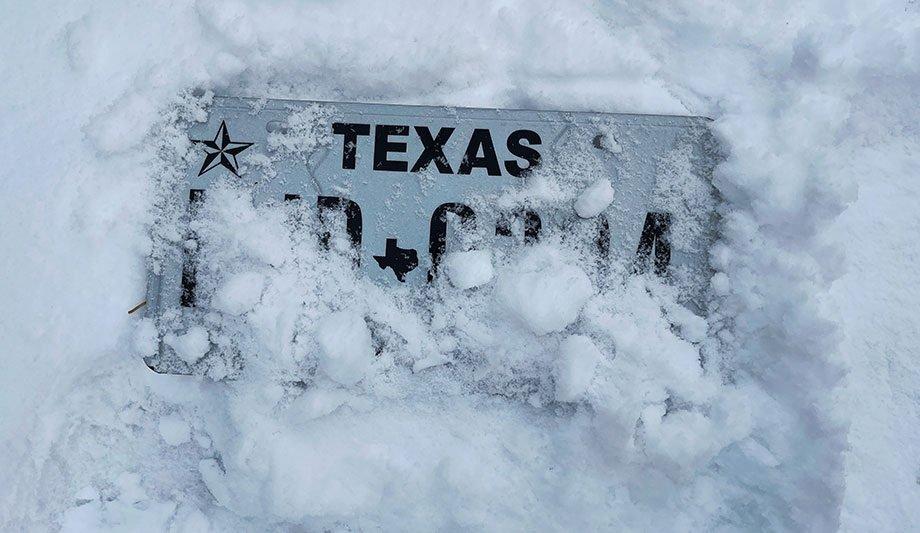


This year’s Texas deep freeze struck the region hard, causing an estimated $10 billion in damage. It was one of the costliest winter weather events in the state’s history. The extreme weather conditions severely impacted HVAC systems, too, overtaxing equipment and challenging contractors to keep up with the pace of repairs.
What did not happen, despite some homeowner insurance claims filed in the aftermath of the extreme cold snap, was ‘frozen refrigerant.’ Although the extremes of cold weather in Texas were unusual, the low temperatures still did not come close to the freezing point of refrigerants. The temperatures in Dallas, Texas, from February 14-17 ranged from 14 to 29 degrees Fahrenheit – never above freezing.
Extreme cold temperatures
However, it would take much more extreme cold temperatures to freeze common refrigerants. In fact, R-22 has a freezing temperature of minus 256 degrees Fahrenheit, and R-410A freezes at minus 247 degrees F. That’s much colder than the lowest temperature ever recorded on earth, which was minus 136 degrees Fahrenheit measured on the East Antarctic Plateau in 2010. Even there, refrigerant would not freeze.
It would take much more extreme cold temperatures to freeze common refrigerants
Jay Dykstra, Technical Education Manager for HVAC Investigators (HVACi) and StrikeCheck, debunked the ‘frozen refrigerant’ claim in an article for PropertyCasualty360.com. He noted that comprehensive testing based on engineering best practices helped to determine the specific causes of HVAC failure in the wake of the Texas freeze, and those causes were often different than what homeowners and their contractors expected them to be.
Achieving comfortable temperatures
An actual cause of HVAC equipment failure stemmed from operating in the extreme conditions. Specifically, heat pumps are designed to provide a Delta T (which is the difference between the return air temperature and supply air temperature) of between 25 to 30 degrees. In other words, if it’s 40 degrees outside, a heat pump can adequately maintain a 70-degree indoor temperature.
However, in the Texas freeze, systems were being tasked with providing Delta T values that are larger than the expected 25 to 30 degrees. In extreme cold, achieving comfortable temperatures required heat pumps to work harder than ever, which could cause overheating, overuse, and intensified wear-and-tear on pumps and heat strips that could hasten system failure, especially if cold temperatures continue over several days.
Residential water heaters
High voltage surges cause about 11% of HVAC system failures in a given year
Given the power outages during the Texas freeze, high voltage power surges are another possible cause of HVAC failure. Generally speaking, high voltage surges cause about 11% of HVAC system failures in a given year. A heat pump’s electrical components, refrigerants, and motors are not directly affected by colder temperatures.
However, in Texas, failure of commercial boilers, chiller water coils, and residential water heaters was common. Failure of individual components is more likely if freezing or a high voltage surge are indirect causes of damage. When these conditions are direct causes, the damage is more widespread and could require major repairs or replacement, notes Dykstra.
Damage assessment companies
HVAC and refrigeration damage assessment companies have evaluated the equipment of thousands of HVAC systems in Texas that began to fail during the freeze. Insurance professionals are seeking to better understand why systems fail in such extreme conditions in order to manage claims in connection with the cold weather.
For HVAC professionals, understanding the forensics of system failure also provides a useful tool as we seek to manufacture and install more resilient systems in the future.